31 Therefore, because it was the Preparation Day, that the bodies should not remain on the cross on the Sabbath (for that Sabbath was a high day), the Jews asked Pilate that their legs might be broken, and that they might be taken away. 32 Then the soldiers came and broke the legs of the first and of the other who was crucified with Him. 33 But when they came to Jesus and saw that He was already dead, they did not break His legs. 34 But one of the soldiers pierced His side with a spear, and immediately blood and water came out. 35 And he who has seen has testified, and his testimony is true; and he knows that he is telling the truth, so that you may believe. 36 For these things were done that the Scripture should be fulfilled, “Not one of His bones shall be broken.” 37 And again another Scripture says, “They shall look on Him whom they pierced.”
The point of this text (John 19:31-37) is very simple. It is that Jesus of Nazareth died as the lamb of God for the forgiveness of our sins. Our response must be to repent and believe in Him. Jesus really died. He breathed His last breath. His side was pierced through. All for us.
This fact is essential because Jesus’ death and burial are at the very heart of the gospel message by which we are saved.
Last Sunday we sang that profound African American spiritual, “Were You There?” Its haunting questions invite us to witness the crucifixion, burial, and resurrection of the Lord Jesus Christ. One of my favorite renditions of that hymn is by Jubilant Sykes, who often sang at Grace Community Church in California. Sadly, his life was taken earlier this year, but he is literally now jubilant in the presence of the Lord in heaven. Jubilant Sykes always started this hymn singing in a soft, intimate whisper leading the church to lean-in emotionally and spiritually to reflect on Christ’s suffering and death. His powerful baritone voice made you feel the passion as he rumbled the refrain, “Tremble, tremble, tremble”. Were you there when they crucified my Lord? As the song progresses and the orchestra comes in, Jubilant’s voice rises to a thunder as he reaches the final verse, “Were you there when He rose up from the grave?” and instead of trembling, he shouts, “sometimes I feel like shouting Glory, GLORY! GLORY!”
Were you there? In two weeks, we will celebrate again the glory of Christ’s resurrection as we come to Matthew 28. But before we get there, we have one more place to stop, reflect, and ask, “Were you there when they laid Him in the tomb?”
Matthew 27 has taken us on the journey through the last hours of Christ’s life
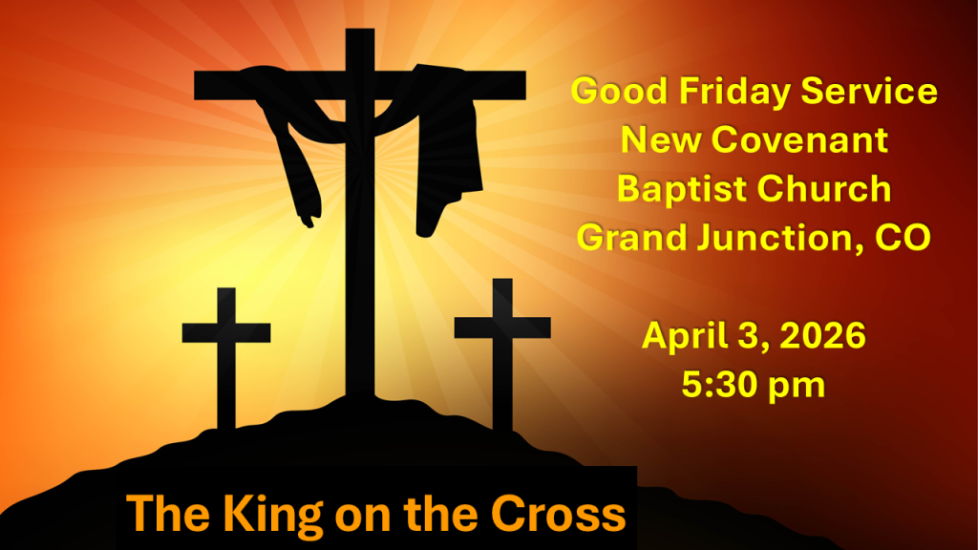
Matthew 27 tells us the story of Calvary, the place of the cross. There Jesus was crucified, having already been betrayed by one of his own disciples, Judas Iscariot. Jesus had been arrested while at prayer in Gethsemane. He stood trial before Caiaphas, the high priest, and the Jewish supreme court called the Sanhedrin. Early in the morning they came to the decision to put Jesus to death (Matt. 27:1) and handed him over to Pilate, the Roman Governor (Matt. 27:2). Jesus then stood trial before Pilate (Matt. 27:11). Even though Pilate knew it was out of envy that they handed Jesus over to him (Matt. 27:18), he eventually gave in and sentenced Jesus to be executed by crucifixion (Matt. 27:26).
The gospel accounts divide the six hours of Jesus’ crucifixion into two parts. According to Mark.15:25, Jesus was nailed to the cross at the “third hour” or nine o’clock in the morning. He hung there until the “ninth hour” which would be three o’clock in the afternoon. Jesus was on the cross for six hours.
Last time, in Matthew 27:27-44, we began to look at the Jesus the King on the cross. We saw the suffering of Jesus’ crucifixion during the first three hours. Jesus had already been beaten, humiliated, mocked, and spit upon when they led Him out to be crucified (Matt. 27:27-31). Carrying His own cross until he no longer could, they him led to Golgotha or Calvary (which means the place of the skull). There they crucified Him, nailing His hands and feet to the cross and lifting it up as the people scoffed and ridiculed Him (Matt. 27:32-44).
Starting in Matthew 27:45 we see the second half of Jesus’ ordeal on the cross.
How many times have we sung the beautiful, yet haunting words that George Bennard penned more than a hundred years ago?
On a hill far away stood an old rugged cross,
The emblem of suff’ring and shame;
And I love that old cross where the dearest and best
For a world of lost sinners was slain.[1]
As the hymn says, the cross is an emblem of suffering and shame—a strange thing to love so much that we sing about it and rejoice in it. The cross was the means of the one of the most brutal means of execution ever devised: crucifixion. Unlike modern methods of capital punishment that are designed to produce a quick, painless death, crucifixion was intended to guarantee that the condemned person would die a slow, agonizing death. Crucifixion was a common method of execution in the first century, used by the Romans on some 20,000 people in Judea and Galilee alone. Why do we remember the name of only one of those crucified men? Why do we lift our voices to sing about Him?
17For Christ did not send me to baptize, but to preach the gospel, not with wisdom of words, lest the cross of Christ should be made of no effect. 18 For the message of the cross is foolishness to those who are perishing, but to us who are being saved it is the power of God. (1 Corinthians 1:17-18).
At the heart of the gospel is the cross. Paul said that Christ sent him to preach the gospel (1 Cor. 1:17), and then immediately began to speak about the cross of Christ. The gospel is “the message of the cross” with the power to save.
By turning the page to Matthew 26, we have come to the final section of this Gospel. Matthew has told of the virgin birth of the King. He has shown Christ’s mighty works, given us His authoritative teachings, and related His conflict with the Jewish authorities. Jesus’ ministry on earth is coming to an end. The only thing left is His passion—His suffering, death, and resurrection. I know it may seem unseasonal for us to be considering Jesus preparing for the cross on the Sunday before celebrating Christmas. This morning, we have sung about Christmas Day, the birth of the Lord Jesus, laid in a manger, with shepherds worshipping and angels proclaiming peace on earth.
So, doesn’t it seem strange to speak of suffering and death while singing with wonder and joy? Yet, knowing the story of Jesus as Matthew has presented it, we aren’t really surprised, are we? No one in the history of the world came with more profound irony than Jesus. Matthew knew it, and he recorded it frequently. The divine King of the universe was born in humble obscurity in the tiny town of Bethlehem. The true King of the Jews was forced to flee to Egypt from the earthly despot Herod. Jesus experienced hunger, but He fed the multitudes. He grew weary but gave rest to others. He was the Son of God but paid taxes and tribute at the temple. He was called a devil but freed those tormented by demons. He would not turn stones to bread to feed Himself but gave His life as bread for His people. The king is a servant.
Nowhere is this irony more poignant than in His passion. His enemies thought they were destroying Him, but in reality, they were fulfilling God’s plan to save the world. He was sold for thirty pieces of silver, but He gave His life a ransom for many. Soldiers crowned Him with thorns and scorned Him as “King of the Jews” but their mocking words were nonetheless true. They jeered, “He saved others; Himself He cannot save” (Matt. 27:42), yet He redeemed His people from their sins. He died the death of a sinner but gave life to all who believe in Him.
This is the message of the Gospel. The sinless Son of God, Christ Jesus, who was born to be the king, suffered the death of a sinner. This is the truth we celebrate at Christmas. The birth of Jesus would have no eternal meaning without His death and resurrection. This is why He came to earth as a man and lived among us as Emmanuel, God-with-us.
Merry Christmas! On this Sunday before we celebrate our Lord’s birth, I thought about doing a special Christmas message rather than continuing our study of the Gospel of Matthew. But the more I studied today’s text, the more I came to see that what Matthew presents to us in these verses is the very spirit of Christmas.
This time of year, people speak glibly about the “Christmas spirit,” rarely meaning any more by this than familial jolliness, sentimental merriment, or perhaps human kindness, social charity, or some nebulous “peace on earth.” At this time of year, the world celebrates with indulgence and a carnival mentality rather than humbly worshiping God for His incarnation in Christ. Paul so profoundly expressed the true spirit of Christmas in Philippians 2 as He describes the theology of the incarnation of the Son of God:
5Let this mind be in you which was also in Christ Jesus, 6 who, being in the form of God, did not consider it robbery to be equal with God, 7 but made Himself of no reputation, taking the form of a bondservant, and coming in the likeness of men. 8 And being found in appearance as a man, He humbled Himself and became obedient to the point of death, even the death of the cross. 9 Therefore God also has highly exalted Him and given Him the name which is above every name, 10 that at the name of Jesus every knee should bow, of those in heaven, and of those on earth, and of those under the earth, 11 and that every tongue should confess that Jesus Christ is Lord, to the glory of God the Father. (Phl. 2:5-11).
The real spirit of Christmas is the spirit of Jesus Christ—the Son of God, who being in His very essence equal with God, left the glory of heaven, became a man, took on the nature of an obedient bondslave, and humbled Himself to die on the cross for our sins. J.I. Packer wrote that the unfathomable truth of Christmas is that,
… the Almighty appeared on earth as a helpless human baby, unable to do more than lie and stare and wriggle and make noises. Needing to be fed and changed and taught to talk like any other child. And there was no illusion or deception in this; the babyhood of the Son of God was a reality. The more you think about it, the more staggering it gets. Nothing in fiction is so fantastic as is this truth of the incarnation.[1]
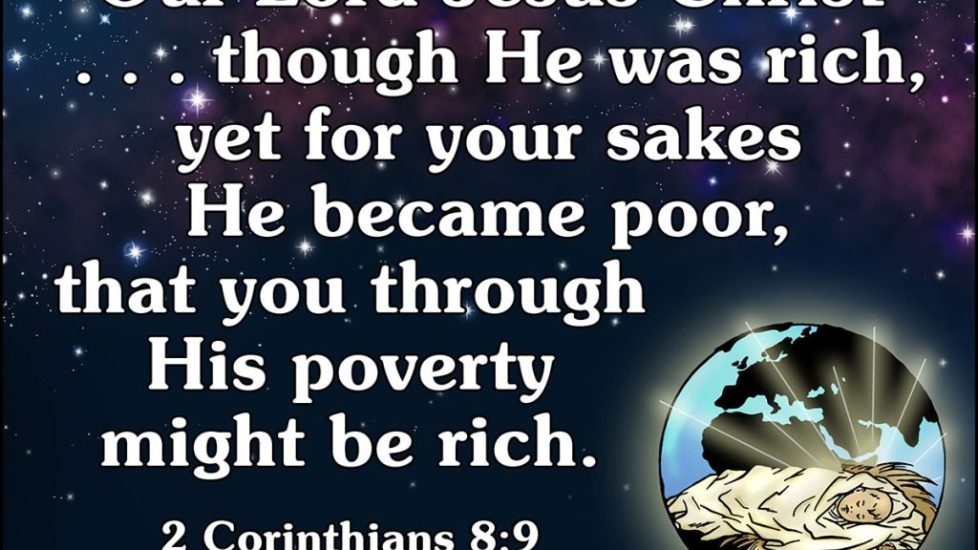
When the apostle Paul urged the Corinthian church to give generously, he expressed the spirit of Christmas, writing, “For you know the grace of our Lord Jesus Christ, that though He was rich, yet for your sakes He became poor, that you through His poverty might become rich.” (2 Cor. 8:9). For the Son of God to become poor meant laying aside His glory, accepting hardship, rejection, malice, misunderstanding, suffering, and a death so terrible that His mind nearly broke under the prospect of it.[2] This is the spirit of Christmas. It’s also the spirit that we are called to exhibit. As the Holy Spirit says through Paul, “Let this mind be in you which was also in Christ Jesus” (Phl. 2:5).
With those thoughts in mind, let’s turn to Matthew 17:22-27. In these brief, few verses we see Jesus Christ demonstrate the spirit of love, humility, and self-sacrifice—the spirit of Christmas.
Over the last few weeks we have been taking a close look at a central passage in Matthew 16. Jesus took His disciples away from the Jewish crowds in Galilee to the mostly Gentile area of Caesarea Philippi (Matt. 16:13). There Jesus questioned them about His identity, “But who do you say that I am?” (Matt. 16:15). Simon Peter spoke up for the group and confessed, “You are the Christ, the Son of the living God” (Matt. 16:16). That Jesus is “the Christ” means He is the fulfillment of God’s promise to send a Savior, an anointed King in the line of David who would reign forever. That Jesus is “the Son of God” means that He is divine, having the very nature and essence of God Himself. Jesus blessed Peter and his confession, saying “flesh and blood has not revealed this to you, but My Father who is in heaven” (Matt. 16:17).
Then Jesus told Simon, “you are Peter, and on this rock I will build My church, and the gates of Hades shall not prevail against it” Matt. 16:18). And we spent three weeks examining the church that Jesus builds—its foundation, builder, victory, and authority. Peter and the other apostles believed that Jesus is the Christ and the Son of God. And based on the reality of Jesus’ identity—the truth that God revealed and they confessed—Jesus will build His victorious and powerful church.
But as great and true as that confession was, Jesus’ disciples did not really know what all that meant. They understood that Jesus was the Christ, but they did not understand what it meant for Him to be the Christ. They knew His identity but they did not know His mission.
Can you picture the dreadful scene? It is Friday in Jerusalem and a crowd has gathered at the place called Golgotha, Skull Hill. It was just outside the city gate and located by the side of a well-traveled road. The Romans liked to hold their crucifixions in public places. Killing people in public had a restraining effect on the masses.
This particular crucifixion started at 9 a.m. Three men on three crosses lifted up and hung there to die in shame. Although crucifixion was common in those days, this one was far from ordinary. Everyone’s attention was on the man in the middle, Jesus of Nazareth. The sign above His head read, “King of the Jews.” Some bystanders mocked and cursed at Him, while others wept, shrieked, and moaned. From the cross He spoke with tenderness and compassion. To those crucifying Him He said, “Father, forgive them, for they do not know what they do”; to His mother, “Woman, behold your son” as He entrusted her care to His beloved disciple.
At noon, the sky went black. For three hours darkness fell across the city of Jerusalem. On the middle cross Jesus looked nearly dead already. His body quivered uncontrollably. Then drawing in a tortured breath He shouted something–“My God, my God, why have you forsaken me?” People in the crowd shouted back at Him. Moments passed, death drew near, then He rasped another sound, “I thirst.” The soldiers put some sour vinegar on a sponge and lifted it to His lips with a stalk of hyssop. He moistened His lips and took a deep breath. Then He spoke again. It was a quick shout. Just one word . . . Tetelestai . . . “It is finished.” Then He breathed out another sentence committing His Spirit to the Father. Then He was dead.
About this awful scene we sing praises to God. Songs like:
Jesus, keep me near the cross,
There a precious fountain;
Free to all, a healing stream,
Flows from Calv’ry’s mountain.
In the cross, in the cross
Be my glory ever,
Till my ransomed soul shall find
Rest beyond the river.
And,
In the cross of Christ I glory,
towering o’er the wrecks of time;
all the light of sacred story
gathers round its head sublime
And again,
Down at the cross where my Savior died,
Down where for cleansing from sin I cried,
There to my heart was the blood applied;
Glory to His name!
What is it about Jesus dying on the cross that is so glorious? Why do we sing, “Glory to His name!”?
Last time (Christ Crucified Part 1) I showed that in John’s account of the crucifixion of Jesus he wants us to understand the glory of the cross in the sense that it is the specific fulfillment of prophecy. God was glorified in Jesus Christ at the cross because He is the fulfillment of Old Testament types, foreshadows and prophecies.
We saw that Jesus was led away and slain as the Passover lamb of God. Jesus was the willing sacrifice who carried His own cross to His substitutionary death. He was the sin offering who died outside the camp to take away the sin of the world. He was the cure for our sin, being lifted up on the cross so that everyone who looks to Him and believes will not perish but have eternal life. He was numbered with the transgressors; crucified with sinners to make atonement for sinners. He became a curse being nailed to the tree, as He who knew no sin became sin for us (2 Cor. 5:21). He was stripped naked as soldiers gambled for His clothes so that we could be clothed in His righteousness (Phl. 3:9). He thirsted so that we could receive the gift of the water of life (John 7:38; Rev. 21:6; 22:17). All this Christ did in fulfillment of God’s purpose to save us for His glory.
Listen for the glory of God as I again read our passage, John 19:16-30:
16 Then he delivered Him to them to be crucified. So they took Jesus and led Him away. 17 And He, bearing His cross, went out to a place called the Place of a Skull, which is called in Hebrew, Golgotha, 18 where they crucified Him, and two others with Him, one on either side, and Jesus in the center.
19 Now Pilate wrote a title and put it on the cross. And the writing was: JESUS OF NAZARETH, THE KING OF THE JEWS. 20 Then many of the Jews read this title, for the place where Jesus was crucified was near the city; and it was written in Hebrew, Greek, and Latin. 21 Therefore the chief priests of the Jews said to Pilate, “Do not write, ‘The King of the Jews,’ but, ‘He said, “I am the King of the Jews.” ‘ ” 22 Pilate answered, “What I have written, I have written.”
23 Then the soldiers, when they had crucified Jesus, took His garments and made four parts, to each soldier a part, and also the tunic. Now the tunic was without seam, woven from the top in one piece. 24 They said therefore among themselves, “Let us not tear it, but cast lots for it, whose it shall be,” that the Scripture might be fulfilled which says: “They divided My garments among them, And for My clothing they cast lots.” Therefore the soldiers did these things.
25 Now there stood by the cross of Jesus His mother, and His mother’s sister, Mary the wife of Clopas, and Mary Magdalene. 26 When Jesus therefore saw His mother, and the disciple whom He loved standing by, He said to His mother, “Woman, behold your son!” 27 Then He said to the disciple, “Behold your mother!” And from that hour that disciple took her to his own home.
28 After this, Jesus, knowing that all things were now accomplished, that the Scripture might be fulfilled, said, “I thirst!” 29 Now a vessel full of sour wine was sitting there; and they filled a sponge with sour wine, put it on hyssop, and put it to His mouth. 30 So when Jesus had received the sour wine, He said, “It is finished!” And bowing His head, He gave up His spirit.
Today we will see the glory of God in Christ in three more events at the cross.
2. The inscription of Pilate
John draws our attention to the written charge against Jesus (John 19:19), “Now Pilate wrote a title and put it on the cross. And the writing was: JESUS OF NAZARETH, THE KING OF THE JEWS.” Pilate made sure everyone was able to read the sign (John 19:20), “Then many of the Jews read this title, for the place where Jesus was crucified was near the city; and it was written in Hebrew, Greek, and Latin.”
Whether Pilate intended it or not, the Jews were definitely offended by the sign (John 19:21-22), “Therefore the chief priests of the Jews said to Pilate, “Do not write, ‘The King of the Jews,’ but, ‘He said, “I am the King of the Jews.”’ But at this point, Pilate had been manipulated enough by the Jews, so he retorted (John 19:22), “What I have written, I have written”. Pilate’s decision was final.
And what a declaration it was! “The King of The Jews”. It wasn’t simply an accusation that He claimed to be this, but rather it was an affirmation that He was this! There—on a Roman cross—hung the promised King of the Jews; suffering for iniquities. And this is as the Scriptures promised. Long before—nearly ten centuries before in fact—God made the promise to King David:
“When your days are fulfilled and you rest with your fathers, I will set up your seed after you, who will come from your body, and I will establish his kingdom. He shall build a house for My name, and I will establish the throne of his kingdom forever. I will be his Father, and he shall be My son. If he commits iniquity, I will chasten him with the rod of men and with the blows of the sons of men. But My mercy shall not depart from him, as I took it from Saul, whom I removed from before you. And your house and your kingdom shall be established forever before you. Your throne shall be established forever” (2 Samuel 7:12-16).
Jesus Himself committed no sin. But He bore the sins of many. And just as the Scriptures promised that the King of the Jews—the Son of David—would be chastened with the blows of men, so Jesus suffered the blows of sinful men. And as David himself rejoiced to declare, God would not allow his holy Offspring to undergo decay (Psalm 16:9-11; see also Acts 2:22-35). Jesus truly was crucified as the King of the Jews.
So, like Caiaphas who inadvertently prophesied that Jesus should die for the nation, so Pilate unknowingly proclaimed the truth that Jesus is the King of the Jews and of all nations. Thus we see the glory of God in the fulfillment of scripture and in the inscription of Pilate. Next we see God’s glory in,
3. The compassion of Christ
We pick up the narrative in John 19:25,
25 Now there stood by the cross of Jesus His mother, and His mother’s sister, Mary the wife of Clopas, and Mary Magdalene.
This is an interesting list because by comparing these names to those mentioned by Matthew, Mark, and Luke we can make some reasonable conclusions about the identity of these women. First, there is Mary, the mother of Jesus. Last mentioned is Mary Magdalene, a woman from whom Jesus had cast out seven demons (Mark 16:9). She will be the first to see Jesus alive after His resurrection (John 20). Then we also have listed “His mother’s sister” and “Mary … of Clopas.” Matthew and Mark both list “Mary the mother of James the Less and Joses” (Mark 15:40; Matt. 27:56). Matthew also lists “the mother of Zebedee’s sons,” James and John. Mark lists Salome. If these references are to the same women, then Mary, the mother of James the Less and Joses is the same woman as Mary, the wife of Clopas; and Salome is the mother of James and John and also the sister of Mary, the mother of Jesus. That would make James and John first cousins to Jesus.
These women were all stood with the Lord Jesus in His moment of greatest suffering. What a horrifying scene it must have been for these women to behold! And John—who we can presume to be the unnamed “disciple whom Jesus loved”—went on to write (John 19:26), “When Jesus therefore saw His mother, and the disciple whom He loved standing by, He said to His mother, ‘Woman, behold your son!’ Then He said to the disciple, ‘Behold your mother!’ And from that hour that disciple took her to his own home.” Even as He suffered the horrors of the cross, Jesus displayed great tenderness and love. Apparently Mary’s husband, Joseph, had already died, leaving Mary as a widow. In that culture, widows had difficulty supporting themselves. Jesus’ brothers, who were not yet believers, were probably not present at the cross. The beloved disciple John would be the one to care for Mary.
Perhaps our Lord—even in His greatest moments of suffering—knew that His precious mother not only needed someone to provide care for her in His absence, but also a son for her to love. He brought the two together at the cross.
So we see the glory of God in the compassion of Christ Jesus for His mother. Finally we see the glory of God in Christ crucified because there we see,
4. The exclamation of victory
We turn our attention now to Jesus’ final word from the cross (John 19:30): tetelestai: “It is finished!” Why did Jesus say this? John tells us in John 19:28, “After this, Jesus, knowing that all things were now accomplished …” “Accomplished” in verse 28 is from the same word as “finished” in verse 30. Back in John 17:4 Jesus had prayed, “I have glorified You on the earth. I have finished the work which You have given Me to do.” In John 4:34 Jesus told His disciples, “My food is to do the will of Him who sent Me, and to finish His work.” Jesus had now accomplished, finished, the work that the Father had given Him to do.
“It is finished!” was not a feeble sigh of defeat. The other gospel writers emphasize that is was a loud cry, like a shout of triumph (Matt. 27:50; Mark 15:37; Luke 23:46). And in it lies our hope! So what does it mean?
It is finished means every prophecy about His life and death has been fulfilled! (John 19:28)
It is finished means that every requirement of God’s righteous law has been met! (Matt. 5:17; Rom. 8:4; 10:4)
It is finished means that sin has been atoned for! (Heb. 9:12; 10:12)
It is finished means Satan has been defeated! (John 12:31; 16:11; Heb. 2:14; 1 John 3:8)
It is finished means our sin debt had been paid in full. (Eph. 1:7)
It is finished means that God’s holy and just wrath has been satisfied! (Rom. 3:25; 1 John 2:2)
It is finished means His work of redemption has been completed! (1 Pet. 1:18-19)
It is finished means that we can add nothing to our salvation (Eph. 2:8-9) (This paragraph “It is finished…” adapted from MacArthur, 356)
Donald Grey Barnhouse (Let Me Illustrate [Revell], p. 245) tells about visiting a 16th century Augustinian monastery and palace near Madrid, Spain, called El Escorial. It is a magnificent building where the kings of Spain have been buried for centuries. The architect who built it made an arch so wide and flat that it frightened the king. He ordered the architect to add a column that would uphold the middle of the arch. The architect argued that it was not necessary, but the king insisted. So the column was built. Years later, the king died and the architect then revealed that the column was a quarter of an inch short of the arch, which had not sagged in the slightest. Guides pass a sliver of wood between the arch and the column to show that in over 400 years, the arch has not moved.
Like that arch, our salvation has a master designer behind it. It did not just happen, but was carefully planned and carried out by God. And like the arch, it is totally sufficient in and of itself. The arch didn’t need the help of a column to stand, it only detracted from the sufficiency and beauty of the arch. The finished work of Jesus Christ in His death and resurrection is perfect and sufficient without any human works needed to supplement it.
After His victory cry, John reports (John 19:30), “And bowing His head, He gave up His spirit.” Jesus gave His life on the cross. Consciously, willingly, He commended His spirit to the Father. Jesus had said (John 10:18), “No one takes it from Me, but I lay it down of Myself. I have power to lay it down, and I have power to take it again. This command I have received from My Father.” Jesus was no helpless victim, He gave up His life at His own will in obedience to the Father.
J. C. Ryle comments (Expository Thoughts on the Gospels[Baker], pp. 290-291):
He that can read a passage like this without a deep sense of man’s debt to Christ, must have a very cold, or a very thoughtless heart. Great must be the love of the Lord Jesus to sinners, when He could voluntarily endure such sufferings for their salvation. Great must be the sinfulness of sin, when such an amount of vicarious suffering was needed in order to provide redemption.
I could never adequately express the fathomless meaning of Christ’s death on the cross. But the words of Stuart Townend’s hymn express the gratitude I feel:
How deep the Father’s love for us,
How vast beyond all measure,
That He should give His only Son
To make a wretch His treasure.
How great the pain of searing loss –
The Father turns His face away,
As wounds which mar the Chosen One
Bring many sons to glory.
Behold the man upon a cross,
My sin upon His shoulders;
Ashamed, I hear my mocking voice
Call out among the scoffers.
It was my sin that held Him there
Until it was accomplished;
His dying breath has brought me life –
I know that it is finished.
I will not boast in anything,
No gifts, no power, no wisdom;
But I will boast in Jesus Christ,
His death and resurrection.
Why should I gain from His reward?
I cannot give an answer;
But this I know with all my heart –
His wounds have paid my ransom.
John has written his Gospel (John 20:31), “that you may believe that Jesus is the Christ, the Son of God, and that believing you may have life in His name.” From the beginning he has recorded for us the glory of the Son of God, writing (John 1:14), “And the Word became flesh and dwelt among us, and we beheld His glory, the glory as of the only begotten of the Father, full of grace and truth.” The miraculous signs that Jesus did manifested His glory (John 2:11; 11:4, 40) and His words glorified God (John 7:18).
But John makes it clear that the true glory of Christ was manifested in His death on the cross. As the time drew near for Jesus to be crucified, He said (John 12:23), “The hour has come that the Son of Man should be glorified.” Speaking of that hour Jesus said (John 12:32), “And I, if I am lifted up from the earth, will draw all peoples to Myself.” John intends a double meaning in this phrase “lifted up”. First, it refers to the method of His death. John wrote (John 12:33), “This He said, signifying by what death He would die.” Jesus was literally “lifted up” on the cross (also John 3:14; 8:28). Secondly, “lifted up” means to exalt. Isaiah 52:13 uses this very word (in the Greek translation) when he writes about the suffering servant of the Lord, “Behold, My Servant shall deal prudently; He shall be exalted and extolled and be very high.” “Exalted” is literally “lifted up”. Christ is exalted as He is lifted up to suffer and die on the cross.
When Judas leaves the upper room to betray Jesus, our Lord declares (John 13:32), “Now the Son of Man is glorified, and God is glorified in Him.” Later that night Jesus prayed to the Father (John 17:4), “I have glorified You on the earth. I have finished the work which You have given Me to do.” In today’s passage in John 19 we see that His finished work is fully accomplished at the cross.
What an amazing reversal we find at the cross. That despised instrument of the curse and shame of the most detestable criminals becomes the means of manifesting the very glory of God. So, as we come to the crucifixion of Jesus today, I want you to see the glory of God in the cross of Christ. Look for that glory as I read our scripture, John 19:16-30,
16 Then he delivered Him to them to be crucified. So they took Jesus and led Him away. 17 And He, bearing His cross, went out to a place called the Place of a Skull, which is called in Hebrew, Golgotha, 18 where they crucified Him, and two others with Him, one on either side, and Jesus in the center.
19 Now Pilate wrote a title and put it on the cross. And the writing was: JESUS OF NAZARETH, THE KING OF THE JEWS. 20 Then many of the Jews read this title, for the place where Jesus was crucified was near the city; and it was written in Hebrew, Greek, and Latin. 21 Therefore the chief priests of the Jews said to Pilate, “Do not write, ‘The King of the Jews,’ but, ‘He said, “I am the King of the Jews.” ‘ ” 22 Pilate answered, “What I have written, I have written.”
23 Then the soldiers, when they had crucified Jesus, took His garments and made four parts, to each soldier a part, and also the tunic. Now the tunic was without seam, woven from the top in one piece. 24 They said therefore among themselves, “Let us not tear it, but cast lots for it, whose it shall be,” that the Scripture might be fulfilled which says: “They divided My garments among them, And for My clothing they cast lots.” Therefore the soldiers did these things.
25 Now there stood by the cross of Jesus His mother, and His mother’s sister, Mary the wife of Clopas, and Mary Magdalene. 26 When Jesus therefore saw His mother, and the disciple whom He loved standing by, He said to His mother, “Woman, behold your son!” 27 Then He said to the disciple, “Behold your mother!” And from that hour that disciple took her to his own home.
28 After this, Jesus, knowing that all things were now accomplished, that the Scripture might be fulfilled, said, “I thirst!” 29 Now a vessel full of sour wine was sitting there; and they filled a sponge with sour wine, put it on hyssop, and put it to His mouth. 30 So when Jesus had received the sour wine, He said, “It is finished!” And bowing His head, He gave up His spirit.
The first way that we see the glory of God in the cross is in,
1. The fulfillment of scripture
John wants us to understand the glory of the cross in the sense that it is the specific fulfillment of Old Testament prophecy. John emphasizes this in John 19:24: “… that the Scripture might be fulfilled …” Also, John 19:28: “After this, Jesus, knowing that all things were now accomplished, that the Scripture might be fulfilled …” You can see this formula two more times in John 19:36-37. John wants us to see that the cross was no accident; it was for the glory of God. From start to finish it was in accordance with God’s foreordained purpose, even in the seemingly minor details. John shows this through Jesus’ fulfillment of foreshadows and prophecies.
What Old Testament prophecies and foreshadowings do we find here?
a. The Lamb (John 19:16-17; Isa 53:7)
John 19:16-17: “…So they took Jesus and led Him away. And He, bearing His cross, went out to a place called the Place of a Skull, which is called in Hebrew, Golgotha.” (The Latin for “Skull” is where we get the name “Calvary”). Even though Jesus willfully laid down His life with no resistance to His oppressors, John 19:16 says “they took Jesus” and “led Him away” (Matt 27:31; Mark 15:20; Luke 23:26).
This is what Isaiah the prophet foretold (Isaiah 53:7-8): “He was oppressed and He was afflicted, Yet He opened not His mouth; He was led as a lamb to the slaughter, And as a sheep before its shearers is silent, So He opened not His mouth. He was taken from prison and from judgment …” We have already seen how Jesus refused to defend Himself and kept silent before Annas and Pilate (John 18:21; 19:9). The other Gospels record that He did the same before Caiaphas and Herod (Matt. 26:63; Luke 23:9). So, as Jesus is led away, we see the imagery of Jesus as the Lamb of God that takes away the sin of the world (John 1:29).
b. The Sacrifice (John 19:17; Genesis 22)
Also John 19:17 says, “And He, bearing His cross.” The other Gospels record that the soldiers forced a man named Simon of Cyrene to carry Jesus’ cross (Luke 26:23). Jesus carried His cross from the place of judgment as far as He was able. But weakened by the scourging and other mistreatment Jesus probably stumbled under the load. At that point, the soldiers conscripted Simon. But John wants to emphasize that Jesus bore the cross to show the Son’s obedience to the Father’s plan.
In Genesis 22, God tests Abraham’s faith by saying (Ge. 22:2), “Take now your son, your only son Isaac, whom you love, and go to the land of Moriah, and offer him there as a burnt offering on one of the mountains of which I shall tell you.” Isaac is a type of Christ picturing the only begotten Son whom the Father loves. Abraham obeys God and “… took the wood of the burnt offering and laid it on Isaac his son,” (Gen. 22:6). In the end, God provided a ram to take Isaac’s place. Here we see a foreshadowing of Jesus, who not only carried the wood of His own sacrifice but also became the substitutionary lamb.
c. The Sin Offering (John 19:17; Ex. 29:14; Lev. 16:27; Heb. 13:11-12)
John 19:17 also specifies that when they took Jesus, “He … went out.” Specifically this refers to Him going outside the city walls. John 19:20 reports that “the place where Jesus was crucified was near the city,” not in the city. This points back to the Old Testament sacrificial system, where the sin offering was taken outside the camp (Exo. 29:14; Lev. 16:27). Hebrews 13:11-12 applies this type to Jesus:
11 For the bodies of those animals, whose blood is brought into the sanctuary by the high priest for sin, are burned outside the camp. 12 Therefore Jesus also, that He might sanctify the people with His own blood, suffered outside the gate.
d. The Cure (John 19:18; Num. 21; John 3:14-15)
John 19:18 states so simply the horrible fact “…they crucified Him.” As I said in the introduction, Jesus referred to this as being “lifted up” (John 8:28; 12:32). In John 3:14-15 Jesus says, “And as Moses lifted up the serpent in the wilderness, even so must the Son of Man be lifted up, that whoever believes in Him should not perish but have eternal life.” This takes us all the way back to Numbers 21 where God sent fiery serpents among His people because they had sinned (Num. 21:6). When the people cried out for mercy, God told Moses to “Make a fiery serpent, and set it on a pole; and it shall be that everyone who is bitten, when he looks at it, shall live.”
Jesus was lifted up on the cross, crucified so that those who look to Him and believe will live.
e. Numbered with the transgressors (John 19:18; Isaiah 53:12)
We read in John 19:18, “… they crucified Him, and two others with Him, one on either side, and Jesus in the center.” Isaiah 53:12 prophesies: “He poured out His soul unto death, And He was numbered with the transgressors, And He bore the sin of many, And made intercession for the transgressors.” Jesus was crucified with sinners to make atonement for sinners.
f. The Crucified One (Psalm 22; John 19:23-25a)
As the crucified One, Jesus fulfills Psalm 22. That Psalm begins, “My God, my God why have you forsaken me”—the very words Jesus Himself uttered from the cross (Matt. 27:46). Listen to Psalm 22:16-18:
16 For dogs have surrounded Me; The congregation of the wicked has enclosed Me. They pierced My hands and My feet; 17 I can count all My bones. They look and stare at Me. 18 They divide My garments among them, And for My clothing they cast lots.
David prophesied about the pierced hands and feet hundreds of years before crucifixion was invented. But the direct fulfillment that John points us to is the dividing of Jesus’ garments and gambling for His clothes. John 19:23-25:
23 Then the soldiers, when they had crucified Jesus, took His garments and made four parts, to each soldier a part, and also the tunic. Now the tunic was without seam, woven from the top in one piece. 24 They said therefore among themselves, “Let us not tear it, but cast lots for it, whose it shall be,” that the Scripture might be fulfilled which says: “They divided My garments among them, And for My clothing they cast lots.” Therefore the soldiers did these things.
Notice that John 19:25 says, “therefore the soldiers did these things.” Why? It was to fulfill Scripture. I am sure that none of the four soldiers were aware of Psalm 22. They were simply doing what they always did: divvying up the criminal’s few belongings. For Jesus it was five pieces of clothing. They each got a piece of His outer garments; probably His turbin, His sandals, His outer coat, and His sash or belt. The one piece left is the seamless tunic. Rather than tear this seamless woven garment, they cast lots for it. But here again we see the sovereign hand of God using even His enemies to accomplish His purposes.
g. The thirsty one (John 19:28-29; Psalm 22:15; Psalm 69:21)
The other gospels report that when they arrived at Golgotha, just before they crucified Jesus, they gave Him “wine mingled with gall to drink” (Matt. 27:34; or myrrh, Mark 15:23); but He refused to drink it. This may have been a narcotic to ease the pain, or simply another a form of torment that amused the soldiers, because the myrrh made the wine so bitter that it tasted like gall and was undrinkable.
John 19:28 reports that later, as He hung on the cross, Jesus said, “I thirst!” This time someone gave Him some sour wine (or vinegar) on a sponge to drink. The two references together (to gall and sour wine) fulfilled the Messianic Psalm 69:21, where David complained, “They also gave me gall for my food, And for my thirst they gave me vinegar to drink.” Again, in Psalm 22 where David depicts the details of a death by crucifixion hundreds of years before that cruel punishment was devised, he wrote (Psa. 22:15): “My strength is dried up like a potsherd, And My tongue clings to My jaws; You have brought Me to the dust of death.” John 19:29 also points out that they used a stalk of hyssop to lift the sponge to Jesus’ lips. Hyssop was what Israel used to put the blood of the lamb on the doorposts of their homes at Passover (Exod. 12:22). And Jesus is dying as the true Passover lamb of God.
So Jesus’ fulfillment of types and prophecies shows that His death was no accident. God predicted it and planned it all for our salvation.
Conclusion
The way that the minute details of Jesus’ death fulfilled these many types and prophecies teaches us that we can trust the Bible. I’m sure that Moses, David, Isaiah and many other Old Testament prophets did not fully understand the things that they wrote which later would be fulfilled specifically in Christ’s death for our sins. As 1 Peter 1:10-12 explains:
10 Of this salvation the prophets have inquired and searched carefully, who prophesied of the grace that would come to you, 11 searching what, or what manner of time, the Spirit of Christ who was in them was indicating when He testified beforehand the sufferings of Christ and the glories that would follow. 12 To them it was revealed that, not to themselves, but to us they were ministering the things which now have been reported to you through those who have preached the gospel to you by the Holy Spirit sent from heaven–things which angels desire to look into.
The prophets of the Old Testament wrote more than they understood. How could they do that? Because scripture is inspired by God (2 Tim 3:16). Again Peter explains (2 Pet. 1:20-21):
20 knowing this first, that no prophecy of Scripture is of any private interpretation, 21 for prophecy never came by the will of man, but holy men of God spoke as they were moved by the Holy Spirit.
So, in the death of Christ on the cross we see the glory of God in the perfect fulfillment of scripture. Next time we will see three other indications of the glory of God in Christ crucified.
But today we have seen that the cross shows us the glory God in Jesus Christ as the lamb of God that was sacrificed as a sin offering so that we could be cured from the curse of sin. He hung on the cross between sinners as He bore the sin of the world and endured the wrath of God. He became a curse being nailed to the tree, as He who knew no sin became sin for us (2 Cor. 5:21). He thirsted so that we could receive the gift of the water of life (John 7:38; Rev. 21:6; 22:17). He was stripped naked as soldiers gambled for His clothes so that we could be clothed in His righteousness (Phl. 3:9). All this Christ did in fulfillment of God’s purpose to save us for His glory.
How do we respond to such a great sacrifice of love? Maybe these words from the hymn by Chris Anderson will become yours:
His robes for mine: O wonderful exchange!
Clothed in my sin, Christ suffered ‘neath God’s rage.
Draped in His righteousness, I’m justified.
In Christ I live, for in my place He died.
I cling to Christ, and marvel at the cost:
Jesus forsaken, God estranged from God.
Bought by such love, my life is not my own.
My praise—my all—shall be for Christ alone.