The Cross and the Coin
Matthew 17:22-27
Merry Christmas! On this Sunday before we celebrate our Lord’s birth, I thought about doing a special Christmas message rather than continuing our study of the Gospel of Matthew. But the more I studied today’s text, the more I came to see that what Matthew presents to us in these verses is the very spirit of Christmas.
This time of year, people speak glibly about the “Christmas spirit,” rarely meaning any more by this than familial jolliness, sentimental merriment, or perhaps human kindness, social charity, or some nebulous “peace on earth.” At this time of year, the world celebrates with indulgence and a carnival mentality rather than humbly worshiping God for His incarnation in Christ. Paul so profoundly expressed the true spirit of Christmas in Philippians 2 as He describes the theology of the incarnation of the Son of God:
5 Let this mind be in you which was also in Christ Jesus, 6 who, being in the form of God, did not consider it robbery to be equal with God, 7 but made Himself of no reputation, taking the form of a bondservant, and coming in the likeness of men. 8 And being found in appearance as a man, He humbled Himself and became obedient to the point of death, even the death of the cross. 9 Therefore God also has highly exalted Him and given Him the name which is above every name, 10 that at the name of Jesus every knee should bow, of those in heaven, and of those on earth, and of those under the earth, 11 and that every tongue should confess that Jesus Christ is Lord, to the glory of God the Father. (Phl. 2:5-11).
The real spirit of Christmas is the spirit of Jesus Christ—the Son of God, who being in His very essence equal with God, left the glory of heaven, became a man, took on the nature of an obedient bondslave, and humbled Himself to die on the cross for our sins. J.I. Packer wrote that the unfathomable truth of Christmas is that,
… the Almighty appeared on earth as a helpless human baby, unable to do more than lie and stare and wriggle and make noises. Needing to be fed and changed and taught to talk like any other child. And there was no illusion or deception in this; the babyhood of the Son of God was a reality. The more you think about it, the more staggering it gets. Nothing in fiction is so fantastic as is this truth of the incarnation.[1]
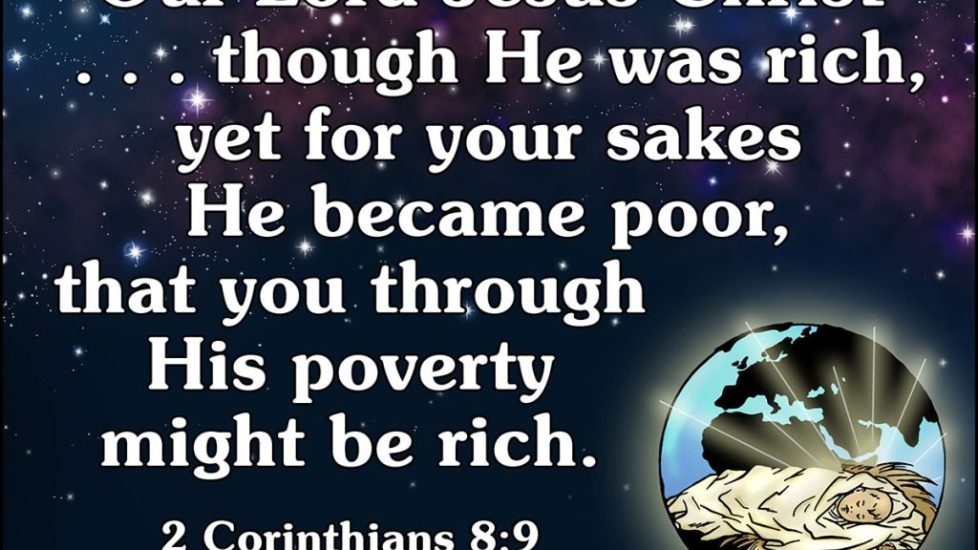
When the apostle Paul urged the Corinthian church to give generously, he expressed the spirit of Christmas, writing, “For you know the grace of our Lord Jesus Christ, that though He was rich, yet for your sakes He became poor, that you through His poverty might become rich.” (2 Cor. 8:9). For the Son of God to become poor meant laying aside His glory, accepting hardship, rejection, malice, misunderstanding, suffering, and a death so terrible that His mind nearly broke under the prospect of it.[2] This is the spirit of Christmas. It’s also the spirit that we are called to exhibit. As the Holy Spirit says through Paul, “Let this mind be in you which was also in Christ Jesus” (Phl. 2:5).
With those thoughts in mind, let’s turn to Matthew 17:22-27. In these brief, few verses we see Jesus Christ demonstrate the spirit of love, humility, and self-sacrifice—the spirit of Christmas.