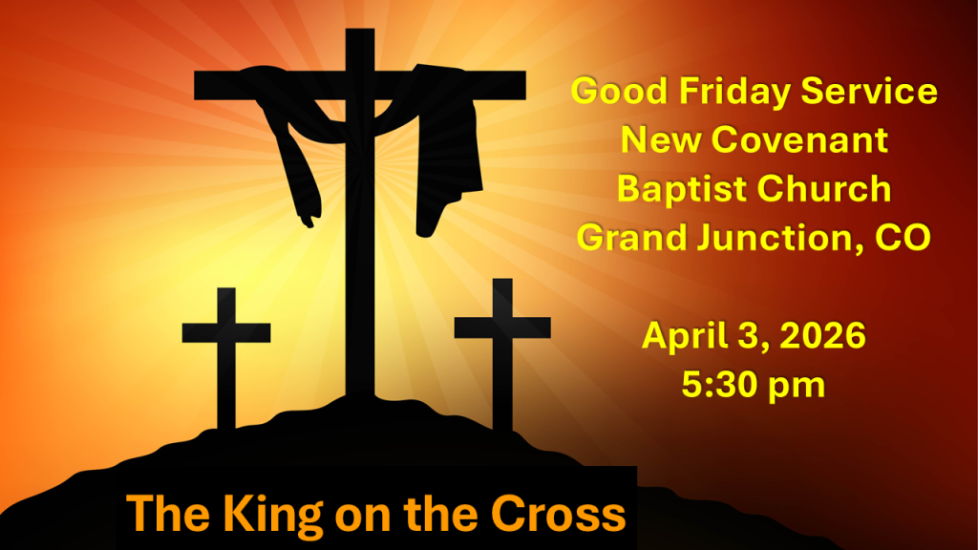
31 Therefore, because it was the Preparation Day, that the bodies should not remain on the cross on the Sabbath (for that Sabbath was a high day), the Jews asked Pilate that their legs might be broken, and that they might be taken away. 32 Then the soldiers came and broke the legs of the first and of the other who was crucified with Him. 33 But when they came to Jesus and saw that He was already dead, they did not break His legs. 34 But one of the soldiers pierced His side with a spear, and immediately blood and water came out. 35 And he who has seen has testified, and his testimony is true; and he knows that he is telling the truth, so that you may believe. 36 For these things were done that the Scripture should be fulfilled, “Not one of His bones shall be broken.” 37 And again another Scripture says, “They shall look on Him whom they pierced.”
The point of this text (John 19:31-37) is very simple. It is that Jesus of Nazareth died as the lamb of God for the forgiveness of our sins. Our response must be to repent and believe in Him. Jesus really died. He breathed His last breath. His side was pierced through. All for us.
This fact is essential because Jesus’ death and burial are at the very heart of the gospel message by which we are saved.
I want to start today by first drawing your attention to the last two verses of John’s Gospel. In John 21:24, John points out that he is the one referred to as the disciple whom Jesus loves throughout the Gospel, and that he’s the one who is bearing witness about these things, and who has written these things, and that his testimony is true. In other words, this Gospel was written by a reliable eyewitness. John was there, he saw what Jesus did, heard what Jesus said and witnessed the death and resurrection of Jesus. So what he says is trustworthy.
Then in John 21:25 John says, “And there are also many other things that Jesus did, which if they were written one by one, I suppose that even the world itself could not contain the books that would be written. Amen.” Can you hear John’s heart? it’s like he wishes he could’ve written more, that he could’ve testified to more of the works of Christ, but thinking more realistically, there are so many that this world simply couldn’t handle a book that big. The riches of God’s grace in Christ, the glory of His majesty, and the wonders of His mercy are inexhaustible. Indeed, Jesus Christ is infinitely glorious. We will spend all eternity marveling at such things and worshiping our God. It’s been John’s goal throughout this Gospel not to recount everything Jesus did, but to give us sufficient testimony so that we would behold His glory and believe on Him for eternal life.
Two and a half years ago we began this journey through the Gospel of John. It gives me not just a sense of joy in what we have learned but also a sense of sorrow over what we have left unsaid. As you have experienced with me, there is a depth to John that simply cannot be fathomed. J.C. Ryle said that coming to the last verses of John, “… is like listening to the parting words of a friend, whom we may possibly not see again.” For me, knowing how much more of the Bible there is to teach and the limited number of days that the Lord gives me on this earth, I may never get the chance to preach through this wonderful book again.
My hope and prayer for us as we have walked through John’s Gospel has been that we would truly behold the glory of Jesus Christ, that we would get a glimpse of the Son of God in His magnificence, and thus believe in Him, fall in love with Him, and be compelled to pour out our lives for Him.
Essentially, that is what we find in these last few verses of John 21. Jesus has just walked Peter through his restoration as an apostle and church leader. Three times Jesus asked Peter, “Do you love me?”; and three times Jesus commissioned him to feed or shepherd His sheep. We learned that a disciple of Jesus loves the Lord and that love compels us to serve. In our passage today you will notice that twice (John 21:19, 22) Jesus repeats to Peter the command that He gave Him when He first called him as a disciple, “Follow Me!” (Matt. 4:19; see, also, Jesus’ initial command to Philip in John 1:43). Watch for what it means to follow Jesus as I read our passage today starting in John 21:15–
15 So when they had eaten breakfast, Jesus said to Simon Peter, “Simon, son of Jonah, do you love Me more than these?” He said to Him, “Yes, Lord; You know that I love You.” He said to him, “Feed My lambs.” 16 He said to him again a second time, “Simon, son of Jonah, do you love Me?” He said to Him, “Yes, Lord; You know that I love You.” He said to him, “Tend My sheep.” 17 He said to him the third time, “Simon, son of Jonah, do you love Me?” Peter was grieved because He said to him the third time, “Do you love Me?” And he said to Him, “Lord, You know all things; You know that I love You.” Jesus said to him, “Feed My sheep.”
18 “Most assuredly, I say to you, when you were younger, you girded yourself and walked where you wished; but when you are old, you will stretch out your hands, and another will gird you and carry you where you do not wish.” 19 This He spoke, signifying by what death he would glorify God. And when He had spoken this, He said to him, “Follow Me.”
20 Then Peter, turning around, saw the disciple whom Jesus loved following, who also had leaned on His breast at the supper, and said, “Lord, who is the one who betrays You?” 21 Peter, seeing him, said to Jesus, “But Lord, what about this man?” 22 Jesus said to him, “If I will that he remain till I come, what is that to you? You follow Me.” 23 Then this saying went out among the brethren that this disciple would not die. Yet Jesus did not say to him that he would not die, but, “If I will that he remain till I come, what is that to you?”
24 This is the disciple who testifies of these things, and wrote these things; and we know that his testimony is true. 25 And there are also many other things that Jesus did, which if they were written one by one, I suppose that even the world itself could not contain the books that would be written. Amen.
Jesus says to Peter, “You follow Me.” What does it mean to be a disciple, a follower of Jesus? Last time in John 21:15-17 we saw being a disciple of Jesus means loving Him and serving Him. Today we also see being a disciple of Jesus means:
1. Sacrificially following Jesus (John 21:18-19)
We can trust and follow the Lord for our future, including trials and the time and manner of our death. Look at John 21:18; Jesus says, “Most assuredly, I say to you, when you were younger, you girded yourself and walked where you wished; but when you are old, you will stretch out your hands, and another will gird you and carry you where you do not wish.” We do not have to wonder about what that means because John explains in John 21:19, “This He spoke, signifying by what death he would glorify God.” The phrase, “stretch out your hands,” was commonly understood in the ancient world to refer to crucifixion (D. A. Carson, The Gospel According to John [Eerdmans/Apollos], p. 679). The day would come in Peter’s later years in which they would stretch out his hands (as in crucifixion), and someone else would ‘gird him’ (perhaps a figure of speech for being ‘bound’ by ropes or fetters), and that he would be taken where he did not wish.
Clement of Rome (AD 96) reports Peter’s martyrdom, although he doesn’t mention how he was executed. In the 3rd to 4th century, Eusebius of Caesarea, wrote in his Church History(Book 2, Chapter 25), “It is, therefore, recorded that Paul was beheaded in Rome itself, and that Peter likewise was crucified under Nero. This account of Peter and Paul is substantiated by the fact that their names are preserved in the cemeteries of that place even to the present day.”
The reason this is significant is that Peter had at one time boasted that, even if everyone else stumbled and denied the Lord, he himself would not (Matthew 26:33). He had said, “Even if I have to die with You, I will not deny You!” (Matt. 26:35). All the others said the same, of course; but Peter was the lead voice. In this John 13 when Jesus tells His disciples that they cannot follow Him now as He goes to His death, Peter protests, “Lord, why can I not follow You now? I will lay down my life for Your sake” (John 13:37).
Peter not only gets a second chance at ministry and leadership, he gets his second chance at sacrifice. Peter would indeed lay down his life for Jesus sake after all. Here, Jesus proves true what Peter has just said (John 21:17), “Lord, You know all things…” Jesus knew Peter’s future, including when and how he would die. We all have to die (unless Jesus returns before then). The question is, “will your death glorify God? Paul’s aim was (Phil. 1:20) “… that in nothing I shall be ashamed, but with all boldness, as always, so now also Christ will be magnified in my body, whether by life or by death.”
This has been an important theme in John’s gospel. In John 9 the disciples ask Jesus if the man born blind or his parents had sinned to cause his blindness. Jesus gave this answer (John 9:3), “Neither this man nor his parents sinned, but that the works of God should be revealed in him.” In John 11 Jesus gets the news that His friend Lazarus is sick and when Jesus heard it He said (John 11:4), “This sickness is not unto death, but for the glory of God, that the Son of God may be glorified through it.” In John 12 Jesus said (John12:23), “The hour has come that the Son of Man should be glorified,” and prayed (John 12:28, “Father, glorify Your name.” Then He said (John 12:32), “And I, if I am lifted up from the earth, will draw all peoples to Myself.” John explains (John 12:33), “This He said, signifying by what death He would die.” John has been teaching us that your life, your disease, your suffering, and yes, even your death are to be for the glory of God.
How do we die in such a way to glorify God? The way to glorify God in our death is to follow Him while we live. At the end of John 21:19 we read, “And when He had spoken this, He said to him, ‘Follow Me’” If we are dong what Jesus said in Luke 9:23—denying ourselves, taking up our cross daily and following Him—then we will be ready to glorify God in death because we have glorified Him in life.
Peter spent the rest of his life serving the Lord Jesus, feeding His lambs, tending His sheep. Peter, no doubt, had this conversation in mind when, later, he would write (2 Peter 1:12-15),
For this reason I will not be negligent to remind you always of these things, though you know and are established in the present truth. Yes, I think it is right, as long as I am in this tent, to stir you up by reminding you, knowing that shortly I must put off my tent, just as our Lord Jesus Christ showed me. Moreover I will be careful to ensure that you always have a reminder of these things after my decease.
Because Peter glorified the Lord in his life to the very end, he would also glorify the Lord in his death.
Well, we need to move on to point two. Being a disciple of Jesus means not only sacrificially following Jesus but also,
2. Personally following Jesus (John 21:20-23)
We can trust and follow the Lord for how and where we serve Him, without being concerned about how He uses others. John 21:20-21 says, “Then Peter, turning around, saw the disciple whom Jesus loved following, who also had leaned on His breast at the supper, and said, ‘Lord, who is the one who betrays You?’ Peter, seeing him, said to Jesus, ‘But Lord, what about this man?’” In John 21:24 John informs us that this same man that Peter asked about is John himself, the author of this Gospel.
We don’t know whether Peter asked out of curiosity or concern for John or the need to compare himself with John. But whatever his reason, Jesus replies (John 21:22), “If I will that he remain till I come, what is that to you? You follow Me.” This was a gentle way of Jesus saying to Peter “that’s none of your business.” Jesus determined how Peter would serve Him and when and how Peter would die. He did the same for John; and, He does that for all who follow Him.
John is quick to dispel the rumor that seems to have developed from Jesus’ question, writing (John 21:23), “Then this saying went out among the brethren that this disciple would not die. Yet Jesus did not say to him that he would not die, but, ‘If I will that he remain till I come, what is that to you?’” The point is not that John wouldn’t die before the Lord returned, the point is that it should not be Peter’s concern.
It is tempting to compare ourselves with others, but it is detrimental to our calling and our service to the Lord. As a pastor, it’s easy to compare myself to other pastors and wonder, “Why does God bless their ministries as He does, but not mine?” But I am not them, and God’s gifts and His calling on my life is unique. So is yours.
We must all follow the Lord Jesus Christ personally. Finally, being a disciple of Jesus Christ means,
3. Obediently following Jesus (John 21:24-25)
We can trust the Lord concerning the reliability of His Word, including what it contains and what it omits. The Bible was not written so that we would know everything there is to know, but so that we would believe and obey. Look again at John 21:24, “This is the disciple who testifies of these things, and wrote these things; and we know that his testimony is true. Here, John is testifying to the truthfulness of all that he has written in his Gospel concerning Jesus. He wants us to believe his testimony and put our faith in Jesus Christ. Then John concludes by writing, “And there are also many other things that Jesus did, which if they were written one by one, I suppose that even the world itself could not contain the books that would be written. Amen.”
In other words, the Bible is a miracle of brevity in light of its divine subject! The world could have been filled with page after page of material explaining, declaring, and illuminating us on our great Redeemer. But John, under the inspiration of the Holy Spirit, was selective. What he wrote was enough—enough for you and me to understand the simple gospel truth that leads to eternal life (Phil Newman). J.C. Ryle wrote, “There is enough to make every unbeliever without excuse, enough to show every inquirer the way to heaven, enough to satisfy the heart of every honest believer, enough to condemn man if he does not repent and believe, enough to glorify God.”
So we end our study of the Gospel of John with joy and thankfulness for the clear and plain presentation of the way to eternal life by believing in the life, death and resurrection of Jesus, the Son of God. We end with sorrow and humility when we think of how little we have laid hold of the treasures that this Gospel contains. And finally, we end in awe and wonder at the amazing grace and infinite glory we have found in our Lord Jesus Christ. Know Him; believe in Him; love Him; worship Him; serve Him; glorify Him. That is what this Gospel, and all of life, is about.
In 1949, Jim Elliot graduated with highest honors from Wheaton College in Illinois. He was someone who journaled extensively. His complete works may be found in The Journals of Jim Elliot, compiled and edited by his wife and author Elisabeth Elliot. On October 28, 1949, Elliot wrote these prophetic words in his journal: “He is no fool who gives what he cannot keep to gain what he cannot lose.” He believed that with all of his heart, and his life proved it. Six years later, at the young age of twenty-eight, Jim Elliot and four missionary comrades were martyred by Auca Indians on the Curaray River in the jungles of Ecuador. Elliot once wrote in his journal,
“God, I pray Thee, light these idle sticks of my life and may I burn for Thee. Consume my life, my God, for it is Thine. I seek not a long life, but a full one, like you, Lord Jesus. … Saturate me with the oil of the Spirit that I may be aflame. But flame is often short-lived. Canst thou bear this, my soul? Short life? In me there dwells the spirit of the Great Short-Lived, whose zeal for God’s house consumed Him. ‘Make me Thy fuel, Flame of God.’”
Jim Elliot seemed to know that suffering and martyrdom awaited him, and yet, his prayer was not for safety, or comfort, or longer life, but for greater zeal, and greater impact for the glory of God. His concern was not avoiding suffering, but growing in his love and affection for the Lord Jesus. In his journal he quoted the words of the hymn, “Be Thou the object bright and fair to fill and satisfy the heart. My hope to meet Thee in the air, and nevermore from Thee to part!” Elliot’s concern was loving Jesus more, glorifying God more, and staying faithful come what may.
What motivates such sacrificial service to advance the gospel of Jesus Christ? The love of Christ. The Lord’s love for us and our love for Him. Speaking of his own missionary work, the apostle Paul wrote (2 Cor. 5:14), “For the love of Christ compels us.” The motive is love. Love is the power of obedience. Love is the power of duty. Love is the power of service. Love is the power of sacrifice. Love is the power of worship. Love is the power of fellowship.
Peter and the other apostles will faithfully follow Jesus and give their lives in serving the Lord. Why? Love. Notice Jesus’ emphasis on love in our text today, John 21:15-25:
15 So when they had eaten breakfast, Jesus said to Simon Peter, “Simon, son of Jonah, do you love Me more than these?” He said to Him, “Yes, Lord; You know that I love You.” He said to him, “Feed My lambs.” 16 He said to him again a second time, “Simon, son of Jonah, do you love Me?” He said to Him, “Yes, Lord; You know that I love You.” He said to him, “Tend My sheep.” 17 He said to him the third time, “Simon, son of Jonah, do you love Me?” Peter was grieved because He said to him the third time, “Do you love Me?” And he said to Him, “Lord, You know all things; You know that I love You.” Jesus said to him, “Feed My sheep. 18 Most assuredly, I say to you, when you were younger, you girded yourself and walked where you wished; but when you are old, you will stretch out your hands, and another will gird you and carry you where you do not wish.” 19 This He spoke, signifying by what death he would glorify God. And when He had spoken this, He said to him, “Follow Me.”
20 Then Peter, turning around, saw the disciple whom Jesus loved following, who also had leaned on His breast at the supper, and said, “Lord, who is the one who betrays You?” 21 Peter, seeing him, said to Jesus, “But Lord, what about this man?” 22 Jesus said to him, “If I will that he remain till I come, what is that to you? You follow Me.” 23 Then this saying went out among the brethren that this disciple would not die. Yet Jesus did not say to him that he would not die, but, “If I will that he remain till I come, what is that to you?”
24 This is the disciple who testifies of these things, and wrote these things; and we know that his testimony is true. 25 And there are also many other things that Jesus did, which if they were written one by one, I suppose that even the world itself could not contain the books that would be written. Amen.
Remember last time we saw that this is the third time that Jesus appears to the group of disciples after His resurrection. They are in Galilee where Jesus has just produced a miraculous catch of fish and then provided breakfast for the disciples on the shore. Peter was the disciple most at the center of attention in this event. It was Peter who declared (John 21:3), “I am going fishing.” After catching the multitude of fish, when John told him, “It is the Lord!” Peter jumped out of the boat and swam to be the first one to reach Jesus (John 21:7). When the Lord said (John 21:10), “Bring some of the fish which you have just caught,” it was Peter who dragged the whole net of large fish to the shore alone (John 21:11).
There is one detail from our text last week that I did not draw your attention to, but it sets the stage for what happens in our text today. In John 21:9 we’re told that, “Then, as soon as they had come to land, they saw a fire of coals there, and fish laid on it, and bread.” Focus on that “fire of coals.” The only other place in the New Testament where we find that phrase is in John 18:18 when Peter stood warming himself by a fire of coals in the courtyard of the high priest as Jesus stands trial. It was there that Peter denied the Lord three times before the rooster crowed just as Jesus predicted.
It happened the very night that Jesus had demonstrated His great love by washing Peter’s feet. Jesus had just commanded His disciples to love one another as He has loved them (John 13:34). Peter then boldly declared to Jesus (John 13:37), “I will lay down my life for Your sake.” In John 13:38, “Jesus answered him, ‘Will you lay down your life for My sake? Most assuredly, I say to you, the rooster shall not crow till you have denied Me three times.’”
And John 18 records how it happened that night by the fire of coals. Peter had denied the Lord repeatedly; disowned Him vehemently; failed miserably; sinned publicly. Peter needed to be restored. God has very significant plans for this denying, impatient, impulsive man named Simon Peter. This short exchange between the risen Lord Jesus and Peter represents his public restoration to his apostolic ministry. It shows us the wonderful grace and forgiveness of our Lord. It also shows the love that the Lord desires of those who would be His disciples.
1. The Lord calls disciples to love Him (John 21:15-17)
John 21:15 begins, “So when they had eaten breakfast, Jesus said to Simon Peter.” Later in this passage we get the impression that Jesus and Peter were walking together with John kind of tagging along behind. Jesus asks Peter three questions. Remember what we have learned throughout the gospel: Jesus never asks a question that He does not already know the answer to. He asks so that Peter will probe his own heart.
A. The heart of discipleship is a love relationship with Jesus.
Peter had denied the Lord three times and so three times Jesus repeats the essential question, “Simon, son of Jonah, do you love Me?” These three questions hit Peter like repeated hammer blows to drive the point home—three times, the third time with grief because it reminded him of his threefold denials. Peter affirmed each time, “Yes, Lord; You know that I love You.” And, three times the Lord responded to Peter’s affirmation of love, “Feed My lambs. … Tend My sheep. … Feed My sheep.” The point is, loving Jesus because He has forgiven all your sins is essential for serving Him.
It is significant that Jesus calls Peter, “Simon, son of Jonah,” because that was his name before his life was changed by Jesus. John 1:42 records that when Andrew brought his brother to Jesus, “Now when Jesus looked at him, He said, “You are Simon the son of Jonah. You shall be called Cephas” (which is translated, Peter, a Rock).” In Matthew 16 when Simon Peter confesses (Matt. 16:16), “You are the Christ, the Son of the living God,” Jesus said to him, “Blessed are you, Simon Bar-Jonah, for flesh and blood has not revealed this to you, but My Father who is in heaven. And I also say to you that you are Peter, and on this rock I will build My church, and the gates of Hades shall not prevail against it.” By God’s grace, Simon the son of Jonah became Peter the rock. Jesus underscores His grace by calling Peter by his original name, “Simon, son of Jonah.” It reminded Peter of who he had been in the flesh.
The first question Jesus asks is (John 21:15), “Simon, son of Jonah, do you love Me more than these?” Who or what are “these”? Peter had just gone back to fishing. The boat and nets were there on the shore. Was Jesus referring to those? Peter had once forsook his old life as a fisherman to become a fisher of men (Luke 5:10-11). Did he love Jesus more than his old life?
But I think more likely, Jesus was referring to the other disciples who were with them there on that beach in Galilee. In the upper room, Peter had boasted that even if the other disciples stumbled and denied Jesus, he never would (John 13:37; Matt. 26:33). Peter proved that he was not as faithful to The Lord—above all the others—as he boasted in the flesh that he would be. He was just as weak in the flesh and just as much in need of grace and forgiveness as everyone else.
Peter’s answer shows that he has learned the lesson of humility. He is no longer boasting of his love for Jesus. Instead he replies (John 21:17), “Lord, You know all things; You know that I love You,”. It’s not enough to say that we love Jesus or sing that we love Jesus. Anybody can do that. Rather, love for Jesus must come from the heart, which only God knows.
You may be aware that John uses two different words for “love” in this dialogue. The first two times that Jesus asks Peter, “Do you love Me?” He uses the Greek verb agapao, the word that best signifies sacrificial love. Peter replies using the Greek verb phileo, the word that describes strong affection. But when Jesus asks the third time, He uses phileo and Peter replies again with phileo. Does John intend a significance in this? John often uses synonyms for stylistic variation. In our text, he uses two different words for “know,” two for “feed,” and two for “sheep”. Perhaps Peter knew that the Lord understood that he had strong affection for Him; but he didn’t feel he could claim the kind of readiness to sacrifice that he once boasted.
Our love for the Lord must encompass aspects of both agapao and phileo. It’s like my love for Kathy. Over 35 years ago, I committed myself to love her exclusively until death do we part. That agape commitment is the basis for the phileo relationship that we have built over the years. And while our relationship is not built on feelings, but rather commitment, I do have strong feelings of affection for her. If the feelings were never there, something serious would be wrong with our relationship. The same should be true of your love for the Lord. It’s based on commitment, it consists of a growing relationship, and it often involves strong feelings.
The main point is clear. Loving Jesus from the heart is the essential nature of my relationship with God. Jesus focuses Peter’s attention first on his love relationship with the Lord. That has to be right before we can effectively serve the Lord. In John 21:17 when Jesus asks the third time, “Do you love me?” John writes, “Peter was grieved because He said to him the third time, ‘Do you love Me?’ And he said to Him, ‘Lord, You know all things; You know that I love You.’” Jesus knew it would cause Peter to be grieved. But the Lord also knew that grieving over our sins is a necessary part of being restored from those sins to a place of useful service for Him. “Blessed are those who mourn, for they shall be comforted” (Matt. 5:4). No one can properly serve the Lord who shrugs off sin as no big deal. And no one can have the deep love for Jesus that sustains ministry who doesn’t appreciate the awful price that He paid to redeem us from our sins. So when we do sin, we need to confess it to the Lord and feel the grief that our sin causes Him.
B. We show love for Jesus by serving others.
Three times the Lord drives home to Peter that if he loves Him, he is to tend or shepherd His sheep (“Feed My lambs. … Tend My sheep. … Feed My sheep”). “Feed” means to feed a flock, to give them nourishment (Matt. 8:30; Luke 15:15). To “tend” is related to the word shepherd and thus refers to all of the activities of that job, including feeding, guarding, guiding, and caring for the well-being of the flock. Peter uses the same word in 1 Peter 5 when writing instructions to the elders in the church:
1 The elders who are among you I exhort, I who am a fellow elder and a witness of the sufferings of Christ, and also a partaker of the glory that will be revealed: 2 Shepherd the flock of God which is among you, serving as overseers, not by compulsion but willingly, not for dishonest gain but eagerly; 3 nor as being lords over those entrusted to you, but being examples to the flock; 4 and when the Chief Shepherd appears, you will receive the crown of glory that does not fade away. (1 Pet. 5:1-4)
Shepherding the Lord’s flock is primarily the job of the elders in each local church. Paul exhorted the Ephesian elders (Acts 20:28), “Therefore take heed to yourselves and to all the flock, among which the Holy Spirit has made you overseers, to shepherd the church of God which He purchased with His own blood.” The main job of a pastor should be to feed God’s flock from His Word.
Three times Jesus refers to the church as His: “My lambs … My sheep … My sheep.” Lambs are the little ones, the tender and needy part of the flock. Sheep are the mature ones. They are all His. They don’t belong to any pastor, but to the Lord. And since they belong to the Lord, who bought them with His own blood, pastors should be diligent to care for each one and love each one because each one is precious to Jesus.
It always bothers me when I see Christians despise or put down other Christians. I know, some of the sheep can be irritating! They can be self-centered, stubborn, and difficult to be around. But if Jesus loved them enough to die for them, then we all must love them, too. They’re His sheep!
Now you may be thinking, “Thankfully, Pastor, that’s your job, not mine!” But not so fast! Granted, shepherding the sheep is the primary job of the elders. But that doesn’t mean they are the only ones who must do it. Older believers should shepherd those who are younger in the Lord. Husbands must shepherd their families and feed them from God’s Word. Fathers and mothers should teach their children the ways of the Lord.
The “one another” passages in the New Testament show that shepherding the Lord’s flock is the responsibility of every growing member of the church. We are all called to love one another (John 13:34); to receive one another (Rom. 15:7); to admonish one another (Rom. 15:14); to serve one another (Gal. 5:13); to bear with one another in love (Eph. 4:2); to teach one another (Col 3:16); to submit to one another (Eph. 5:21); to comfort and edify one another (1 Thess. 5:11); exhort one another (Heb. 3:13); pray for one another (James 5:16); and minister to one another (1 Pet. 5:5).
Paul wrote in Ephesians 4 that the Lord gave some to be pastors and teachers, “… for the equipping of the saints for the work of ministry, for the edifying of the body of Christ, till we all come to the unity of the faith and of the knowledge of the Son of God, to a perfect man, to the measure of the stature of the fullness of Christ,” (Eph. 4:12-13). My job is to equip you to serve the Lord. All the “saints”, every member of the church, is to do the “work of ministry” as the Lord gifts and calls us to serve Him.
Why do we serve our fellow sheep? Because we love the Chief Shepherd (1 Pet. 5:4) and want to please Him. Love for Jesus is what keeps you serving His sheep, tending His flock, feeding His lambs. Any other motivation will end in discouragement. Your love for Jesus has to undergird your service to His sheep or you’ll get hurt or disgusted and quit serving. Love for Jesus is what keeps you going when the sheep are ornery or stubborn or disagreeable.
Do you love Jesus? Is He what gets you going in the morning? Is Jesus the one who satisfies your every longing? Is He your treasure and great reward? Is serving Him your highest pleasure? Do you love Jesus?
Like Jim Elliot, can you say to Jesus,
Be Thou the object bright and fair
To fill and satisfy the heart;
My hope to meet Thee in the air,
And nevermore from Thee to part;
That I may undistracted be
To follow, serve, and wait for Thee.
(Hymn by G.W.Frazer, Have I An Object, Lord Below)
Last time in John 20 we were with the disciples on Sunday evening a week after Jesus was raised from the dead. Like He had done for the other disciples on resurrection Sunday, Jesus showed His hands and side to “doubting Thomas” and called him to stop unbelieving but to believe. Thomas immediately responded to Jesus, “My Lord and my God” (John 20.28).
Thomas’ profession of faith is the climax of Christology in John’s Gospel. He wrote this accurate testimony so that you will come to the same conclusion as Thomas and make the same profession of faith. That is what John urges us to do at the end of John 20, “And truly Jesus did many other signs in the presence of His disciples, which are not written in this book; 31 but these are written that you may believe that Jesus is the Christ, the Son of God, and that believing you may have life in His name.” (John 20:30-31). Seems like a good ending for John’s Gospel. But it doesn’t end there. So we come to John 21.
After the highpoint of Jesus’ death and resurrection, John 21 almost seems like a letdown. How does this last chapter fit? The answer is that John 21 provides an epilogue to balance the prologue, to tie up loose ends, and to point the disciples and the church forward. You might say it answers the question, “What now?”
John’s prologue (John 1:1-18) connects Jesus Christ to the eternity of God and the beginning of creation; now his epilogue points forward to the continuing work of Jesus through the church. In a sense the epilogue is anticlimactic now that God has broken into space and time as the Word become flesh; now that Jesus manifested God’s glory in His life, death, and resurrection; now that He has finished the Father’s work to redeem His people from sin and condemnation! But it also pictures for us the day-to-day working out of faith, depending on the grace of Jesus and the power of the Spirit.
John 21 addresses some questions that would be left unanswered had the Gospel ended after John 20:31, such as:
What was the relationship of the Lord Jesus to the disciples after His resurrection? (John 21:1-14 answers this).
What happened with Peter after his denial of the Lord? (John 21:15-19).
What about the return of Christ? (John 21:20-23).
What about all the other things that Jesus did? Why didn’t John and the other writers give a more complete biography of Jesus? (John 21:24-25)
So John is tying up some loose ends to complete the story and answer some remaining questions. And at the same time, he is showing us the risen Christ in relation to His disciples and through them how He relates to us. Today we will look at John 21:1-14 when Jesus appears to some disciples at the Sea of Galilee.
1 After these things Jesus showed Himself again to the disciples at the Sea of Tiberias, and in this way He showed Himself: 2 Simon Peter, Thomas called the Twin, Nathanael of Cana in Galilee, the sons of Zebedee, and two others of His disciples were together. 3 Simon Peter said to them, “I am going fishing.” They said to him, “We are going with you also.” They went out and immediately got into the boat, and that night they caught nothing. 4 But when the morning had now come, Jesus stood on the shore; yet the disciples did not know that it was Jesus. 5 Then Jesus said to them, “Children, have you any food?” They answered Him, “No.” 6 And He said to them, “Cast the net on the right side of the boat, and you will find some.” So they cast, and now they were not able to draw it in because of the multitude of fish. 7 Therefore that disciple whom Jesus loved said to Peter, “It is the Lord!” Now when Simon Peter heard that it was the Lord, he put on his outer garment (for he had removed it), and plunged into the sea. 8 But the other disciples came in the little boat (for they were not far from land, but about two hundred cubits), dragging the net with fish. 9 Then, as soon as they had come to land, they saw a fire of coals there, and fish laid on it, and bread. 10 Jesus said to them, “Bring some of the fish which you have just caught.” 11 Simon Peter went up and dragged the net to land, full of large fish, one hundred and fifty-three; and although there were so many, the net was not broken. 12 Jesus said to them, “Come and eat breakfast.” Yet none of the disciples dared ask Him, “Who are You?”–knowing that it was the Lord. 13 Jesus then came and took the bread and gave it to them, and likewise the fish. 14 This is now the third time Jesus showed Himself to His disciples after He was raised from the dead.
John sets the scene for us by saying, “After these things Jesus showed Himself again to the disciples at the Sea of Tiberias [that is, the Sea of Galilee], and in this way He showed Himself . . .” The statement “after these things” refers, of course, to the story of our Lord’s first and second resurrection appearances to His disciples (see John 20:19-29). The first appearance was when the disciples were in hiding—without Thomas; and the second was with Thomas present. That’s why John closes this section in John 21:14 by saying this present story is the third of His appearances to His disciples as a group after He was raised from the dead.
John emphasizes the word “showed” in this section. He uses it twice in John 21:1 and concludes with it in John 21:14. It means “to make manifest or visible or known what has been hidden or unknown.” Jesus is showing His disciples who He is and what He does.
This time Jesus manifests Himself “at the Sea of Tiberias [that is, the Sea of Galilee].” The two previous times they saw Jesus it was in Jerusalem where He had died and rose again. What are they doing back up in Galilee? Matthew and Mark help us here. In Matthew 26:32 at the last supper after telling His disciples that they will all stumble because of Him Jesus says, “But after I have been raised, I will go before you to Galilee.” Mark 16:7 tells us that the angels at the empty tomb instructed the women to “… go, tell His disciples—and Peter—that He is going before you into Galilee; there you will see Him, as He said to you.” In Matthew 28:10 Jesus Himself appears to the women and says to them, “Do not be afraid. Go and tell My brethren to go to Galilee, and there they will see Me.” Matthew 28:16 reports their obedience to that command: “… the eleven disciples went away into Galilee, to the mountain which Jesus had appointed for them.” So they are supposed to be in Galilee.
John 21:2 informs us who was there, “Simon Peter, Thomas called the Twin, Nathanael of Cana in Galilee, the sons of Zebedee, and two others of His disciples were together.” Seven disciples, no mention of the other four, maybe they were non-fishermen. This is likely the same group, plus Thomas, that Jesus first called as His disciples back in John 1 if the two unnamed disciples are Peter’s brother Andrew and Nathanael’s friend Philip. It’s interesting that the two listed first are Peter the denier and Thomas the doubter.
That brings us to,
1. The decision of Peter. (John 21:1-3)
The reason for it. John 21:3, “Simon Peter said to them, ‘I am going fishing.’” Why did Peter make the decision to go fishing?
John doesn’t really give us Peter’s reasoning here, just his decision. Most commentators speculate about it. Did Peter do it out of a sense of purposelessness? Did he lack a certainty of his call because of his past failures? Possibly. Was it out of necessity? Did he go fishing simply to put food on the table and cash in their pockets? After all, a man has to make a living. Perhaps. Was it to stay busy while they waited? Was he restless, tired of doing nothing? Fishing was what he knew. He was a fisherman. What else was he going to do? Could be. Or was it a desire to go back to his old life, to the comfort of the familiar? Was he disillusioned? Was he discouraged? Was he disobedient? All of these are possible. John doesn’t say why and maybe the Holy Spirit has left it vague so that we might identify with Peter when we have our own excuses for turning back to our old life.
The result of it. But even though we can’t be dogmatic about the reason for it, we can be certain of the result of it. The first result of Peter’s decision was that others joined him. Peter is a leader, so like rubber ducks they all line up behind him, “We are going with you also” (John 21:3). Even though Peter had failed, he was still a leader. You know you are a leader when others follow you, for good or for bad. So John reports (John 21:3), “They went out and immediately got into the boat.” THE boat, not just “a boat”. The definite article is there pointing to a particular boat, maybe it was the very boat Peter and Andrew had or James and John had forsook when they left to follow Jesus (Luke 5:11) after He said to Peter, “Do not be afraid. From now on you will catch men.”
The ultimate result of their night of fishing was (John 21:3), “… that night they caught nothing.” The disciples were experienced professional fishermen. They knew where to go, what to do, and where to do it, yet they caught nothing. Their nets were empty and now it is daybreak. It reminds me of what Jesus told His disciples in John 15:5, “I am the vine, you are the branches. He who abides in Me, and I in him, bears much fruit; for without Me you can do nothing.” Andreas Kostenberger observes, “Remarkably, the disciples never catch a fish in any of the Gospels without Jesus’ help.” (John [Baker], p. 590).
John 21:4 informs us of Jesus’ appearing, “But when the morning had now come, Jesus stood on the shore; yet the disciples did not know that it was Jesus.” Was it because they were about a hundred yards from the shore (John 21:8)? Was there an early morning mist from the lake that made it hard to see? Or was it because no one recognized the Lord Jesus in His resurrection body unless He revealed Himself to them?
That brings us to,
2. The question of Jesus (John 21:5)
“Then Jesus said to them, ‘Children, have you any food?’” Actually the question presumes that they don’t, “Lads, you don’t have any fish do you?” “They answered Him, ‘No.’” Whenever you read that Jesus asked a question, you need to understand that He wasn’t looking for information. He knew that they had not caught anything. His question demanded their honesty and confronted their poverty. He wanted them to recognize and acknowledge their insufficiency. The fact is, we only trust in Christ to the extent that we recognize our own insufficiency, as well as His all-sufficiency. The apostle Paul reflected this when he was talking about the serious responsibility of preaching the gospel and he asked rhetorically (2 Cor. 2:16), “And who is sufficient for these things?” But then a few verses later he elaborates (2 Cor. 3:5), “Not that we are sufficient of ourselves to think of anything as being from ourselves, but our sufficiency is from God ….”
Jesus was teaching them this lesson. Next we see,
3. The provision of fish (John 21:6, 11)
John 21:6, “And He said to them, “Cast the net on the right side of the boat, and you will find some.” So they cast, and now they were not able to draw it in because of the multitude of fish.”
Jesus provides the catch of fish as a matter of obedience. Granted, the disciples did not yet know that it was the Lord. John doesn’t explain why these tired, seasoned fishermen would have obeyed some stranger giving advice from the shore. MacArthur comments, “the command was as compelling to them as it was to the fish.” John point seems to be that if you do what Jesus commands, He will give the blessing.
Back in John 14 our Lord had said, “He who has My commandments and keeps them, it is he who loves Me” (John 14:21), and again “If anyone loves Me, he will keep My word.” That’s why later in this chapter Jesus questions Peter about his love for Him.
The catch of fish is not only a matter of obedience, it also shows a measure of abundance, “So they cast, and now they were not able to draw it in because of the multitude of fish.” Jesus is showing them here that faithfulness leads to fruitfulness. John 21:11 reports that when Simon Peter dragged the net ashore it contained 153 large fish. Why 153? Did John have some hidden meaning in that number? Bible commentators have speculated about that number and allegorized this story to exhaustion over the centuries. After studying all of these varied conjectures I am glad to report to you that I have come to a conclusion about the significance of 153. It refers to the number of fish they caught. John was an eyewitness and like any good fisherman he remembers the number. It was an abundance of fish, so much that they expected the net might break, but John reports (John 21:11), “… although there were so many, the net was not broken.”
Next we see,
4. The reaction of the disciples (John 21:7-8)
John—who was always inclined, it seems, to humbly veil his identity in this Gospel—tells of what he turned to say to Peter. “Therefore that disciple whom Jesus loved said to Peter, ‘It is the Lord!’” (John 21:7a). Surely, this miraculous catch of fish reminded the disciples of that occasion at the beginning when Jesus called them to be fishers of men in Luke 5. Just like this time they had toiled all night and caught nothing (Luke 5:5). After Jesus had taught the multitude from Peter’s boat He said to Simon (Luke 5:4), “Launch out into the deep and let down your nets for a catch.” And just like this time they caught a great number of fish, so much that it filled two boats to the point of sinking.
Perhaps Peter had been standing there in a state of shock; but once John said it, the realization sunk in and he wasted no time! “Now when Simon Peter heard that it was the Lord, he put on his outer garment (for he had removed it), and plunged into the sea.” (John 21:7b). In Luke 5 after that first miraculous catch of fish Peter “… fell down at Jesus’ knees, saying, ‘Depart from me, for I am a sinful man, O Lord!’” (Luke 5:8). Now his reaction was to get back to Jesus as quickly as he could. It wasn’t really necessary for Peter to dive in, of course. The boat could have brought him just as easily. In the next verse, we’re told, “But the other disciples came in the little boat (for they were not far from land, but about two hundred cubits), dragging the net with fish” (v. 8). But perhaps it was the impatience of the heart that longed to be restored that made him feel the boat was taking too long.
There’s something wonderful about Peter’s eagerness to be near the Lord; it was like he was glad to be found out. He’s in the water and he’s swimming with his tunic on, and then he’s wading to the shore. Peter did love the Lord. He knew his own weakness, he knew his own failures, and he couldn’t get back to the Lord fast enough. He wanted forgiveness, he wanted restoration, and he gets it – we’ll see that next time.
That brings us to,
5. The conclusion of the event (John 21:9-14)
We see in John 21:9 the breakfast Christ prepares for them: “Then, as soon as they had come to land, they saw a fire of coals there, and fish laid on it, and bread.” Jesus has provided for them. So He says to them (John 21:12), “Come and eat breakfast.” “Come and dine” (KJV). What an invitation! What grace! Jesus invites them into intimate fellowship with Him. John then writes, “Yet none of the disciples dared ask Him, ‘Who are You?’—knowing that it was the Lord.” They knew by what Jesus said and by what He did. They all knew it was the Lord.
Then Jesus does something wonderful (John 21:13), “Jesus then came and took the bread and gave it to them, and likewise the fish.” Would this have made their minds go back to the time when the Lord fed a multitude with just a few loaves of bread and a few fish (John 6:1-14)? If there had been any doubt that this was the resurrected Lord, perhaps this token act was enough to remove all question. John affirms to us, “This is now the third time Jesus showed Himself to His disciples after He was raised from the dead” (v. 14).
Jesus Himself serves them. How does the risen Lord Jesus relate to His followers? He provides for them and serves them. This is the blessing Christ provides for us. Jesus has the same care for us that He did for the disciples. He will provide for our needs and we will have sweet fellowship with Him.
Let me ask you today: do you feel like you have been fishing all night with no success? Is it because you are not obeying the Lord? Is it because you are trying to do it all in your own wisdom and strength? Is it because you have missed that sweet fellowship of spending time with Jesus as He feeds your soul? Is it because you have yet to trust the risen Lord Jesus Christ to save you from your sin?
Respond to His calling you today, “Come and dine.” “Come, have your sins forgiven. Come, lay your burdens down. Come, let Me nourish your soul.”
24 Now Thomas, called the Twin, one of the twelve, was not with them when Jesus came. 25 The other disciples therefore said to him, “We have seen the Lord.” So he said to them, “Unless I see in His hands the print of the nails, and put my finger into the print of the nails, and put my hand into His side, I will not believe.” 26 And after eight days His disciples were again inside, and Thomas with them. Jesus came, the doors being shut, and stood in the midst, and said, “Peace to you!” 27 Then He said to Thomas, “Reach your finger here, and look at My hands; and reach your hand here, and put it into My side. Do not be unbelieving, but believing.” 28 And Thomas answered and said to Him, “My Lord and my God!” 29 Jesus said to him, “Thomas, because you have seen Me, you have believed. Blessed are those who have not seen and yet have believed.”
30 And truly Jesus did many other signs in the presence of His disciples, which are not written in this book; 31 but these are written that you may believe that Jesus is the Christ, the Son of God, and that believing you may have life in His name.
John’s Purpose (John 20:30-31)
We have come today at the end of John 20 to the very purpose of the Gospel of John. Most bible scholars, commentators and preachers will agree that the confession of Thomas (John 20:28), “My Lord and my God!”, is the pinnacle of the testimonials to Jesus Christ. No other disciple in the Gospel exalts Jesus with a loftier confession of faith. John bookends his Gospel with statements of the deity of Christ. Remember that John began his Gospel by stating that Jesus, the Word, was God. He was in the beginning with God and all things were made through Him. Then throughout his Gospel John has given us much convincing evidence that Jesus is God. But so far in twenty chapters of John’s Gospel, no one has yet confessed that Jesus is God. So now, right before John calls us to believe that Jesus is the Christ, the Son of God, he reports the great confession of Thomas who calls Jesus “Lord” and “God.” This is the pinnacle of Christology in John’s Gospel. This is what he has been seeking to show us.
Of course, this is not the end of the book of John, but it is the climax. We still have John 21 which concludes the Gospel. John 21 is kind of the denouement of the story that comes after the climax where the loose ends come together. It’s kind of a mopping-up. The climax of the Gospel of John as we have seen is found in the events of the crucifixion and resurrection of Jesus Christ. This includes Thomas’ conclusive testimony of the deity of Christ.
One of the things that we need to remember is that John is very selective in the events and teachings he includes in his Gospel. In fact, John is so selective that if you count up the days that John covers in his Gospel there are really only about 22 different days that John writes about. Think about that. Out of thirty years in the life of Jesus; three and a half years of ministry; maybe thousands of miracles; unnumbered teachings and sermons; intimate conversations with the Master; and more; John records only the events that total about three weeks. John himself tells us that he purposely does this (John 20:30-31), “And truly Jesus did many other signs in the presence of His disciples, which are not written in this book; but these are written that you may believe that Jesus is the Christ, the Son of God, and that believing you may have life in His name.” John purposely chose these events, these signs, so that you would believe in Jesus Christ. Then again at the end of the Gospel John writes (John 21:25), “And there are also many other things that Jesus did, which if they were written one by one, I suppose that even the world itself could not contain the books that would be written.”
In a sermon on these verses, Charles Spurgeon (Metropolitan Tabernacle Pulpit [Pilgrim Publications], 27:653-664) pointed out that John sticks faithfully to his purpose. He omits some stories about himself which would have made himself shine, such as being with Jesus on the Mount of Transfiguration. John left out many things that he could have written.
Rather, John gives us a series of testimonies of people who were led to believe in Jesus as the Christ, the Son of God. In John 1, Andrew finds his brother Peter and exclaims (John 1:41), “’We have found the Messiah’ (which is translated, the Christ).” Then Philip finds Nathaniel and announces (John 1:45), “We have found Him of whom Moses in the Law and also the Prophets wrote—Jesus of Nazareth, the son of Joseph.” Nathaniel confesses (John 1:49), “Rabbi, You are the Son of God! You are the King of Israel!” And so it goes throughout the book: Nicodemus (John 3); the woman at the well and the Samaritans (John 4); numerous witnesses in John 5; in John 6:69, Peter testifies, “we have come to believe and know that You are the Christ, the Holy One of God.”
Now after Jesus’ glorious death and resurrection John presents the definitive testimony of Thomas. This means that John the apostle, sitting down and writing this Gospel so that people would believe; considering all the things that Jesus did and said; thinking of all the encounters he had with Jesus and others had with Jesus; John chose the Lord’s encounter with Thomas as the highpoint of his Gospel witness. Why?
Doubting Thomas (John 20:24-25)
Why Thomas? The apostle Thomas has gotten a bad reputation over the centuries. We call him “doubting Thomas.” We think of him as a skeptic or a pessimist. But really, like most of the apostles, we know very little about him personally. The name Thomas comes from the Hebrew word for twin (Gen. 25:34). Three times in his Gospel John calls him Didymus which is the Greek word for twin. In each of the other Gospels Thomas is only mentioned once—in the lists of the apostles (Matt. 10:3; Mark 3:18; Luke 6:15). In those lists he is always coupled with Matthew. So some have speculated that Thomas and Matthew were twins, although in Acts Thomas is paired with Philip.
Everything else we know about Thomas comes from the Gospel of John. In John 11:16 when Jesus decides to go to Judea after his friend Lazarus has died, the disciples objected that it was too dangerous. But Thomas said (John 11:16), “Let us also go, that we may die with Him.” Perhaps Thomas may have been a little pessimistic, but he was loyal to Jesus. Thomas speaks up again in the upper room after Jesus has told the disciples that He was going away to His Father. Jesus said (John 14:4), “And where I go you know, and the way you know.” But Thomas complained (John 14:5), “Lord, we do not know where You are going, and how can we know the way?” To which Jesus replied (John 14:6), “I am the way, the truth, and the life. No one comes to the Father except through Me.”
Now in John 20 Thomas appears for the third time. This episode took place one week (eight days) after Jesus had suddenly appeared behind closed doors to the other disciples on the evening of resurrection Sunday (John 20:19-23). He had shown them His hands and side to prove it was really Jesus Himself and the disciples were glad when they saw the Lord (John 20:20). But John 20:24 tells us, “Now Thomas, called the Twin, one of the twelve, was not with them when Jesus came.”
John makes a point of telling us that Thomas was one of the twelve. This is important because this group were designated by the Lord as apostles and one of the qualifications of an apostle was that they had seen the Risen Lord Jesus Christ (Acts 1:22). All the others were already eyewitnesses. Thomas was not yet. Thomas did not necessarily need to see the risen Jesus to be a believer, but he did need to see Him to be an apostle. What had happened that week before when Thomas was missing? Jesus not only proved He was alive, but He also commissioned them as apostles (John 20:21), “… as the Father has sent Me, I also send you.” He gave them the responsibility of proclaiming the message of the forgiveness of sins. We don’t know why Thomas was absent that first Sunday night when Jesus appeared to the other disciples. But because he wasn’t there, he missed the blessing and the sending.
Someone has said that you never know what you’re going to miss if you don’t come to church! As Christians, unbelief and weak faith are a great danger for us. This is why the author of Hebrews talks about our great need to meet together and to encourage and strengthen each other in the faith. Hebrews 3:12-14 says, “Beware, brethren, lest there be in any of you an evil heart of unbelief in departing from the living God; but exhort one another daily, while it is called ‘Today,’ lest any of you be hardened through the deceitfulness of sin. For we have become partakers of Christ if we hold the beginning of our confidence steadfast to the end.” Listen, we need each other to fight sin, pursue holiness, and stay on the narrow road of faith. Again in Hebrews 10:23-25 he writes, “Let us hold fast the confession of our hope without wavering, for He who promised is faithful. And let us consider one another in order to stir up love and good works, not forsaking the assembling of ourselves together, as is the manner of some, but exhorting oneanother, and so much the more as you see the Day approaching.” So, is it wrong to miss a church gathering? Not necessarily. Sometimes we have to. But, regardless of why we miss, can missing a Sunday be detrimental to our faith? Absolutely! Thomas missed one Sunday and found himself exactly where the author of Hebrews warns us to stay away from—he’s falling into the posture of an unbelieving heart.
We can see the unbelief in Thomas’ heart in his reaction to the disciples testimony. When they said to him (John 20:25a), “We have seen the Lord.” Thomas would not believe. Instead he replied (John 20:25b), “Unless I see in His hands the print of the nails, and put my finger into the print of the nails, and put my hand into His side, I will not believe.” According to J.I. Packer, Thomas was guilty of what he calls “willful skepticism.” There’s no sense in his words that he hopes his fellow disciples are right; he refuses to give his fellow apostles the benefit of the doubt. He places an undue burden on Jesus to prove Himself.
But the Lord Jesus does not leave Thomas forever in that sad state of unbelief.
Seeing Jesus (John 20:26-27)
John 20:26, “And after eight days His disciples were again inside, and Thomas with them. Jesus came, the doors being shut, and stood in the midst, and said, ‘Peace to you!’” Eight days later means the next Sunday. So, on the next Lord’s Day the disciples are huddled up again in a locked room, and this time Thomas is with them. Just like last week, the risen Lord miraculously appears before them. And the first words out of His mouth once again are, “Peace to you!”, reminding them that peace is with them because He is with them.
After this, without a word from Thomas, Jesus knowing Thomas’ heart and mind better than Thomas does, says to him in John 20:27, “Reach your finger here, and look at My hands; and reach your hand here, and put it into My side. Do not be unbelieving, but believing.” Jesus could have rebuked Thomas; He could have condemned his unbelieving heart. But instead He displays grace and speaks peace. Jesus meets and ministers to Thomas in his weakness.
Jesus’ actions here remind me of Jude 22, where Jude, the very brother of Jesus who once doubted the Lord greatly, calls us to, “have mercy on some, who are doubting” (NASB). Praise God! That is exactly what Jesus does. I know that most of us have struggled with doubt, with unbelief, from time to time. The nature of sin is really unbelief. When we fall into sin we do so because we fail to believe God’s Word and trust that Jesus is better than our sin.
We are all doubters in our flesh, but Jesus is gracious. Instead of judgment He gives peace. Instead of condemnation He gives resurrection proof. He gives the gospel. He gives Himself. That’s what he does for Thomas and that’s what He does for us as well.
That brings us to Thomas’ response:
Thomas worships (John 20:28-29)
John 20:28, “And Thomas answered and said to Him, ‘My Lord and my God!’” John doesn’t tell us that Thomas touched the Lord as Jesus had invited him to do. We don’t know whether he touched Him or not. I’m inclined to think that Thomas didn’t touch Him, since Jesus replied (John 20:29), “Thomas, because you have seen Me, you have believed.” Or it could be a question, “Because you have seen Me, have you believed?” (NASB). It’s not so much a rebuke to Thomas, but it is meant to underline the importance of believing. At that point, Thomas didn’t need to touch Jesus, because He believed and knew that the Lord really was alive. Thomas had said he would never believe unless he touched the wounds of Jesus; but God’s grace proved him wrong. Praise God! He still proves us wrong in our unbelief and in our sin, and shows Himself gracious, merciful, mighty to save, and faithful again and again.
You remember John’s point from the very beginning of the Gospel? John 1:1, “In the beginning was the Word, and the Word was with God, and the Word was God” And then in John 1:14, “And the Word became flesh and dwelt among us, and we beheld His glory, the glory as of the only begotten of the Father, full of grace and truth.” Thomas has beheld the glory of Christ; a glory that is full of grace and a glory that is full of truth, and he can’t help himself now. Whatever doubts, whatever concerns, whatever frustrations, whatever anger, whatever unbelief, whatever it was that was on Thomas’ mind for those eight days; it’s all gone now. Because all that he can see now is the glory of Jesus Christ!
Thomas knows that He is at peace with God because God is standing before Him lavishing mercy and grace upon him. And so while standing before the truth of God incarnate, while standing before the grace of God incarnate, Thomas responds in giving glory to Jesus in worship, proclaiming Jesus to be exactly who He is: “My Lord and my God!” Jesus is his Lord because He is his God.
What about us (John 20:30-31)
Maybe you’re thinking, “If I could have been there with Thomas and seen Jesus risen from the dead, it would be easier to overcome my doubts. But I’ve never seen Him.” For you, Jesus speaks to Thomas the words of John 20:29, “Blessed are they who did not see, and yet believed.” That’s us! Jesus pronounces a blessing on us who believe the apostolic witness. Thomas did not believe the testimony of the other apostles. But by God’s grace, we have! Peter writes about us who believe,
whom having not seen you love. Though now you do not see Him, yet believing, you rejoice with joy inexpressible and full of glory, receiving the end of your faith–the salvation of your souls. (1 Peter 1:8-9).
That is how we are saved! That is how we have eternal life: by believing God’s word. Look again at John 20:31, “but these have been written so that you may believe that Jesus is the Christ, the Son of God; and that believing you may have life in His name.” What a blessing it is to believe in Jesus; not because we’ve seen Him, but because we have His written word. Commenting on faith that comes from God’s word, Calvin wrote, “we now behold Christ in the Gospel in the same manner as if he visibly stood before us.” Salvation doesn’t come through a mystical or miraculous vision, but rather from the Holy Spirit giving you understanding and insight into God’s Word.
We have eternal life when we believe the word of God that Jesus is the Christ, the Son of God who died for our sins on the cross, was raised from the dead the third day, and is Lord and God. That is what we proclaim as we come to the Lord’s Table today. Christ Jesus died for our sins. The blood of His death washes away our sin. He is the living Lord who gives eternal life because He was raised from the dead. He is our Lord and our God who died for us and who lives and who is coming again. That’s why we sing
Crown Him the Lord of love;
Behold his hands and side,
Those wounds, yet visible above,
In beauty glorified:
All hail, Redeemer, hail!
For Thou hast died for me:
Thy praise and glory shall not fail
Throughout eternity.
If you have been with us for the last 30 months as we have walked through three years in the life Jesus Christ in the Gospel of John, it has been an extraordinary journey. Through these sermons I have sought to show who Jesus truly is, so that we would know Him, believe in Him and love Him. We have been impressed by His works of power and amazed by His words of life. We have witnessed Jesus willingly laying down His life as He was lifted up on the cross. John has testified of Jesus’ death, burial and His resurrection. And now, John shows us the risen Christ appearing to His disciples, giving proof that He is the living Lord, sent by the Father to give eternal life to all who believe in Him. Now as the Risen Lord Jesus appears to His disciples He also sends them to proclaim that truth to others. In our text we’ll see that when we see the risen Lord Jesus Christ, He replaces our fear with peace so that our hearts are filled with joy. And Jesus sends joyful believers out to tell others the good news of forgiveness of sins in Jesus. So look with me at John 20:19-23.
19 Then, the same day at evening, being the first day of the week, when the doors were shut where the disciples were assembled, for fear of the Jews, Jesus came and stood in the midst, and said to them, “Peace be with you.” 20 When He had said this, He showed them His hands and His side. Then the disciples were glad when they saw the Lord. 21 So Jesus said to them again, “Peace to you! As the Father has sent Me, I also send you.” 22 And when He had said this, He breathed on them, and said to them, “Receive the Holy Spirit. 23 If you forgive the sins of any, they are forgiven them; if you retain the sins of any, they are retained.”
Our text begins by giving us a bit of the context. In John 20:19 we read, “Then, the same day at evening, being the first day of the week …” It’s still Sunday, the Lord’s Day, the very day the Lord Jesus rose from the dead. Mary Magdalene, John, and Peter have all seen the empty tomb; and Mary has encountered both angels and the risen Lord Himself. Jesus has just commissioned Mary to go and tell the disciples that He is risen, and that through Him all of His people are brought into right relationship with God. He calls them brothers because they are now children of God (John 20:17). Mary went and told the disciples that she had seen the Lord and what He said to her (John 20:18).
John does not tell us what Mark and Luke record in their accounts—that when the disciples were told that Jesus was alive, they thought it was nonsense and they refused to believe it. Rather than being overjoyed at her report, John reports next that (John 20:19), “the doors were shut where the disciples were assembled, for fear of the Jews.” I suppose they had good reason to fear the Jewish authorities. They were followers of Jesus, and He had just been crucified for sedition. They probably thought that the Jews might come after them next. And now, the story was circulating that they had stolen the body of Jesus (Matthew 28:11-15) which would have meant that they would be in danger not only from the Jews but also the Romans. They must have been deeply troubled by the reports that Jesus was alive. What were they to think of all this? What were they to do? Fear, anxiety, and worry often cause us to look anywhere and everywhere except to Jesus.
But the Lord doesn’t leave them alone in their fear. While they are huddled behind closed doors John tells us (John 20:19b), “Jesus came and stood in the midst, and said to them, ‘Peace be with you.’” John doesn’t tell us how He got in, but it appears to be sudden and miraculous. Locked doors cannot keep out the risen Lord!
This bring us to our first point. The Risen Christ gives us:
1. The peace of His presence (John 20:19-21)
“Peace be with you” was a common Jewish greeting, wishing overall well-being to the other person. But in the context here it surely means far more than just a perfunctory greeting. For one thing, the disciples are overrun with fear and in desperate need of peace. You can imagine how startling it would be for the risen Lord to appear suddenly in a locked room where you were already afraid. Luke 24:37 says that they were frightened and thought that they were seeing a ghost. So Jesus repeats “Peace to you” again in John 20:21. Also remember that in the upper room, just before Jesus was betrayed and arrested, Jesus told His disciples (John 14:27), “Peace I leave with you, My peace I give to you; not as the world gives do I give to you. Let not your heart be troubled, neither let it be afraid.” What beautiful words! What an amazing promise! And again, the very last words He spoke to them that night, before He began to pray to the Father, was (John 16:33), “These things I have spoken to you, that in Me you may have peace. In the world you will have tribulation; but be of good cheer, I have overcome the world.”
Now, the idea behind peace, or shalom in Hebrew, is peace with God first and foremost, but also tranquility, safety, harmony, and reconciliation. The word was often used to refer to the peace that will come at the last day when God will restore all things and there will be no more sin, death, or tears. And all of this comes true in Jesus. Peace is with them because Jesus is with them and for them. Jesus gives the peace of His presence.
To assure them of His presence, that it is really Him, Jesus now gives them proof (John 20:20), “When He had said this, He showed them His hands and His side. Then the disciples were glad when they saw the Lord.” On that first resurrection Sunday, Jesus showed the disciples His hands and side to convince them of the truth that He was risen bodily. Luke (24:39, 41-43) adds that He invited them to touch Him and then He asked for a piece of broiled fish, which He ate as they watched. There was no mistaking the fact that His wounds, now healed, were from His crucifixion. It was Jesus, and there was no denying it, incredible as that may be.
Jesus gives the disciples a gospel wakeup call as He appears before them and displays resurrection proof to them. After this John tells us (John 20:20b), “Then the disciples were glad when they saw the Lord.” That word glad means literally to rejoice. Because they saw the risen Lord and experienced His peace they were filled with an overwhelming joy.
The gospel, and the joy of the Lord that comes with it really does change everything. Just as Jesus had promised them His peace, He had also promised them joy. As Jesus encouraged them on that last night before the cross He told them (John 16:20), “Most assuredly, I say to you that you will weep and lament, but the world will rejoice; and you will be sorrowful, but your sorrow will be turned into joy.” And again (John 16:22), “Therefore you now have sorrow; but I will see you again and your heart will rejoice, and your joy no one will take from you.”
The way to battle fear, worry, and anxiety, is with the gospel. When you see the Jesus for who He is, the living Lord, He gives to you the peace of His presence which results in the joy of the Lord. “ThejoyoftheLORDis your strength,” (Neh. 8:10).
Secondly, the risen Christ gives us,
2. The participation in His purpose (John 20:21)
After assuring them of peace and filling them with joy Jesus says to them (John 20:21), “… As the Father has sent Me, I also send you.” You may remember that in John’s Gospel Jesus often emphasizes that He was sent by God the Father. He was sent to do the Father’s will (John 4:34; 6:38-39); to speak the Father’s words (John 3:34; 12:49); and to perform the Father’s works (John 4:34; 5:36). He was sent to bring salvation to the world (John 3:17). In John 18:37, Jesus told Pilate, “You say rightly that I am a king.For this cause I was born, and for this cause I have come into the world, that I should bear witness to the truth.”
Now Jesus tells His disciples (John 20:21), “… As the Father has sent Me, I also send you.” By sending us in the same way that He was sent, His purpose becomes our purpose. If Jesus came to “seek and to save that which was lost” (Luke 19:10), then that is our mission as well. If Jesus came to call “sinners, torepentance” (Luke 5:32), then we are called to do the same (Acts 2:38).
So what does it look like for us to be sent as Jesus was sent? As Jesus was sent in the Father’s name (John 5:43), we are sent in Jesus name (Acts 2:38, 3:6). As Jesus obeyed the Father’s will (John 6:38), we obey and teach others to obey the will of Jesus (Matt. 28:20). As Jesus performed the works of the Father (John 5:36), we will do His works also (John 14:12). As Jesus was sent to speak the Father’s words (John 3:36), to preach the gospel (Luke 4:43); we are sent to speak Jesus’ words (Matt. 28:19-20), to preach the gospel (Mark 16:15).
So the risen Lord Jesus has give us the peace of His presence and the participation in His purpose, thirdly He gives us,
3. The power of His Spirit (John 20:22)
John 20:22, “And when He had said this, He breathed on them, and said to them, ‘Receive the Holy Spirit.’” Here we see a foretaste of what’s to come at Pentecost in Acts 2 when the Holy Spirit comes down, baptizes (Acts 1:5) and fills the disciples (Acts 2:4). Here in John, Jesus is soon to ascend to the right hand of the Father, and when He does the Holy Spirit will then come down upon the church just as He promised. Remember Jesus had told them that He was going away to the Father (John 16:5), but that (John 16:7), “… it is to your advantage that I go away; for if I do not go away, the Helper will not come to you; but if I depart, I will send Him to you.” He had just told Mary to say to them (John 20:7), “I am ascending to My Father and your Father, and to My God and your God.”
So what Jesus does here is either a symbolic or temporary imparting of the Holy Spirit to the disciples. There is obviously great symbolism in Jesus breathing on them. It reflects God’s breathing life into Adam so that he became a living being (Gen. 2:7). Also, it pictures Ezekiel’s vision of the dry bones, where God told him to prophesy to the breath (the word also means “spirit”) so that the corpses would come to life (Ezek. 37:4-5). The Holy Spirit is the breathe of God that gives spiritual life to dead souls.
The Holy Spirit is active throughout the Bible. Surely the Holy Spirit was active in the lives of the disciples as they met with the risen Lord Jesus over those 40 days following His resurrection and as they waited in Jerusalem for the say of Pentecost. But the Holy Spirit came down in a new permanent baptism to the church at Pentecost. But listen, we’re not meant to get hung up on the issue of what this imparting of the Spirit means in light of Pentecost. What John is showing us is that to live as a Christian, especially on the mission that Jesus has given us, is impossible without the Holy Spirit. Jesus sends us into the world with a Christlike mission; but the trouble is we by ourselves are not all that Christlike. That’s why we need the Holy Spirit of Christ within us, to convert us and conform us to the image of Christ; and to empower us to live out the mission that Christ has given us.
Just before Jesus ascended, He directly linked the power of the coming Spirit to the disciples’ future witness (Acts 1:8): “But you shall receive power when the Holy Spirit has come upon you; and you shall be witnesses to Me[fn] in Jerusalem, and in all Judea and Samaria, and to the end of the earth.” The Bible never commands us to be baptized with the Holy Spirit, because that is a one-time action that takes place at the moment of salvation (1 Cor. 12:13). But it does command us to be continually filled with the Spirit and to walk in the Spirit (Eph. 5:18; Gal. 5:16). Since the Spirit of God must open blind eyes and impart new life to sinners when they hear the gospel (2 Cor. 4:4-6; John 6:63), we must especially rely on the Spirit when we talk to people about the Lord.
The risen Lord Jesus has give us the peace of His presence, the participation in His purpose, the power of His Spirit, and fourthly,
4. The proclamation of His salvation (John 20:23)
Jesus continues in John 20:23, “If you forgive the sins of any, they are forgiven them; if you retain the sins of any, they are retained.” The gospel we proclaim is about the forgiveness of sins. G. Campbell Morgan (The Gospel According to John Revell], p. 321) wrote, “The ultimate reason of the mission of the Church in the world, is to deal with sin.” John Macarthur writes,
“Why did the Father send Jesus into the world? He didn’t send Jesus into the world to bring about social justice. He didn’t send Jesus into the world to improve people’s economic condition. He didn’t send Jesus into the world to elevate our understanding of godly morality. He didn’t send His Son into the world to make people’s circumstances better. He didn’t send Him into the world to raise the economic standards. … Jesus didn’t assault any human institution. He didn’t come for educational purposes; He didn’t come for philanthropic purposes; He never engaged in any effort to remedy social issues. He came into the world to seek and save lost sinners, and bring them salvation, and that is why all believers exist in the world today.”
Everything we do, whether it’s our ministry, our worship, our study of Scripture; whether it’s our spiritual testimony as we shine as lights in the world, has as its objective the mission of Christ to proclaim the forgiveness of sins through the Lord Jesus Christ. As Paul wrote (1 Tim. 1:15), “This is a faithful saying and worthy of all acceptance, that Christ Jesus came into the world to save sinners, of whom I am chief.” Jesus didn’t come to give you all your earthly desires; He came to save us from the just wrath of God against our sin.
But because the Roman Catholic Church uses John 20:23 to support some false teaching, we need to understand this verse clearly. They interpret it to mean that ordained priests have the authority to forgive or retain the sins of people contingent on private confession and penance. They base this on their false doctrine of apostolic succession through Peter and the popes; on their excessive distinction between clergy and laity; and on their view that penance is necessary for forgiveness. But there are many reasons to reject their view (I was helped here by the comments from Steven Cole).
First, there is no biblical warrant for apostolic succession. The Lord worked through the apostles to lay the foundation the church (Eph. 2:20), but once the church was founded, that authority ceased. Also, the New Testament is clear that there is no distinction between ordained clergy and laity. While there is warrant for ordaining men to ministry, this does not make them mediators between believers and God. Jesus is the only mediator (1 Tim. 2:5). All believers are priests before God, with equal access to His throne of grace (1 Pet. 2:9; Heb. 4:14-16).
Second, only God can forgive sins, which He does the instant a person repents and believes in the Lord Jesus Christ (Luke 5:21; 24:47; Acts 2:38; 16:31; 26:18). To add penance or any work to justify us and gain us forgiveness is to fall from grace (Gal. 5:4).
Third, there is no example in the Bible of the apostles forgiving or retaining the sins of anyone. For example, when Peter proclaimed the gospel to the Jews at Pentecost he proclaimed (Acts 2:38), “Repent, and let every one of you be baptized in the name of Jesus Christ for the remission of sins.” When Peter preached to Cornelius and the others gathered in his house, he did not say, “I forgive your sins in Jesus’ name.” Rather, he said (Acts 10:43), “To Him (to Jesus) all the prophets witness that, through His name, whoever believes in Him will receive remission of sins.” Paul never instructed pastors like Timothy or Titus to perform this function, which is a glaring omission if this is the way that God’s people obtain forgiveness of their sins.
Peter didn’t actually forgive the sins of the people he preached to. Rather, he proclaimed the gospel that God would grant forgiveness to them if they would believe in Jesus.
So, what Jesus is speaking of here is evangelism and discipleship. We proclaim the gospel to someone, with the aim to persuade them—by God’s grace—to repent and believe, to forsake their sin and follow Jesus. How they respond to the gospel shows whether or not their sins are forgiven. If we truly repent and believe our sins are forgiven, because Jesus took the punishment due us for our sins upon Himself, and now we are covered in His righteousness. If we reject the gospel we reject Jesus, and thus we are without the righteousness of Christ and still in our sins.
Jesus gives us—the Church—the authority and the mandate to proclaim the gospel. There are many good works we can do, and many we should do; but some of those good things the world does as well. What is the one thing that separates us from everyone else? Preaching the gospel. Proclaiming forgiveness of sins in the name of Jesus Christ. This is the one thing we must do!
That’s our commission: To proclaim forgiveness of sins in Jesus’ name to all who will believe. That mission is possible because the risen Lord Jesus Christ has given us the peace of His presence, participation in His purpose, the power of His Spirit, and the proclamation of His salvation.
Do you have His peace? Does His prescence fill you with great joy? Are you compelled by His purpose? Are you empowered by His Spirit? If so, are you proclaiming His salvation?
Only John’s Gospel tells us the story of Mary Magdalene meeting Jesus at the empty. I think Mary must have told John about it personally. Everything about this encounter rings true to human nature. A weeping woman lingers by an empty tomb, wondering what has happened to the body of the One she loved. When Jesus suddenly appears, she doesn’t recognize Him. Then when He calls her name she grips His feet so tightly that He has to tell Her to let go. Finally the mourner becomes a missionary, running to tell others that she has seen the Lord.
The background of her story is in verses John 20:1-10. Mary Magdalene first arrived at the tomb very early Sunday morning and discovered that the stone was taken away. Alarmed, she ran to Peter and John and exclaimed (John 20:2), “They have taken away the Lord out of the tomb, and we do not know where they have laid Him.” Peter and John immediately ran to the tomb. John got there first, but just looked in. Then Peter charged past John into the tomb and discovered the grave clothes without Jesus’ body. Then John went in, saw, and believed that Jesus was risen (John 20:8). But Peter went away still pondering what had happened (Luke 24:12). However neither man understood yet from the Scriptures that Jesus must rise from the dead (John 20:9). After viewing the empty tomb, both men returned home.
Meanwhile, Mary has returned to the tomb. We pick up her story in John 20:11:
11 But Mary stood outside by the tomb weeping, and as she wept she stooped down andlooked into the tomb. 12 And she saw two angels in white sitting, one at the head and the other at the feet, where the body of Jesus had lain. 13 Then they said to her, “Woman, why are you weeping?” She said to them, “Because they have taken away my Lord, and I do not know where they have laid Him.” 14 Now when she had said this, she turned around and saw Jesus standing there, and did not know that it was Jesus. 15 Jesus said to her, “Woman, why are you weeping? Whom are you seeking?” She, supposing Him to be the gardener, said to Him, “Sir, if You have carried Him away, tell me where You have laid Him, and I will take Him away.” 16 Jesus said to her, “Mary!” She turned and said to Him, “Rabboni!” (which is to say, Teacher). 17 Jesus said to her, “Do not cling to Me, for I have not yet ascended to My Father; but go to My brethren and say to them, ‘I am ascending to My Father and your Father, and to My God and your God.’ ” 18 Mary Magdalene came and told the disciples that she had seen the Lord, and that He had spoken these things to her.
Mary Magdalene is one of at least five different women named “Mary” in the New Testament. She probably came from the village of Magdala on the shores of the Sea of Galilee. Jesus had cast out seven demons from Mary, setting her free from those evil spirits (Luke 8:2). She became one of a group of women who followed Christ and provided financial support for His ministry (Luke 8:3).
Some have speculated that she was the woman caught in adultery (John 8:1-11), or the “sinful woman” who was forgiven much “for she loved much” when she anointed the feet of Jesus in Luke 7:36-50. But the Bible doesn’t identify her with either of those women. This much we know; she is living proof that those whom the Son sets free are free indeed (John 8:36). Having been liberated from demonic bondage, she was determined to follow Jesus.
And she followed Him to the very end. When our Lord hung on the cross, she stood nearby with Mary His mother. She witnessed them take His dead body down from the cross. Mary Magdalene was there sitting opposite the tomb when Joseph laid Jesus’ body inside (Matt. 27:61; Mark 15:47). She had prepared spices and fragrant oils to finish anointing His body for burial (Luke 23:56; Mark 16:1).
Early on Sunday morning, before the sun came up, she and the other women (Mark 16:1) ventured through the darkness to the Garden Tomb (John 20:1). If we piece together the four Gospel accounts of that resurrection day, it seems that Jesus rose from the dead sometime before dawn on Sunday. There was an earthquake and an angel rolled the stone from the tomb (Matt. 28:2). The guards were terrified and knocked unconscious. When the awoke, they fled.
When the women found the stone rolled away and the tomb empty Mary Magdalene rushed off to tell Peter and John (John 20:2). It may have been while she was gone that the other women saw the angels who told them that Jesus was risen from the dead (Matt. 28:5-7). Those women ran with fear (Mark 16:8) and joy to tell the disciples (Matt. 28:8).
Peter and John then arrive at the tomb; see the grave clothes; John believes; and they return home as we saw in John 20:1-10. At that point, Mary Magdalene returned to the tomb. She is confused, bewildered, in shock, frightened and brokenhearted. It has not yet occurred to her that the empty tomb meant that Jesus had risen from the dead.
1. Mary weeps (John 20:11-15)
So we read in John 20:11, “But Mary stood outside by the tomb weeping, and as she wept she stooped down and looked into the tomb.” John places great emphasis on Mary’s weeping. He mentions it twice in this verse and both the angels (John 20:13) and Jesus (John 20:15) ask her about her weeping. The word for her weeping means to mourn, wail aloud or lament as a sign of pain and grief (BLB).
It is not unusual to find mourners weeping and wailing at the tomb of a loved one who has died. Lazarus’ sister Mary and the Jews with her were weeping at her brother’s tomb in John 11. What is unusual in this case is that the body of Jesus was not in the tomb. If the tomb is empty, why is she still there? If you’ve ever lost a loved one who meant more to you than life itself, you know why she was there. She had loved Jesus in life, now she loved Him in death. She served Jesus in life, now she meant to serve Him in death. She is weeping over an empty tomb! What should have been good news broke her heart! Watching Jesus die that cruel death on the cross was hard enough. But for her, it was the ultimate indignity that someone had taken His body. Her unrestrained grief was immeasurable.
John 20:12 says, when she looked into the tomb, “…she saw two angels in white sitting, one at the head and the other at the feet, where the body of Jesus had lain.” Did she recognize them as angels? John tells us they were in white as angels are often described as appearing in white or in garments shining with light (Matt. 28:3-5; Mark 16:5,6; Luke 24:3-7; Acts 1:10) connecting them with heavenly glory and the power of God. Their very presence and position in the tomb is a message and a ministry. The position of the angels is like the two cherubim on the ark of the covenant over the mercy seat described in Exodus 25:17-22—one at the head and one at the feet of where Jesus once laid. The very presence of the angels is proclaiming that Jesus is God in the flesh, who has come out of the Holy of Holies to reveal Himself as the living Lord.
In John 20:13 the angels begin to minister directly to Mary. “Then they said to her, ‘Woman, why are you weeping?’” When they ask “Woman, why are you weeping?” the inference is that her tears were not really called for. Yes, they were tears of love, and of sorrow, but they were also ill-founded. She replies, “Because they have taken away my Lord, and I do not know where they have laid Him.” In Mary’s mind, this was the darkest moment of her life, and yet her tears were based upon false assumptions: that Jesus was dead; that His body had been stolen; that she would not be able to find His body. If Mary had known the real reason why the tomb was empty, she would not have been crying. Think about what she says, “…they have taken away my Lord…” It’s an ironic complaint. If He is the Lord, no one could take Him anywhere without His consent! God is still sovereign here. Has she forgotten that?
How often have we been like Mary? We are disappointed because, like Mary, we don’t understand the big picture of what God is doing. Evil men seemed to have triumphed. They killed Jesus and now she thinks they have stolen His body. We often suffer needless sorrow because we forget that God is sovereign and that nothing in this world can thwart God’s eternal purpose for our good and for His glory.
Maybe I could ask you today, “Why are you weeping?”
2. Mary Worships (John 20:14-17a)
14 Now when she had said this, she turned around and saw Jesus standing there, and did not know that it was Jesus. 15 Jesus said to her, “Woman, why are you weeping? Whom are you seeking?” She, supposing Him to be the gardener, said to Him, “Sir, if You have carried Him away, tell me where You have laid Him, and I will take Him away.”
Why didn’t she recognize the Lord? The text doesn’t say but several answers come to mind. First, she was not expecting to see Him. She saw Jesus die and she thought that was final. She expected to find Him laid out in the tomb, not standing before her talking. Secondly, she had been weeping. Her eyes were blurred with tears and she was overcome with grief. Thirdly, Jesus may not have looked exactly the same as He did before His resurrection. He most certainly looked different from the way she saw Him last, from the horrible sight she could not erase from her mind—a badly beaten, bloody figure, who could hardly be recognized for all the abuse His body had taken. But perhaps the main reason was like what happened later that afternoon to the two disciples on the road to Emmaus (Luke 24:13-27). Luke 24:15-16 says that Jesus Himself drew near and went with them, “But their eyes were restrained, so that they did not know Him.”
Perhaps Jesus did not want Mary to recognize Him at first so that He could teach her an important truth. Jesus teaches that truth by asking her, “Woman, why are you weeping? Whom are you seeking?” Jesus knew why she was weeping. He knew that the empty tomb caused her great grief. He knew that she was seeking His body. Basically He’s saying, “You are dearly loved, and you have a great Savior; so why do you weep and grieve? This Jesus you say you are seeking, who do you think He is? What kind of Messiah do you seek?” It seems that Jesus means this as a gentle rebuke. As we can see from what Mary says next, she’s focusing far too much on the body of Jesus, on Jesus as a man and not Jesus as God in the flesh. And Jesus is opening her eyes and her heart up to that.
Mary’s grief still blinds her to the truth, but she nevertheless seems to discern that this “gardener” holds the key to her quest for the Lord’s body. And it’s a bit ironic that Mary thinks this, because in a way He is the great gardener. Jesus has just shown Himself to be the true better Adam who is everything Adam failed to be. Adam disobeyed God’s will in a garden, and Jesus perfectly obeyed and submitted Himself to God’s will in a garden.
She pleads with Him (John 20:15), “Sir, if you have carried him away, tell me where you have put him, and I will take him.” Jesus answered with but one word (John 20:16), “Mary.” Then “She turned and said to Him, ‘Rabboni!’ (which is to say, Teacher).” For Mary, seeing was not believing, but hearing was. Would you not love to have heard this one word just the way Mary did? That one word was spoken in the loving voice she knew so well. What love, what mercy, what grace, what healing was conveyed by this one word—“Mary.” I cannot help but recall the words of our Lord, spoken earlier in John 10:
1 “Most assuredly, I say to you, he who does not enter the sheepfold by the door, but climbs up some other way, the same is a thief and a robber. 2 But he who enters by the door is the shepherd of the sheep. 3 To him the doorkeeper opens, and the sheep hear his voice; and he calls his own sheep by name and leads them out. 4 And when he brings out his own sheep, he goes before them; and the sheep follow him, for they know his voice. 5 Yet they will by no means follow a stranger, but will flee from him, for they do not know the voice of strangers.” … 27 “My sheep hear My voice, and I know them, and they follow Me. 28 And I give them eternal life, and they shall never perish; neither shall anyone snatch them out of My hand.” (John 10:1-5, 27-28).
When the voice of the shepherd called Mary by name, she knew His voice. Immediately Mary recognized that it was her Lord, and called Him “Rabboni” (or teacher). We know from our Lord’s words that Mary has already locked Him in her grasp. The fact that Mary was clinging to Jesus shows that He was not a phantom. He was raised bodily from the dead. He would ascend bodily into heaven, and according to the scriptures He will return bodily in power and glory. But it is as though she intended to keep holding on to Him, so that He would never leave her again. And it is because of this that Jesus responds (John 20:17), “Do not cling to Me, for I have not yet ascended to My Father.” Merrill Tenney explains,
He was not refusing to be touched but was making clear that she did not need to detain him, for he had not yet ascended to the Father. He planned to remain with the disciples for a little while; she need not fear that he would vanish immediately. Ultimately he would return to God, and he urged her to tell the disciples that he would do so. (The Expositor’s Bible Commentary, ed. by Frank Gaebelein [Zondervan], 9:191)
Mary’s problem was not that she sought Jesus or clung to Jesus, but that she was still thinking of Him from an earthly, physical point of view. Jesus was signaling a new relationship with Mary and with His disciples: “After I ascend, you will have My presence spiritually, but not physically.” He didn’t leave the grave to stay with them on earth, but so that He could ascend to the Father where He would intercede for them and ask the Father to send the Holy Spirit.
So we have seen first Mary weeps and then Mary worships. Thirdly we see,
3. Mary Witnesses (John 20:17b-18)
After telling Mary that she need not cling to Him the way she is because He has not yet ascended, in John 20:17b He commissions her saying, “but go to My brethren and say to them, ‘I am ascending to My Father and your Father, and to My God and your God.’” Now this is truly amazing. For the very first time in this Gospel Jesus calls His disciples His brothers. Although Jesus has a unique relationship with the Father (He calls Him “My Father”), God is now also “your Father” and “your God.”
How did we become children of God and brothers and sisters of Christ? The writer of Hebrews says,
10 For it was fitting for Him, for whom are all things and by whom are all things, in bringing many sons to glory, to make the captain of their salvation perfect through sufferings. 11 For both He who sanctifies and those who are being sanctified are all of one, for which reason He is not ashamed to call them brethren, (Heb. 2:10-11)
By Christ’s death and resurrection we have been placed in Christ through believing in Him. John 1:12 says, “But as many as received Him, to them He gave the right to become children of God, to those who believe in His name.” This is what it means to be a Christian. Because of what Christ has done in His death and resurrection, His Father is your Father, Christ’s God is your God. This is the message Jesus gives Mary to tell.
In John 20:18 she does just that, “Mary Magdalene came and told the disciples that she had seen the Lord, and that He had spoken these things to her.” Mary was first at the tomb, first to see the risen Lord Jesus Christ, first to speak with Him, and first to share that good news with others. Our Lord appeared to her first. Mary Magdalene will never be one of the apostles; she will never write a New Testament book; she will never become a great church leader or preacher. Nevertheless, this woman was privileged to be the first to see and to tell the good news. God does not usually call and use greatly those who are the greatest and most powerful, but those who are weakest and most in need. Is He calling you? O weak and needy believer? Can you simply say, like Mary, “I have seen the Lord”?
If you have heard His voice for the first time today calling you to believe, to trust in His death for the forgiveness of your sins and His resurrection to give you life, don’t hesitate. Turn from your sin and selfishness. Turn from your life of sorrow. Turn to the risen Jesus, the living Lord. Believe today and be saved (Romans 10:9-10), “if you confess with your mouth the Lord Jesus and believe in your heart that God has raised Him from the dead, you will be saved. For with the heart one believes unto righteousness, and with the mouth confession is made unto salvation.”
Like Mary, your weeping will be turned to worship which will result in witnessing to others.
We are gathered today on the first day of the week just as most Christians have done for almost 2000 years. The Jews always observe the Sabbath, which is the seventh day. Since all the first Christians were Jews and they brought the message of Christ to the rest of the world, why did they shift their emphasis from the seventh day to the first day of the week? There is only one explanation: the resurrection of the Lord Jesus Christ occurred on Sunday. As our text in John 20:1 begins, “Now on the first day of the week Mary Magdalene went to the tomb early, while it was still dark, and saw that the stone had been taken away from the tomb.”
Ever since the apostles met with Jesus on the evening of that Sunday (John 20:19), the church has met on the first day of the week (John 20:26; Acts 20:7; 1 Cor. 16:2). The church gathers for worship on the Lord’s day (Rev. 1:10). Why? Because every time we meet on the first day of the week we are celebrating the resurrection of the Lord Jesus Christ. As I said last time, the death and resurrection of Jesus Christ is the pivotal event not only of Christianity but of human history.
The truth of the gospel, the Christian message, rests on the fact of Christ’s resurrection (1 Cor. 15:14). Our salvation hinges on the death and resurrection of Christ (Rom. 10:9-10; 1 Cor. 15:14). The forgiveness of our sins depends on His resurrection (1 Cor. 15:17). His resurrection secures our justification (Rom. 4:25), eternal life (Rom. 6:23), and our own resurrection (1 Cor. 15).
All four gospels record the fact of Christ’s resurrection. Each account adds details unique to the witnesses who experienced it. Dr. Harry Ironside wrote about John 20, “Out of the different accounts which we have in the Gospels of the events connected with the resurrection of our Lord Jesus Christ, this is one of the most graphic, one of the most interesting and one of the most compelling. When rightly understood, I do not see how anyone desiring to know the truth, can meditate on this passage without being brought to saving faith in the risen Christ” (H.A. Ironside, Addresses on The Gospel of John [New York: Loizeaux Brothers, Inc., 1956], p. 857).
And that of course is John’s purpose: that you would believe in Jesus Christ, the Son of God and have life in His name (John 20:31). As I read our passage today ask yourself, “Do I believe?” and “What difference does it make that Jesus is alive?” John 20:1-10:
1 Now on the first day of the week Mary Magdalene went to the tomb early, while it was still dark, and saw that the stone had been taken away from the tomb. 2 Then she ran and came to Simon Peter, and to the other disciple, whom Jesus loved, and said to them, “They have taken away the Lord out of the tomb, and we do not know where they have laid Him.” 3 Peter therefore went out, and the other disciple, and were going to the tomb. 4 So they both ran together, and the other disciple outran Peter and came to the tomb first. 5 And he, stooping down and looking in, saw the linen cloths lying there; yet he did not go in. 6 Then Simon Peter came, following him, and went into the tomb; and he saw the linen cloths lying there, 7 and the handkerchief that had been around His head, not lying with the linen cloths, but folded together in a place by itself. 8 Then the other disciple, who came to the tomb first, went in also; and he saw and believed. 9 For as yet they did not know the Scripture, that He must rise again from the dead. 10 Then the disciples went away again to their own homes.
Throughout Jesus’ earthly ministry, His closest followers struggled to understand what He said about His promised resurrection and the fulfillment of Scripture. It really wasn’t until after His resurrection that they understood. In John 2 after Jesus had cleared the temple at the beginning of His earthly ministry, we’re told that the Jews confronted Him and demanded, “What sign do You show to us, since You do these things?” John writes,
Jesus answered and said to them, “Destroy this temple, and in three days I will raise it up.” Then the Jews said, “It has taken forty-six years to build this temple, and will You raise it up in three days?” But He was speaking of the temple of His body. Therefore, when He had risen from the dead, His disciples remembered that He had said this to them; and they believed the Scripture and the word which Jesus had said (John 2:19-22).
Jesus had promised His disciples that He would be raised from the dead (Matthew 20:17-19; Mark 10:32-34; Luke 18:31-33). But as Luke tells us, “they understood none of these things” (Luke 18:34). It was not until after Jesus had been raised from the dead—and until after He was able to open their eyes to the truths of the Scriptures—that we’re told they believed.
This morning’s text tells us how that belief began to take hold in the disciples’ hearts. The first event that John records for us is:
1. Mary’s Report (20:1-2)
John 20 begins with Mary Magdalene, “Now on the first day of the week Mary Magdalene went to the tomb early, while it was still dark, and saw that the stone had been taken away from the tomb.” Remember that this Mary was among those women who stood by the cross as Jesus was crucified (John 19:25). Luke tells us that after Jesus died on Friday, these women followed after Joseph of Arimathea and “observed the tomb and how His body was laid,” (Luke 23:55). John doesn’t mention it but several other women came with her to the tomb bringing spices they had prepared (Luke 24:1) to anoint His body (Mark 16:1). Mark tells us that the women wondered, “Who will roll away the stone from the door of the tomb for us?” (Mark 16:3) since it was heavy. But as four Gospels report before they got there, “the stone had been taken away from the tomb” (John 20:1).
The stone being rolled away is strong evidence of Christ’s resurrection. This was a large, round stone placed in a groove in front of the tomb to secure it from grave robbers. It would have taken several strong men to roll that stone out of the groove. Matthew reports that the Jewish leaders feared that Jesus’ disciples would come and steal His body and claim that He was risen (Matt. 27:63-64). So they went to Pilate and got a Roman guard to secure the tomb. They set a seal on the stone and posted the guard, making it as secure as they knew how (Matt. 27:65-66).
Matthew also tells us it was an angel who rolled back the stone from the door (Matt. 28:2) while the guards shook for fear and became like dead men (Matt. 28:4). When the guards reported what had happened, the chief priests gave them a large sum of money and told them to tell anyone who asked that the disciples came at night and stole Jesus’ body while the guards slept (Matt. 28:11-15).
There are several obvious problems with that story. If the Roman guards were asleep how did they know it was Jesus’ disciples who took the body? Guards who fell asleep on duty would have faced substantial punishment (Matt 28:14). Even if they had dozed off, the sound of a group of men moving the heavy stone surely would have awakened them. Besides, after the crucifixion, the disciples were too depressed and fearful to pull off a grave robbery. And even if they had stolen Jesus’ body why would they then have endured persecution and martyrdom to proclaim what they knew to be a hoax?
So the rolled away stone is evidence of the resurrection. In addition, Mary reports that the tomb was empty. Mary Magdalene was not expecting the resurrection, so when she saw that the stone was rolled away, she assumed that somebody had taken Jesus’ body. John 20:2 tells us, “Then she ran and came to Simon Peter, and to the other disciple, whom Jesus loved, and said to them, ‘They have taken away the Lord out of the tomb, and we do not know where they have laid Him’”
She knows the disciples did not take Jesus’ body. She assumes someone else did—perhaps the guards or the Jewish authorities. But again, the obvious problem with that scenario is that if the Jewish leaders knew where Jesus’ body was, they would have produced it the instant that the apostles began proclaiming the resurrection.
So, the first piece of evidence for belief is that the stone had been rolled away and the body of the Lord Jesus was no longer there.
2. John’s Observation (20:3-5)
Upon hearing Mary’s report, we’re told (John 20:3), “Peter therefore went out, and the other disciple, and were going to the tomb.” The “other disciple,” the “disciple whom Jesus loved,” must be John himself. This means he is reporting his first-hand eyewitness testimony of these things (John 21:24).
It is likely that John was younger than Peter, and evidently a faster runner. We’re told (John 20:4), “So they both ran together, and the other disciple outran Peter and came to the tomb first.” John also seems to have been the more cautious of the two. Having arrived, he didn’t enter the tomb; but we are told (John 20:5), “And he, stooping down and looking in, saw the linen cloths lying there; yet he did not go in.”
The grave-clothes were there; and it would clearly have been recognized by John that this was—indeed—the place where the body of the Lord had been lain. If the Lord’s body had been stolen, it would have been very strange that the clothes had been left so intact. This is yet another piece of evidence for belief although John himself did not yet understand completely.
3. Peter’s Investigation (20:6-7)
After John sees the tomb from outside, Peter arrived. But Peter didn’t show any of the timidity that John displayed. We’re told (John 20:6), “Then Simon Peter came, following him, and went into the tomb.” (v. 6a).
Once he stepped in he saw was a remarkable thing! Verse 6 continues, “and he saw the linen cloths lying there, and the handkerchief that had been around His head, not lying with the linen cloths, but folded together in a place by itself.” (vv. 6b-7).
Jewish burials involved wrapping the corpse with linen strips and tucking spices into the folds to offset the stench of the corpse. The head was wrapped separately. Peter and John saw the linen wrappings with the face cloth rolled up by itself in an orderly manner, but Jesus’ body was gone. Grave robbers would not have taken the time to remove the grave clothes at the scene, but would have grabbed the body with the grave clothes and left. Or, if they had removed them, they would have left them scattered in a disorderly fashion. D. A. Carson observes, “The description is powerful and vivid, not the sort of thing that would have been dreamed up; and the fact that two men saw it (v. 8) makes their evidence admissible in a Jewish court (Dt. 19:15).” (The Gospel According to John [Eerdmans/Apollos], pp. 637-638).
When Jesus raised Lazarus from the dead (John 11), the former dead man “came out bound hand and foot with graveclothes, and his face was wrapped with a cloth.” Lazarus was raised in his old body which was still subject to disease and death. So he had to be unbound by bystanders (John 11:44). But Jesus was raised with a resurrection body that is no longer subject to death. That new body is physical, yet it could pass through the grave clothes, leaving them lying there intact. He later could pass through closed doors without opening them, as well as appear and disappear suddenly at will (John 20:19, 26; Luke 24:15, 31).
4. John’s Belief (20:8-9)
We’re not told what immediate affect this all had on Peter yet; but it was clearly a turning point for John. He writes of himself (John 20:8), “Then the other disciple, who came to the tomb first, went in also; and he saw and believed.” In this section John uses three different Greek words meaning “to see.” When John first arrived at the tomb (John 20:5), he stooped and looked in and “saw” the linen wrappings lying there, but he didn’t go in. In that verse he uses the common Greek word that suggests nothing more than sight. When Peter got there (John 20:6), he entered the tomb and “saw” the linen wrappings. Here the Greek word has the nuance of looking carefully or examining something. Finally, John went in, “saw” and believed (John 20:8). Here John uses a word that means to perceive or see with understanding. He not only saw, but He believed.
What did John believe? Did he believe that the Lord Jesus was truly alive from the dead? Perhaps, at this point, it was only a growing belief. What we find in the gospels is that first there is unbelief by those who were eyewitnesses, then belief. Both are evidence of the truth of the resurrection.
To become a more complete belief it needed to be centered in the Scriptures. John himself tells us (John 20:9), “For as yet they did not know the Scripture, that He must rise again from the dead.” Later that day when Jesus appeared to them (Luke 24:45), “… He opened their understanding, that they might comprehend the Scriptures.”
The evidence of the rolled away stone, empty tomb, and the grave cloths left behind is powerful, but it is not conclusive for believing. John had faith based on the evidence. He saw the graveclothes. He knew the body of Jesus was not there. Warren Wiersbe writes, “as good as evidence is to convince the mind, it cannot change the life.” The Bible says that “faith comes by hearing, and hearing by the word of God,” (Rom. 10:17).
It is faith in the Word that the Lord wants in His disciples (John 2:22; 12:16; 14:26). Peter would later write that it is the Word of God that is a more sure basis for our faith than personal experiences (1 Pet 1:23-25; 2 Pet. 1:19-21). Paul wrote about the gospel (1 Cor. 15:3-4), “For I delivered to you first of all that which I also received: that Christ died for our sins according to the Scriptures, 4 and that He was buried, and that He rose again the third day according to the Scriptures.”
We may not be able to examine first-hand the evidence of the empty tomb or to see Jesus physically alive and to touch Him as the apostles did, but we have the witness of the Word of God. The Law, the Psalms, the Prophets, and the Apostles together testify that Jesus is alive.
5. Disciples’ Return (20:10)
Finally John writes(John 20:10), “Then the disciples went away again to their own homes.” This itself is testimony that they were convinced Jesus was not there. They would not have left the tomb—opened and unguarded as it was—if they thought the body of the Lord might still be in it.
The pieces of evidence that Mary and Peter and John saw are a part of what our faith is based on. The Christian faith rests on the testimony that Jesus is alive and the fulfillment of scripture. Faith in Christ is not a blind leap in the dark. Wilbur M. Smith concluded: “If our Lord said, frequently, with great definiteness and detail, that after He went up to Jerusalem He would be put to death, but on the third day He would rise again from the grave, and this prediction came to pass, then it has always seemed to me that everything else that our Lord ever said must also be true.” (Therefore Stand [Baker], p. 419, cited by McDowell, Evidence, p. 187).
Be encouraged that the Lord does not cast us off when our faith is weak and our understanding is shallow, but He graciously leads us to deeper faith and understanding as we seek Him.
Mary did not yet expect the resurrection, but she loved the Lord and wanted to give Him a proper burial. Peter’s and John’s faith and understanding were very weak at this point, but the Lord graciously nurtured them along and later used them mightily. We serve a gracious and loving Savior who can sympathize with our weaknesses. Draw near to Him, especially when you’re confused or doubting (Heb. 4:15-16).
Faith has a starting point; a basis. It is the resurrection of Jesus Christ according to the scriptures. The Resurrection tells me that Jesus is who He says He is; this is not just a big fairy tale; that He is making me into someone new and that He is coming back for me. Is that your faith as well?
31 Therefore, because it was the Preparation Day, that the bodies should not remain on the cross on the Sabbath (for that Sabbath was a high day), the Jews asked Pilate that their legs might be broken, and that they might be taken away. 32 Then the soldiers came and broke the legs of the first and of the other who was crucified with Him. 33 But when they came to Jesus and saw that He was already dead, they did not break His legs. 34 But one of the soldiers pierced His side with a spear, and immediately blood and water came out. 35 And he who has seen has testified, and his testimony is true; and he knows that he is telling the truth, so that you may believe. 36 For these things were done that the Scripture should be fulfilled, “Not one of His bones shall be broken.” 37 And again another Scripture says, “They shall look on Him whom they pierced.”
38 After this, Joseph of Arimathea, being a disciple of Jesus, but secretly, for fear of the Jews, asked Pilate that he might take away the body of Jesus; and Pilate gave him permission. So he came and took the body of Jesus. 39 And Nicodemus, who at first came to Jesus by night, also came, bringing a mixture of myrrh and aloes, about a hundred pounds. 40 Then they took the body of Jesus, and bound it in strips of linen with the spices, as the custom of the Jews is to bury. 41 Now in the place where He was crucified there was a garden, and in the garden a new tomb in which no one had yet been laid. 42 So there they laid Jesus, because of the Jews’ Preparation Day, for the tomb was nearby.
The point of John 19:31-42 is very simple. It is that Jesus of Nazareth really died and was buried. That is the point. Jesus really died. He experienced death. He tasted it. He endured it, really and truly.
Yet, although the point of the passage is indeed this simple, I want us to think about the details of it for a few minutes because Jesus’ death and burial are at the very heart of the gospel message. As Paul summarized the gospel by writing (1 Cor. 15:3-4), “For I delivered to you first of all that which I also received: that Christ died for our sins according to the Scriptures, and that He was buried, and that He rose again the third day according to the Scriptures.”
Our text is in two parts. In John 19:31-37 we have the final scene at the cross. Here John conveys the truth that Christ Jesus died. John presents four witnesses to testify to this truth. Then in John 19:38-42 John shows how Christ Jesus was buried by two unlikely disciples.
So the first point is that,
1. Christ Jesus died (John 19:31-37)
Maybe you’re thinking, “Well, that’s obvious. Of course He died!” But many people down through the centuries have denied that seemingly obvious fact. Late in the first century, Docetists denied that Jesus was truly a man. They claimed that He only seemed to be a man and thus He only seemed to die. Over a billion Muslims today believe something similar to that error because Mohammed, whose knowledge of Christianity came through Docetist sources, wrote in the Quran (Sura 4.156), “They did not kill him, neither did they crucify him; it only seemed to be so.” (D. A. Carson, The Gospel According to John [Eerdmans/Apollos], pp. 623-624, footnote 3). I believe that part of the reason John wrote his letter of 1 John was to oppose an early form of this heresy. There John wrote (1 John 4:2-3), “By this you know the Spirit of God: Every spirit that confesses that Jesus Christ has come in the flesh is of God, and every spirit that does not confess that Jesus Christ has come in the flesh is not of God.” Jesus did not just seem to be a man, He was truly a man of flesh and blood. As John wrote at the beginning of his Gospel (John 1:14), “And the Word became flesh and dwelt among us.”
We saw last time in John 19:30 how Jesus died, “So when Jesus had received the sour wine, He said, “It is finished!” And bowing His head, He gave up His spirit.”
Defined in medical terms death is the “irreversible cessation of all vital functions especially as indicated by permanent stoppage of the heart, respiration, and brain activity” (Merriam-Webster). When Jesus died He “bowed His head”. His body gave out. His heart stopped beating; His lungs stopped processing air; His brain ceased functioning.
But more than that, John tells us “He gave up His spirit.” There is a reminder here that we humans are not merely physical beings. We are not only made up of flesh and blood, but also of soul and spirit. When Jesus died He “bowed His head and gave up His spirit.”
Jesus of Nazareth experienced death in full, and John presents four witnesses to testify to it.
A. The soldiers certify His death (19:31-34)
John presents the Roman soldiers to us as witnesses to the death of Christ.
In John 19:31we read, “Therefore, because it was the Preparation Day, that the bodies should not remain on the cross on the Sabbath (for that Sabbath was a high day), the Jews asked Pilate that their legs might be broken, and that they might be taken away.”
The “Preparation Day” was Friday, the day before the Jewish Sabbath. Since the Jews could not work on the Sabbath, they had to prepare all the meals for the Sabbath the day before. John points out that this was no ordinary Sabbath, it was “a high day”. Because this Sabbath fell during the Passover week, it was extra special.
Again, notice the hypocrisy of the Jewish authorities. They have just murdered an innocent man their concerned is to not defile themselves for the Sabbath day. Perhaps they were thinking of Deuteronomy 21:22-23 which says, “If a man has committed a sin deserving of death, and he is put to death, and you hang him on a tree, his body shall not remain overnight on the tree, but you shall surely bury him that day, so that you do not defile the land which the LORD your God is giving you as an inheritance; for he who is hanged is accursed of God.” So the Jewish authorities go to Pilate and request that the three who were crucified have their legs broken and their bodies removed from the crosses. Breaking of the legs of the criminals would make death come quickly since it would make it nearly impossible for them to breathe.
John describes the scene in John 19:32-34: “Then the soldiers came and broke the legs of the first and of the other who was crucified with Him. But when they came to Jesus and saw that He was already dead, they did not break His legs. But one of the soldiers pierced His side with a spear, and immediately blood and water came out.”
The point is that the soldiers knew Jesus was dead. That is why they did not break His legs. And just to make sure, one soldier thrust a spear into His side. If Jesus had still been alive He would have certainly reacted to this, but instead John tells us that from His side flowed blood and water.
Medical experts disagree on exactly what happened (Carson, p. 623, cites the two most common theories), but it’s obvious from the flow of blood and water that Jesus was dead before the spear thrust. But even if He hadn’t already died, this spear thrust would have finished the job. It wasn’t a minor puncture wound—it left a scar large enough to put your hand into (John 20:27). D.A. Carson writes, “However the medical experts work this out, there can be little doubt that the Evangelist is emphasizing Jesus’ death, His death as a man, His death beyond any shadow of doubt.”
Bible scholars have long wondered about the significance of this. John, who loves symbolism, most likely wants us to think about the symbolic meaning of this. But the problem is, commentators differ on what it means. The most common suggestion from Chrysostom on has been that the water represents baptism and the blood represents the Lord’s table. I think that is reading something into the text that is probably not there.
It is more likely that the blood and water point to the eternal life and cleansing that flow from Jesus’ death. J. C. Ryle (Expository Thoughts on the Gospels) believed that John had Zechariah 13:1 in mind, “In that day a fountain shall be opened for the house of David and for the inhabitants of Jerusalem, for sin and for uncleanness.” That verse occurs just five verses after Zechariah 12:10, which John quotes with reference to the piercing of Jesus’ side (John 19:37). So, the blood and water symbolize cleansing from sin (1 John 1:7) and eternal life by the Holy Spirit (John 4:14; 7:37-39; see Carson, p. 624).
August Toplady’s hymn, “Rock of Ages”, goes in that direction, doesn’t it?
Rock of Ages, cleft for me,
let me hide myself in thee;
let the water and the blood,
from thy wounded side which flowed,
be of sin the double cure;
save from wrath and make me pure.
We also sing of that cleansing in William Cowper’s hymn,
There is a fountain filled with blood,
Drawn from Immanuel’s veins;
And sinners plunged beneath that flood,
Lose all their guilty stains.
What is unmistakably clear is that Jesus really died. Blood and water flowed from His side. The Romans soldiers – the professional executioners – were sure of it, and so John presents them to us as witnesses.
B. John’s eyewitness testimony (19:35)
Notice, secondly, that John himself is also a witness. In John 19:35 we read, “And he who has seen has testified, and his testimony is true; and he knows that he is telling the truth, so that you may believe.”
To whom is John referring here? It is most natural, I think, and most in keeping with the way that John refers to himself throughout his Gospel, to understand John to be referring to himself. Remember John was at the cross with Jesus’ mother (John 19:26). He is the one bearing witness. He promises to be telling the truth about the death of Christ. Why? “so that you may believe.” That is the whole point of the Gospel of John isn’t it? “…these are written that you may believe that Jesus is the Christ, the Son of God, and that believing you may have life in His name,” (John 20:31).
So the soldiers actions testify to Christ’s death and John’s eyewitness testifies to Jesus’ death. And thirdly we have,
C. The fulfillment of scripture (19:36-37)
Notice, that John sets the Old Testament scriptures before us as evidence. First he writes in John 19:36, “For these things were done that the Scripture should be fulfilled, ‘Not one of His bones shall be broken.’”
John is probably combining three Old Testament Scriptures: Exodus 12:46 and Numbers 9:12, which prohibit breaking the bones of the Passover lamb; and, Psalm 34:20, which refers to God protecting the righteous man from his enemies breaking his bones. John’s concern is that we would see Jesus as God’s righteous servant who is the Lamb of God who takes away the sins of the world. Jesus’ death was foreordained, promised, and prefigured. Even the small details were in fulfillment of prophesy.
Second, John points out in John 19:37, “And again another Scripture says, ‘They shall look on Him whom they pierced.’” This is certainly a reference to Zechariah 12:10 which says,
And I will pour on the house of David and on the inhabitants of Jerusalem the Spirit of grace and supplication; then they will look on Me whom they pierced. Yes, they will mourn for Him as one mourns for his only son, and grieve for Him as one grieves for a firstborn.
That prophecy will have its final fulfillment when Jesus returns (Rev. 1:7), but it had its initial fulfillment here. It also fulfills Isaiah 53:5, which says that the Suffering Servant “was wounded (literally, pierced through) for our transgressions.” I would love to expound on the prophecies of Zechariah 12 and 13, but for now, I simply want to draw your attention to the main idea. Jesus of Nazareth died on the cross, not because He failed his mission, but because He accomplished it. The death of Jesus Christ was not man’s idea, it was God’s. His death fulfilled scriptures written long ago. The scriptures testify to the necessity of the death of the Christ.
The fourth witness to the death of Jesus comes at His burial. So we see in John 19:38-42 that,
2. Christ was buried (John 19:38-42)
Jesus’ burial by Joseph of Arimathea and Nicodemus also testify to the death of Christ. I think these two serve as powerful witnesses. Both of these men were members of the Sanhedrin. They were powerful men, well respected amongst the Jews.
All four Gospels tell us that Joseph of Arimathea went to Pilate to ask permission to take Jesus from the cross to give Him a proper burial. The gospels portray him as a rich man (Matt. 27:57); a good and just man (Luke 23:50) who was looking for the kingdom of God (Mark 15:43). He had not consented to the decision to crucify Jesus (Luke 23:51). He had become a disciple of Jesus (Matt. 27:57), but secretly for fear of the Jews (John 19:38). Mark says that Joseph, “coming and taking courage, went in to Pilate and asked for the body of Jesus.” (Mark 15:43). “Pilate gave him permission. So he came and took the body of Jesus.” (John 19:38).
John 19:39 informs us that Joseph was not alone, “And Nicodemus, who at first came to Jesus by night, also came, bringing a mixture of myrrh and aloes, about a hundred pounds.” This man who probably for fear of the Jews come to Jesus at night when he could not be seen, now steps out of the shadows and helps prepare Jesus’ body for burial.
Joseph and Nicodemus had nothing to gain and everything to lose. But because they believed in Him, they risked their reputations to give Jesus a proper burial, when no one else could or would. John tells us about the burial (John 19:40-42),
“40 Then they took the body of Jesus, and bound it in strips of linen with the spices, as the custom of the Jews is to bury. 41 Now in the place where He was crucified there was a garden, and in the garden a new tomb in which no one had yet been laid. 42 So there they laid Jesus, because of the Jews’ Preparation Day, for the tomb was nearby.”
Matthew tells us it was Joseph’s own tomb (Matt. 27:60) which was unused (Luke 23:53). It was hewn out of the rock (Mark 15:46). John wants us to know the tomb was in a garden near Golgotha.
Normally, a crucified man’s body would be left on the cross until the vultures had eaten it and then taken down and thrown on the ash heap called Gehenna. But because God always accomplishes His purpose (Isa. 46:8-11), Jesus was buried in this rich man’s tomb fulfilling Isaiah 53:9,
“And they made His grave with the wicked—
But with the rich at His death,
Because He had done no violence,
Nor was any deceit in His mouth.”
So these are the four witness concerning the death of Jesus: The Roman soldiers, John himself, the scriptures, and the burial by Joseph and Nicodemus.
But the question remains, why does it matter that Jesus died?Why is John so concerned to demonstrate it to us?
Well, for one thing, it obviously sets up the resurrection narrative which follows. You cannot have a true resurrection without a true death. Here is the most important reason for the emphasis upon the death of Christ. If He did not die, then He could not rise from the dead. Why is that significant? The apostle Paul points out (1 Corinthians 15:14): “And if Christ is not risen, then our preaching is empty and your faith is also empty.” If Christ did not die Christianity is false. Again Paul writes (1 Cor. 15:17-19),
17 And if Christ is not risen, your faith is futile; you are still in your sins! 18 Then also those who have fallen asleep in Christ have perished. 19 If in this life only we have hope in Christ, we are of all men the most pitiable.
Why would our faith be empty and futile if Jesus Christ did not die and then rise from the dead on the third day? Because the Christian faith is not, first of all, about ethical or moral teaching. It is not about how you can have a happier and more satisfying life. If it were Jesus would not have to die. He would only need to teach and give us an example!
But His death and resurrection were necessary. He came to die as the lamb of God who takes away the sin of the world. He came to take away the power of death and the sting of death. He came to give life, eternal life. And that could only be accomplished through His death and resurrection.
What does the death and burial of Jesus Christ mean? Everything, if we believe on Him. As the modern hymn (by Keith Getty and Stuart Townend) says so beautifully
Oh, to see my name
Written in the wounds,
For through Your suffering I am free.
Death is crushed to death,
Life is mine to live,
Won through Your selfless love.
This, the power of the cross:
Son of God, slain for us.
What a love! What a cost!
We stand forgiven at the cross.
Can you picture the dreadful scene? It is Friday in Jerusalem and a crowd has gathered at the place called Golgotha, Skull Hill. It was just outside the city gate and located by the side of a well-traveled road. The Romans liked to hold their crucifixions in public places. Killing people in public had a restraining effect on the masses.
This particular crucifixion started at 9 a.m. Three men on three crosses lifted up and hung there to die in shame. Although crucifixion was common in those days, this one was far from ordinary. Everyone’s attention was on the man in the middle, Jesus of Nazareth. The sign above His head read, “King of the Jews.” Some bystanders mocked and cursed at Him, while others wept, shrieked, and moaned. From the cross He spoke with tenderness and compassion. To those crucifying Him He said, “Father, forgive them, for they do not know what they do”; to His mother, “Woman, behold your son” as He entrusted her care to His beloved disciple.
At noon, the sky went black. For three hours darkness fell across the city of Jerusalem. On the middle cross Jesus looked nearly dead already. His body quivered uncontrollably. Then drawing in a tortured breath He shouted something–“My God, my God, why have you forsaken me?” People in the crowd shouted back at Him. Moments passed, death drew near, then He rasped another sound, “I thirst.” The soldiers put some sour vinegar on a sponge and lifted it to His lips with a stalk of hyssop. He moistened His lips and took a deep breath. Then He spoke again. It was a quick shout. Just one word . . . Tetelestai . . . “It is finished.” Then He breathed out another sentence committing His Spirit to the Father. Then He was dead.
About this awful scene we sing praises to God. Songs like:
Jesus, keep me near the cross,
There a precious fountain;
Free to all, a healing stream,
Flows from Calv’ry’s mountain.
In the cross, in the cross
Be my glory ever,
Till my ransomed soul shall find
Rest beyond the river.
And,
In the cross of Christ I glory,
towering o’er the wrecks of time;
all the light of sacred story
gathers round its head sublime
And again,
Down at the cross where my Savior died,
Down where for cleansing from sin I cried,
There to my heart was the blood applied;
Glory to His name!
What is it about Jesus dying on the cross that is so glorious? Why do we sing, “Glory to His name!”?
Last time (Christ Crucified Part 1) I showed that in John’s account of the crucifixion of Jesus he wants us to understand the glory of the cross in the sense that it is the specific fulfillment of prophecy. God was glorified in Jesus Christ at the cross because He is the fulfillment of Old Testament types, foreshadows and prophecies.
We saw that Jesus was led away and slain as the Passover lamb of God. Jesus was the willing sacrifice who carried His own cross to His substitutionary death. He was the sin offering who died outside the camp to take away the sin of the world. He was the cure for our sin, being lifted up on the cross so that everyone who looks to Him and believes will not perish but have eternal life. He was numbered with the transgressors; crucified with sinners to make atonement for sinners. He became a curse being nailed to the tree, as He who knew no sin became sin for us (2 Cor. 5:21). He was stripped naked as soldiers gambled for His clothes so that we could be clothed in His righteousness (Phl. 3:9). He thirsted so that we could receive the gift of the water of life (John 7:38; Rev. 21:6; 22:17). All this Christ did in fulfillment of God’s purpose to save us for His glory.
Listen for the glory of God as I again read our passage, John 19:16-30:
16 Then he delivered Him to them to be crucified. So they took Jesus and led Him away. 17 And He, bearing His cross, went out to a place called the Place of a Skull, which is called in Hebrew, Golgotha, 18 where they crucified Him, and two others with Him, one on either side, and Jesus in the center.
19 Now Pilate wrote a title and put it on the cross. And the writing was: JESUS OF NAZARETH, THE KING OF THE JEWS. 20 Then many of the Jews read this title, for the place where Jesus was crucified was near the city; and it was written in Hebrew, Greek, and Latin. 21 Therefore the chief priests of the Jews said to Pilate, “Do not write, ‘The King of the Jews,’ but, ‘He said, “I am the King of the Jews.” ‘ ” 22 Pilate answered, “What I have written, I have written.”
23 Then the soldiers, when they had crucified Jesus, took His garments and made four parts, to each soldier a part, and also the tunic. Now the tunic was without seam, woven from the top in one piece. 24 They said therefore among themselves, “Let us not tear it, but cast lots for it, whose it shall be,” that the Scripture might be fulfilled which says: “They divided My garments among them, And for My clothing they cast lots.” Therefore the soldiers did these things.
25 Now there stood by the cross of Jesus His mother, and His mother’s sister, Mary the wife of Clopas, and Mary Magdalene. 26 When Jesus therefore saw His mother, and the disciple whom He loved standing by, He said to His mother, “Woman, behold your son!” 27 Then He said to the disciple, “Behold your mother!” And from that hour that disciple took her to his own home.
28 After this, Jesus, knowing that all things were now accomplished, that the Scripture might be fulfilled, said, “I thirst!” 29 Now a vessel full of sour wine was sitting there; and they filled a sponge with sour wine, put it on hyssop, and put it to His mouth. 30 So when Jesus had received the sour wine, He said, “It is finished!” And bowing His head, He gave up His spirit.
Today we will see the glory of God in Christ in three more events at the cross.
2. The inscription of Pilate
John draws our attention to the written charge against Jesus (John 19:19), “Now Pilate wrote a title and put it on the cross. And the writing was: JESUS OF NAZARETH, THE KING OF THE JEWS.” Pilate made sure everyone was able to read the sign (John 19:20), “Then many of the Jews read this title, for the place where Jesus was crucified was near the city; and it was written in Hebrew, Greek, and Latin.”
Whether Pilate intended it or not, the Jews were definitely offended by the sign (John 19:21-22), “Therefore the chief priests of the Jews said to Pilate, “Do not write, ‘The King of the Jews,’ but, ‘He said, “I am the King of the Jews.”’ But at this point, Pilate had been manipulated enough by the Jews, so he retorted (John 19:22), “What I have written, I have written”. Pilate’s decision was final.
And what a declaration it was! “The King of The Jews”. It wasn’t simply an accusation that He claimed to be this, but rather it was an affirmation that He was this! There—on a Roman cross—hung the promised King of the Jews; suffering for iniquities. And this is as the Scriptures promised. Long before—nearly ten centuries before in fact—God made the promise to King David:
“When your days are fulfilled and you rest with your fathers, I will set up your seed after you, who will come from your body, and I will establish his kingdom. He shall build a house for My name, and I will establish the throne of his kingdom forever. I will be his Father, and he shall be My son. If he commits iniquity, I will chasten him with the rod of men and with the blows of the sons of men. But My mercy shall not depart from him, as I took it from Saul, whom I removed from before you. And your house and your kingdom shall be established forever before you. Your throne shall be established forever” (2 Samuel 7:12-16).
Jesus Himself committed no sin. But He bore the sins of many. And just as the Scriptures promised that the King of the Jews—the Son of David—would be chastened with the blows of men, so Jesus suffered the blows of sinful men. And as David himself rejoiced to declare, God would not allow his holy Offspring to undergo decay (Psalm 16:9-11; see also Acts 2:22-35). Jesus truly was crucified as the King of the Jews.
So, like Caiaphas who inadvertently prophesied that Jesus should die for the nation, so Pilate unknowingly proclaimed the truth that Jesus is the King of the Jews and of all nations. Thus we see the glory of God in the fulfillment of scripture and in the inscription of Pilate. Next we see God’s glory in,
3. The compassion of Christ
We pick up the narrative in John 19:25,
25 Now there stood by the cross of Jesus His mother, and His mother’s sister, Mary the wife of Clopas, and Mary Magdalene.
This is an interesting list because by comparing these names to those mentioned by Matthew, Mark, and Luke we can make some reasonable conclusions about the identity of these women. First, there is Mary, the mother of Jesus. Last mentioned is Mary Magdalene, a woman from whom Jesus had cast out seven demons (Mark 16:9). She will be the first to see Jesus alive after His resurrection (John 20). Then we also have listed “His mother’s sister” and “Mary … of Clopas.” Matthew and Mark both list “Mary the mother of James the Less and Joses” (Mark 15:40; Matt. 27:56). Matthew also lists “the mother of Zebedee’s sons,” James and John. Mark lists Salome. If these references are to the same women, then Mary, the mother of James the Less and Joses is the same woman as Mary, the wife of Clopas; and Salome is the mother of James and John and also the sister of Mary, the mother of Jesus. That would make James and John first cousins to Jesus.
These women were all stood with the Lord Jesus in His moment of greatest suffering. What a horrifying scene it must have been for these women to behold! And John—who we can presume to be the unnamed “disciple whom Jesus loved”—went on to write (John 19:26), “When Jesus therefore saw His mother, and the disciple whom He loved standing by, He said to His mother, ‘Woman, behold your son!’ Then He said to the disciple, ‘Behold your mother!’ And from that hour that disciple took her to his own home.” Even as He suffered the horrors of the cross, Jesus displayed great tenderness and love. Apparently Mary’s husband, Joseph, had already died, leaving Mary as a widow. In that culture, widows had difficulty supporting themselves. Jesus’ brothers, who were not yet believers, were probably not present at the cross. The beloved disciple John would be the one to care for Mary.
Perhaps our Lord—even in His greatest moments of suffering—knew that His precious mother not only needed someone to provide care for her in His absence, but also a son for her to love. He brought the two together at the cross.
So we see the glory of God in the compassion of Christ Jesus for His mother. Finally we see the glory of God in Christ crucified because there we see,
4. The exclamation of victory
We turn our attention now to Jesus’ final word from the cross (John 19:30): tetelestai: “It is finished!” Why did Jesus say this? John tells us in John 19:28, “After this, Jesus, knowing that all things were now accomplished …” “Accomplished” in verse 28 is from the same word as “finished” in verse 30. Back in John 17:4 Jesus had prayed, “I have glorified You on the earth. I have finished the work which You have given Me to do.” In John 4:34 Jesus told His disciples, “My food is to do the will of Him who sent Me, and to finish His work.” Jesus had now accomplished, finished, the work that the Father had given Him to do.
“It is finished!” was not a feeble sigh of defeat. The other gospel writers emphasize that is was a loud cry, like a shout of triumph (Matt. 27:50; Mark 15:37; Luke 23:46). And in it lies our hope! So what does it mean?
It is finished means every prophecy about His life and death has been fulfilled! (John 19:28)
It is finished means that every requirement of God’s righteous law has been met! (Matt. 5:17; Rom. 8:4; 10:4)
It is finished means that sin has been atoned for! (Heb. 9:12; 10:12)
It is finished means Satan has been defeated! (John 12:31; 16:11; Heb. 2:14; 1 John 3:8)
It is finished means our sin debt had been paid in full. (Eph. 1:7)
It is finished means that God’s holy and just wrath has been satisfied! (Rom. 3:25; 1 John 2:2)
It is finished means His work of redemption has been completed! (1 Pet. 1:18-19)
It is finished means that we can add nothing to our salvation (Eph. 2:8-9) (This paragraph “It is finished…” adapted from MacArthur, 356)
Donald Grey Barnhouse (Let Me Illustrate [Revell], p. 245) tells about visiting a 16th century Augustinian monastery and palace near Madrid, Spain, called El Escorial. It is a magnificent building where the kings of Spain have been buried for centuries. The architect who built it made an arch so wide and flat that it frightened the king. He ordered the architect to add a column that would uphold the middle of the arch. The architect argued that it was not necessary, but the king insisted. So the column was built. Years later, the king died and the architect then revealed that the column was a quarter of an inch short of the arch, which had not sagged in the slightest. Guides pass a sliver of wood between the arch and the column to show that in over 400 years, the arch has not moved.
Like that arch, our salvation has a master designer behind it. It did not just happen, but was carefully planned and carried out by God. And like the arch, it is totally sufficient in and of itself. The arch didn’t need the help of a column to stand, it only detracted from the sufficiency and beauty of the arch. The finished work of Jesus Christ in His death and resurrection is perfect and sufficient without any human works needed to supplement it.
After His victory cry, John reports (John 19:30), “And bowing His head, He gave up His spirit.” Jesus gave His life on the cross. Consciously, willingly, He commended His spirit to the Father. Jesus had said (John 10:18), “No one takes it from Me, but I lay it down of Myself. I have power to lay it down, and I have power to take it again. This command I have received from My Father.” Jesus was no helpless victim, He gave up His life at His own will in obedience to the Father.
J. C. Ryle comments (Expository Thoughts on the Gospels[Baker], pp. 290-291):
He that can read a passage like this without a deep sense of man’s debt to Christ, must have a very cold, or a very thoughtless heart. Great must be the love of the Lord Jesus to sinners, when He could voluntarily endure such sufferings for their salvation. Great must be the sinfulness of sin, when such an amount of vicarious suffering was needed in order to provide redemption.
I could never adequately express the fathomless meaning of Christ’s death on the cross. But the words of Stuart Townend’s hymn express the gratitude I feel:
How deep the Father’s love for us,
How vast beyond all measure,
That He should give His only Son
To make a wretch His treasure.
How great the pain of searing loss –
The Father turns His face away,
As wounds which mar the Chosen One
Bring many sons to glory.
Behold the man upon a cross,
My sin upon His shoulders;
Ashamed, I hear my mocking voice
Call out among the scoffers.
It was my sin that held Him there
Until it was accomplished;
His dying breath has brought me life –
I know that it is finished.
I will not boast in anything,
No gifts, no power, no wisdom;
But I will boast in Jesus Christ,
His death and resurrection.
Why should I gain from His reward?
I cannot give an answer;
But this I know with all my heart –
His wounds have paid my ransom.