31 Therefore, because it was the Preparation Day, that the bodies should not remain on the cross on the Sabbath (for that Sabbath was a high day), the Jews asked Pilate that their legs might be broken, and that they might be taken away. 32 Then the soldiers came and broke the legs of the first and of the other who was crucified with Him. 33 But when they came to Jesus and saw that He was already dead, they did not break His legs. 34 But one of the soldiers pierced His side with a spear, and immediately blood and water came out. 35 And he who has seen has testified, and his testimony is true; and he knows that he is telling the truth, so that you may believe. 36 For these things were done that the Scripture should be fulfilled, “Not one of His bones shall be broken.” 37 And again another Scripture says, “They shall look on Him whom they pierced.”
The point of this text (John 19:31-37) is very simple. It is that Jesus of Nazareth died as the lamb of God for the forgiveness of our sins. Our response must be to repent and believe in Him. Jesus really died. He breathed His last breath. His side was pierced through. All for us.
This fact is essential because Jesus’ death and burial are at the very heart of the gospel message by which we are saved.
The first Sunday of every month at our church we observe the Lord’s Supper or Communion. We break the bread and we pass the cup as together we share this meal focused on Christ and the cross. I usually spend some time explaining Communion’s importance and meaning. But today, in our journey through Matthew, we will look specifically at how Jesus instituted it at His last Passover supper. I am delighted for us to take some extended time this morning to reflect and learn about this important part of our worship.
What do you suppose might be the most significant question that anyone could answer? In Matthew 22, we have witnessed the Jewish religious leaders in Jerusalem questioning Jesus just a few days before they would condemn Him and hand Him over to be crucified by the Romans.
You recall that in Matthew 21, Jesus had shaken the whole city when He rode into Jerusalem on a donkey’s colt to the praise of the multitudes, shouting,
“Hosanna to the Son of David!
‘Blessed isHe who comes in the name of the LORD!’[fn]
Hosanna in the highest!” (Matt. 21:9).
The next day, after He cleansed the temple, saying, “It is written, ‘My house shall be called a house of prayer,’ but you have made it a ‘den of thieves,’” the chief priests and scribes angrily complained about the praises of the children in the temple saying to Jesus, “Hosanna to the Son of David!”
In the temple again the following day, the chief priests and the elders of the people confronted Him as He was teaching, and demanded, “By what authority are You doing these things? And who gave You this authority?” (Matt. 21:23). And when they would not answer His question about the authority of John’s baptism, Jesus did not directly answer theirs, but rather He told a series of three parables that indicted them for their unrepentant unbelief and rejection of Him, saying, “Therefore I say to you, the kingdom of God will be taken from you and given to a nation bearing the fruits of it.” (Matt. 21:43).
Still unrepentant, the religious leaders then “went and plotted how they might entangle Him in His talk” (Matt. 22:15). Their plan was to press Jesus with questions designed to trap Him and discredit Him before the people. The Pharisees had asked Jesus about politics; the Sadducees had asked about the afterlife; and the lawyer had asked about the Law. But Jesus answered each question with great wisdom; and He exposed the hard-hearted unbelief of His opponents in the process. In the end, all they succeeded in doing was discrediting themselves.
Finally, Jesus turns the tables and asks them a question that gets down to the central issue.
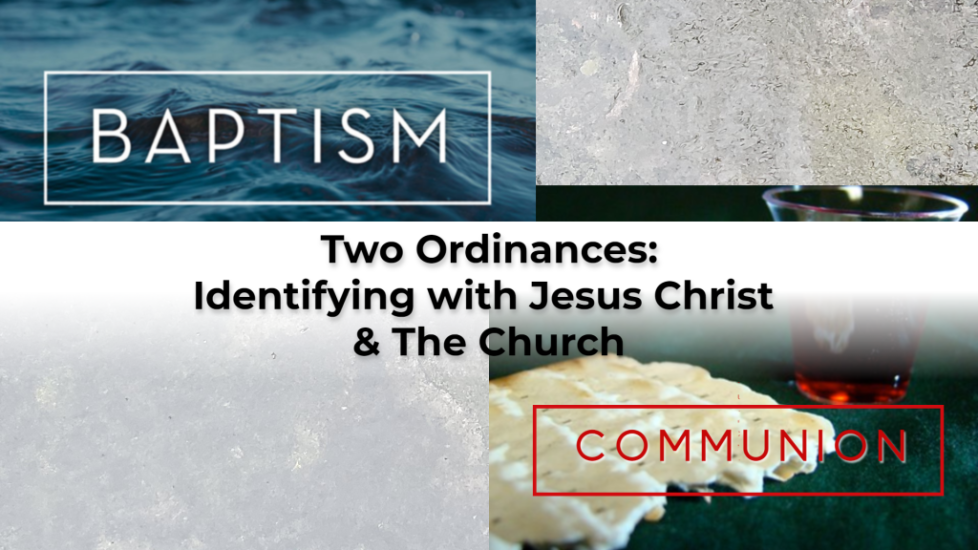
Today we were due to start a new section of the Gospel of Matthew. But since on this special Lord’s Day we are observing both baptism and the Lord’s Supper, I thought it would be good to remind ourselves of the meaning and importance of these church ordinances. So, we will wait until next time to begin Matthew 13. While I prefer to preach expositional sermons verse-by-verse through a book of the Bible, sometimes, it is helpful to pull together verses from the scripture that speak to a specific topic to help us get a wider biblical understanding. So, that is what we will briefly do today. I will not be able, in the time we have today, to present a comprehensive study, rather I intend to simply give a quick overview of the ordinances of Baptist and the Lord’s Supper.[i]
Let me begin by making some statements about ordinances. Like most Baptists, we refer to Baptism and the Lord’s Supper as “ordinances” because they were especially “ordained” or ordered by Jesus. Other churches will sometimes use the term “sacraments” instead. This term comes from the Latin word sacramentum referring to a rite or oath of allegiance. In the sense that we observe baptism and the Lord’s Supper in allegiance to our Lord Jesus, we could call these events sacraments. But largely due to the tradition of the Roman Catholic Church, that term has taken on a different meaning. For them, a sacrament is a rite which, by its very nature conveys the grace of God. In other words, some churches teach that when a person is baptized or takes communion, by that act itself, salvation is imparted and sins are forgiven. We believe the Bible teaches that salvation is a gift of God’s grace through faith alone. So, to avoid confusion, we don’t usually use the term sacrament.
Baptism and the Lord’s Supper are symbols, or visual aids of the gospel as they retell the story of redemption. Church ordinances are determined by three factors: they were instituted by Christ, taught by the apostles, and practiced by the early church. And therefore, we are called to observe them today.
Baptism in the Gospels
In the Gospels, baptism begins with John, the prophet God sent to prepare for the coming of the Messiah. Mark 1:4 says, “John came baptizing in the wilderness and preaching a baptism of repentance for the remission of sins.” Baptism was a sign that people repented from their sin. Mark 1:7-8 says, “And he preached, saying, “There comes One after me who is mightier than I, whose sandal strap I am not worthy to stoop down and loose. I indeed baptized you with water, but He will baptize you with the Holy Spirit.”” So, baptism was a sign that people repented and believed in the coming Messiah.
In Mark 1:9-11, Jesus Himself was baptized: “It came to pass in those days that Jesus came from Nazareth of Galilee, and was baptized by John in the Jordan. And immediately, coming up from the water, He saw the heavens parting and the Spirit descending upon Him like a dove. Then a voice came from heaven, ‘You are My beloved Son, in whom I am well pleased.’”Jesus had no need to repent because He had no sin. Yet, as Matthew records, Jesus was baptized “to fulfill all righteousness.” In being baptized, Jesus identified Himself with sinners and with the righteousness He would provide to all who repent and believe. In this way, baptism depicts the work of the Father, Son, and Spirit in the salvation of those Jesus came to save. The Father loves the Son and sends Him into this world to seek and save the lost (Luke 19:10). The Son gives His life on the cross for the forgiveness of our sins. The Spirit convicts of sin (John 16:8) and draws the believer to the Father through the Son. All the glorious truth of the mercy of God through Jesus Christ is on display at His baptism.
How did baptism become a lasting ordinance for the church? In Matthew 28:19-20, we see that Jesus commands new disciples to be baptized: “Go therefore and make disciples of all the nations, baptizing them in the name of the Father and of the Son and of the Holy Spirit, teaching them to observe all things that I have commanded you; and lo, I am with you always, even to the end of the age.” Amen.” Simply put, we believe in baptism, and we practice it, because Christ commanded it. Making disciples of all nations includes baptizing them.
The early church in the Book of Acts practices baptism. There are ten accounts of obedience to this ordinance in Acts alone. Let me point out a couple of them.
Baptism in the Book of Acts
In Acts 8, the evangelist Philip preached Jesus to an Ethiopian eunuch. Then Luke records, “Now as they went down the road, they came to some water. And the eunuch said, “See, here is water. What hinders me from being baptized?” Then Philip said, “If you believe with all your heart, you may.” And he answered and said, “I believe that Jesus Christ is the Son of God.” So he commanded the chariot to stand still. And both Philip and the eunuch went down into the water, and he baptized him.”(Acts 8:36-38).
When should I get baptized? As soon as possible after conversion. As in the case of the Ethiopian eunuch, it often happened immediately after someone got saved. Remember, baptism is not a mark of spiritual maturity, but rather a statement of personal identification with Jesus Christ. You don’t have to wait until your spiritual life is where you want it to be. It’s an obedience issue, not a maturity issue. Baptism has always been a sign of submission to the Lordship of Jesus Christ.
When Paul preached the gospel in Corinth, Acts 18:8 says, “Then Crispus, the ruler of the synagogue, believed on the Lord with all his household. And many of the Corinthians, hearing, believed and were baptized.”
Here’s one overriding truth from how it was practiced in the book of Acts – baptism always takes place after someone believes! This is why we practice “believer’s baptism”. The order is important—believe and be baptized. In the Bible, belief always precedes baptism. So, this is why we do not baptize babies. Without the ingredient of faith, baptism becomes just an empty church ritual. Someone put it this way: “Unless you have already come to faith in Jesus, being baptized does no more than get you wet.”
Someone might ask, “If I was baptized as an infant do I need to be baptized again as a believer?”
Yes. Since baptism is a public statement of your own personal faith in Jesus Christ, then it’s important to make your statement as a believer. Actually, you’re not really being baptized again because when you were sprinkled as a baby it wasn’t biblical baptism. When you are baptized as a believer by immersion, it will be your first baptism.
Meaning and Mode of Baptism
Why do we baptize by immersion in water when some other churches baptize by pouring or sprinkling? First, the primary meaning of the word “baptize” is “to dip, plunge, or immerse.” Interestingly, while there were Greek words for sprinkling or pouring that were available; the writers of Scripture chose the word baptizo, or immersion.
Also, baptism by immersion gives us a picture of the Gospel that other modes do not. In Romans 6, Paul writes,
3Or do you not know that as many of us as were baptized into Christ Jesus were baptized into His death?4Therefore we were buried with Him through baptism into death, that just as Christ was raised from the dead by the glory of the Father, even so we also should walk in newness of life.5For if we have been united together in the likeness of His death, certainly we also shall be in the likeness of His resurrection, (Rom. 6:3-5).
Water baptism is a picture of the spiritual reality that occurs at salvation when we believe in Jesus Christ. When we are saved, we are united with Christ. By faith, we have died with Him and been raised to a new life with Him. As you stand in the water waiting to be baptized, you symbolize Jesus dying on the cross. As you are lowered into the water, you’re providing a visual demonstration that Jesus was buried in the tomb. As you come out of the water, you’re picturing Jesus rising from the dead. And you are declaring that Jesus has done that spiritual work in you. I have died with Christ to sin, my old life has been buried, I am raised to a new life with Christ.
If you have believed on the Lord Jesus Christ, have you followed Him in baptism?
The second ordinance of the church is…
The Lord’s Supper
In Exodus 12 we learn about the roots of Passover. The head of the family was to take a lamb without blemish and slaughter it at twilight and then the blood was to be put on the sides and tops of the doorframes. That same night they were to roast the lambs, and gather bitter herbs and unleavened bread. They were to eat in haste and be ready to travel because God was going to judge the Egyptians by killing their firstborn. Only those who were under the blood of the lamb would be “passed over.”
After being freed from the Egyptians, God’s people enjoyed a covenantal relationship with the Almighty for hundreds of years. As you read their history however, you quickly discover that they disobeyed and ruptured their relationship with Him time and again. When we come to the prophet Jeremiah we discover that God promised a new covenant: “Behold, the days are coming, declares the Lord, when I will make a new covenant with the house of Israel and the house of Judah” (Jeremiah 31:31).
The night before Jesus was crucified He had a final Passover meal with His closest followers.
Luke 22:14-16 says, “When the hour had come, He sat down, and the twelve apostles with Him. Then He said to them, “With fervent desire I have desired to eat this Passover with you before I suffer; for I say to you, I will no longer eat of it until it is fulfilled in the kingdom of God.”” Jesus was set on celebrating this supper because He knew the meaning behind this final meal.
During this Passover meal, Jesus changed the ritual that the Jews had always done because Jesus Himself was the fulfillment of the Passover. So Matthew 26 records,
26 And as they were eating, Jesus took bread, blessed and broke it, and gave it to the disciples and said, “Take, eat; this is My body.” 27 Then He took the cup, and gave thanks, and gave it to them, saying, “Drink from it, all of you. 28 For this is My blood of the new covenant, which is shed for many for the remission of sins. 29 But I say to you, I will not drink of this fruit of the vine from now on until that day when I drink it new with you in My Father’s kingdom.” (Matt. 26:26-29).
The Savior is saying that this bread is a symbol for His body that was about to be broken for them on the cross. The cup represents His blood, His death, which would inaugurate the new covenant.
In the early church in Acts, we find that the church practiced the Lord’s Supper, calling it, “the breaking of bread” (Acts 2:42; 20:7; cf. 1 Cor. 10:16). It was always practiced in a church community as they gathered for worship and instruction, not individually. As far as we know, this memorial meal was celebrated with dignity and decorum, until we get to the chaotic and confused church in Corinth. Because of their abuses (1 Cor. 11:17-22), Paul finds it necessary to correct the Corinthian church concerning the Lord’s Supper in 1 Corinthians 11. In doing so, Paul gives us some timeless principles for observing the Lord’s Supper.
We observe the Lord’s Supper …
1. To Remember – “Look Back” (1 Cor. 11:23-25).
Paul received these instructions from Jesus Himself: “For I received from the Lord that which I also delivered to you: that the Lord Jesus on the same night in which He was betrayed took bread; and when He had given thanks, He broke it and said, “Take, eat; this is My body which is broken for you; do this in remembrance of Me.” In the same manner He also took the cup after supper, saying, “This cup is the new covenant in My blood. This do, as often as you drink it, in remembrance of Me.”” (1 Cor. 11:23-25). Twice in this passage we’re told to remember what Jesus did for us. The Lord’s Supper is a reminder of the Gospel—that Jesus Christ died for our sins. The bread and the cup are tangible representations of a deep spiritual reality.
When we take the Lord’s Supper, let’s pause and remember what Jesus did for us.
Also we observe the Lord’s Supper…
2. To Rejoice – “Look Forward” (1 Cor. 11:26).
“For as often as you eat this bread and drink this cup, you proclaim the Lord’s death till He comes.” Not only do we look back and remember His cross, but we also look forward and proclaim His crown. To “proclaim” means, “to announce publicly, to declare, publish, and perpetuate.” The bread and the cup tell the story of redemption and look ahead to the culmination of history. Jesus said He would “drink it new with you in My Father’s kingdom” (Matt. 26:29). We eat and drink now in anticipation of a glorious heavenly banquet to come.
When we take the Lord’s Supper, let’s pause and rejoice that Jesus is coming again.
And then, we observe the Lord’s Supper …
3. To Repent – “Look Within” (1 Cor. 11:27-28).
“Therefore whoever eats this bread or drinks this cup of the Lord in an unworthy manner will be guilty of the body and blood of the Lord. But let a man examine himself, and so let him eat of the bread and drink of the cup.” Once we remember by looking back, and rejoice by looking forward, we can’t help but look inside and see our need to repent. Paul is cautioning us about approaching the Lord’s Table in a trite manner. Take time before coming to the Lord’s Table to examine your attitudes, actions, and your affections. Pause and repent of those sins the Lord shows you.
Finally, we observe the Lord’s Supper…
4. To Reconcile – “Look Around” (1 Cor. 11:29-34).
The Corinthians were not showing love to one another in their observance of the Lord’s Supper. They were split into factions (1 Cor. 11:18). They did not wait to eat together and had no concern for others who had nothing (1 Cor. 11:21-22). Listen, the Lord’s Supper is a time for community in the body of Christ. We need to make sure we’re living in unity with each other. Jesus has made us one, so we need to act accordingly. 1 Corinthians 10:17 says, “For we, though many, are one bread and one body; for we all partake of that one bread.”
Is there anyone you need to ask forgiveness from? Anyone you need to extend forgiveness to?
In the Bible, dining together signifies two things: appropriation and participation. By eating the bread and drinking from the cup we’re saying that we have received redemption and we’re declaring that we are in community with one another and with the Lord.
Conclusion
When our church practices the ordinances of baptism and the Lord’s Supper, we obey the command of Jesus, and proclaim the Gospel of Jesus. What a gift from our Lord these precious ordinances are for us!
14 When the hour had come, He sat down, and the twelve apostles with Him. 15 Then He said to them, “With fervent desire I have desired to eat this Passover with you before I suffer; 16 for I say to you, I will no longer eat of it until it is fulfilled in the kingdom of God.”
17 Then He took the cup, and gave thanks, and said, “Take this and divide it among yourselves; 18 for I say to you, I will not drink of the fruit of the vine until the kingdom of God comes.”
19 And He took bread, gave thanks and broke it, and gave it to them, saying, “This is My body which is given for you; do this in remembrance of Me.”
20 Likewise He also took the cup after supper, saying, “This cup is the new covenant in My blood, which is shed for you.
Many of you have asked me what book of the Bible we are going to study next since we have completed our exposition of the book of Genesis. I am so glad you asked! It thrills my heart that you have the expectation that we will open another book from Holy Scripture, read it, explain it, and apply it. Your anticipation encourages me because I you understand that I preach expository sermons verse-by-verse through whole books or sections of the Bible because of what the scripture is, the word of God. It is God’s revelation of Himself, His person, His purposes, and His provision of salvation through His Son Jesus Christ.
Well, I will leave you in suspense no longer. Next week we will begin a study through the Gospel of Matthew. I’ll say more about why I landed on that book next week. But now you have a heads-up so you can begin reading and studying on your own in preparation for Sunday.
I am still reading, studying, and preparing for this sermon series. So today will be a one-off sermon. Since it has been our practice to observe the Lord’s Supper on the first Sunday of each month, and this is the first Sunday in May, I thought I would take this opportunity to teach you again briefly about the Lord’s Supper before we come to the Lord’s Table.
I have chosen Luke’s account for our text. Luke 22:14-20 is rightly called the Last Supper. Jesus Himself tells His disciples that it is the final time that He will observe the Passover meal with His disciples until it is fulfilled in the Kingdom of God. Here Jesus brings to an end the old covenant and inaugurates the new covenant. He observes the final Passover and inaugurates the Lord’s Supper. This short text from Luke 22 has just two parts: 1) in Luke 22:14-18 Jesus celebrates the final Passover with His disciples; and 2) in Luke 22:19-20 Jesus institutes the observance of the Lord’s Supper.
My prayer is that this text will prepare us to share in the Lord’s Table with a renewed significance and devotion to our Lord Jesus Christ.
1. The Final Passover (Luke 22:14-18)
Luke 22:14 marks a transition in the life and ministry of Jesus. Jesus knew that Judas Iscariot had already plotted with the chief priests to betray Jesus (Luke 22:1-6). So, Jesus had sent Peter and John into Jerusalem to prepare the Passover in a large furnished upper room that only He knew about (Luke 22:7-13). With the simple words, “When the hour had come,” Luke signals for us that the divine timetable for Jesus’ death had finally arrived. Way back in Luke 9:51 Jesus had “steadfastly set His face to go to Jerusalem” for the last time in His earthly ministry. Everything in Luke’s Gospel has been anticipating this hour, this time. Jesus had repeatedly told His disciple, “Behold, we are going up to Jerusalem, and all things that are written by the prophets concerning the Son of Man will be accomplished. For He will be delivered to the Gentiles and will be mocked and insulted and spit upon. They will scourge Him and kill Him. And the third day He will rise again.” (Luke 18:31-33; see also Luke 9:22).
By the divine predetermined plan, Jesus is now in Jerusalem preparing for His death. A lot happens on this final night. But from Luke’s perspective, one moment clearly ascended above the rest. It was the moment when Jesus
totally revolutionized their understanding of the Passover by explaining it in terms of His death for sin.
Many people understand that at the Last Supper Jesus changed the Passover into the Lord’s Supper and that does have some truth to it. But saying it that way almost assumes that Jesus changed the entire focus of the Passover. More accurately we could say that through His death and resurrection Jesus fulfilled the Passover. In reality, Passover was always about Jesus just as the whole Old Testament was about Him (Luke 24:44-45; John 5:39).
The beginnings of the Passover go back to Exodus 12. In the book of Exodus, the nation of Israel has been in Egypt for over 400 years. They are no longer welcome guests as they were in the days of Joseph in Genesis. Now they are enslaved and oppressed. God sent Moses to lead them out of their captivity into Canaan, the land God promised by covenant to Abraham, Isaac, and Israel. When Moses brought the word from God to Pharaoh, “Let My people go, …” (Exo. 5:1), Pharaoh challenged Moses: “Who is the LORD, that I should obey His voice to let Israel go?” The ten plagues were God’s answer to this question. The final plague was the death of the firstborn sons of the Egyptians, which resulted in the release of the Israelites. The firstborn sons of the Israelites were spared by means of the first Passover celebration. The Passover lambs were slaughtered, and some of the blood was placed on the doorposts (Exo. 12:7). When the death angel saw the blood on the doorposts, he “passed over” the house (Exo. 12:13). This celebration was made an annual feast for the Israelite nation (Exo. 12:14).
It is important to note that even the original Passover was not to protect Israel from the wrath of Pharaoh but from the judgment of God. The Passover was never solely about deliverance from Egypt, but rather about deliverance from sin and the judgment of God upon sin. So, John the Baptist would declare that Jesus was “the Lamb of God who takes away the sin of the world” (John 1:29).
It was always a picture of Jesus although the Jews had never really grasped that. But after this night and what Jesus would accomplish through His death and resurrection, we can see the true significance of the Passover. Let’s notice a few things about this final Passover.
First, normally the Passover meal was a family celebration and not just a gathering of men. It is significant that Luke records, “…He sat down, and the twelve apostles with Him” (Luke 22:14). That Luke calls the twelve not just disciples but apostles suggests that this event has particular significance for the church, of which the apostles were the foundation (Ephesians 2:20). Here is one of the evidences that while this meal had implications for the Jews, it was designed also for the church.[1] The church is the new family of God. Every time we gather for the Lord’s Supper we do well to remind ourselves of that. We belong to the family of God—brothers and sisters with one another with God as our Father, Jesus Christ as our Lord and Savior, and the Holy Spirit indwelling us.
Second, look at the intense desire of our Lord to eat this meal with them: “Then He said to them, ‘With fervent desire I have desired to eat this Passover with you before I suffer.’” (Luke 22:15). This Passover meal was the final observance of this feast, for all that it had memorialized was about to be greatly overshadowed by the work of the cross. All that the Passover anticipated was, in fact, achieved or made certain. The New Testament declares that Jesus is our Passover Lamb (1 Cor. 5:7). There is no longer any need to put a lamb to death for it has been fulfilled by the sacrifice of Christ. Jesus intensely desired to share this Passover with them as He foresaw His suffering and death. But the expectation of His suffering was not with dread or dismay—instead, it was with eagerness for what He was about to accomplish. Jesus is filled with anticipation as He says, “for I say to you, I will no longer eat of it until it is fulfilled in the kingdom of God.” (Luke 22:16). Jesus essentially says the same thing again in Luke 22:18, “for I say to you, I will not drink of the fruit of the vine until the kingdom of God comes.”
Jesus saw this Passover as prophetic, as anticipatory of the coming of the kingdom, and in this, He could rejoice. The old covenant, being fulfilled in Christ, was to be set aside. The Kingdom, while still future, was certain to be established, because Messiah, at His first advent, had laid its foundation by His sacrificial death (cf. Isaiah 52:13–53:12). When Jesus once again takes up the cup, it will be in His Kingdom (verses 16,18).
This is the end, the fulfillment of the Passover. Jesus said He would never again eat or drink the Passover until the kingdom of God comes. Someday, in the consummated Kingdom, Jesus will eat and drink the Passover again—but not until then.
The Bible teaches that the Kingdom of God has been inaugurated with the coming of Jesus Christ, the King of Israel. All of us who believe in Jesus Christ are citizens of that Kingdom today. This is the spiritual reality of the Kingdom of God. But the consummation of God’s Kingdom will not come until Christ returns to earth. Then Christ will reign on earth in His Kingdom for a thousand years (Rev. 20). We call this the millennium or the Millennial Kingdom. So, although there is certainly a spiritual element of the Kingdom here today, we still look for more—a literal earthly kingdom in which all the kingdom promises and prophecies of both the Old Testament and New Testament will be fulfilled. Jesus is looking forward to that day when the Passover is fulfilled in the Kingdom of God.
The eating of the first Passover involved the sacrifice of the Passover lamb to deliver the first-born sons of Israel from death. It was done as well as a preparatory step to the exodus, their release from Egypt by Pharaoh, their crossing of the Red Sea, and their entrance into the promised land. Thus, the sacrifice of the Passover lamb was not focused only on the preservation of the lives of the Israelites, but on the possession of the promised kingdom. In the same way, Jesus rejoiced in the assurance that the kingdom would come in all its fullness.
Hebrews 12:2 speaks about Jesus, “…who for the joy that was set before Him endured the cross, despising the shame, and has sat down at the right hand of the throne of God.”
What joy was set before Him? The joy of a purchased bride; the joy of a redeemed humanity; the joy of a consummated kingdom; the joy of a His coming reign. That is what Jesus is doing here on the night before He would die. He is looking forward to the kingdom He will purchase. He is looking forward to the kingdom He will redeem. He is eagerly anticipating the day when all the saints are redeemed and He returns and reigns on the earth and celebrates with His own.
We certainly enjoy the Lord’s Supper today. We celebrate with a warmth and gratitude that fills our hearts as we remember Christ and His sacrifice. But can you imagine how good it will be to observe the Passover, the Lord’s Supper with Jesus in the Kingdom? Can you imagine how good it will be when sin is gone? Can you imagine how good it will be when we dwell in a land where righteousness dwells?
That is what Jesus is anticipating here. Jesus knows what He is about to do. He is doing it out of great love and obedience. He is doing it with joy as He looks to the fulfillment of His sacrifice.
2. The First Communion (Luke 22:19-20)
Here is where Jesus’ explanation reaches its climax. Jews had been taking the Passover for nearly 1500 years but it was not until this night that God finally explained what it was about. It wasn’t just about deliverance from Egypt it was about deliverance from sin. It was about the cross and the atonement which Christ purchased for us.
And He took bread, gave thanks and broke it, and gave it to them, saying, “This is My body which is given for you; do this in remembrance of Me.”
It is so monumental what Jesus is doing here. With these few simple statements, Jesus ends the Old Covenant and launches the new. Jesus speaks of His body as an offering, a sacrifice given for them. “This is My body which is given for you.” Jesus wasn’t saying that the bread was literally His body, clearly, it was a symbol. At the time, He was still using His body.
But why the body? What does that mean? The writer of Hebrews makes it clear. Hebrews 10:4-10
4 For it is not possible that the blood of bulls and goats could take away sins. 5 Therefore, when He came into the world, He said: “Sacrifice and offering You did not desire, But a body You have prepared for Me. 6 In burnt offerings and sacrifices for sin You had no pleasure. 7 Then I said, ‘Behold, I have come–In the volume of the book it is written of Me–To do Your will, O God.’ ” 8 Previously saying, “Sacrifice and offering, burnt offerings, and offerings for sin You did not desire, nor had pleasure in them” (which are offered according to the law), 9 then He said, “Behold, I have come to do Your will, O God.” He takes away the first that He may establish the second. 10 By that will we have been sanctified through the offering of the body of Jesus Christ once for all. (Heb 10:4-10)
What was the body? It is where Jesus satisfied the righteous requirements of God. God didn’t want a sheep or a goat or a bull, God wanted a holy life. Jesus took on flesh and lived that holy life, obedient to His Father in all things. And here He tells the disciples, “I DID IT FOR YOU.” All of My obedience… All of My suffering… All of My resistance to temptation…
IT WAS FOR YOU.
Jesus satisfied the righteous requirements for you. And He told them to eat it. Why eat it?
52 The Jews therefore quarreled among themselves, saying, “How can this Man give us His flesh to eat?” 53 Then Jesus said to them, “Most assuredly, I say to you, unless you eat the flesh of the Son of Man and drink His blood, you have no life in you. 54 “Whoever eats My flesh and drinks My blood has eternal life, and I will raise him up at the last day. 55 “For My flesh is food indeed, and My blood is drink indeed. 56 “He who eats My flesh and drinks My blood abides in Me, and I in him. 57 “As the living Father sent Me, and I live because of the Father, so he who feeds on Me will live because of Me. 58 “This is the bread which came down from heaven–not as your fathers ate the manna, and are dead. He who eats this bread will live forever.” (John 6:52-58)
It is symbolic of acceptance. It is symbolic of need. It is an act of worship. They were to eat showing that they needed this righteousness that Jesus alone had obtained.
And Jesus said that when they eat it “do THIS in remembrance of Me.” No longer would the meal remind them of just the Exodus from Egypt and deliverance from slavery—it would remind them of Jesus’ death and their salvation from sin. What truth did the Passover convey? You escape judgment only by death, and the death can be the death of an innocent substitute. Here is the one who ends all sacrifices, for He offers the sacrifice which fully satisfies God.
Then in Luke 22:20, Jesus said “20 Likewise He also took the cup after supper, saying, “This cup is the new covenant in My blood, which is shed for you.””
That wine they were drinking was symbolic of the blood of Jesus. It wasn’t His actual blood; it was a symbol. It looked to His atoning work on the cross. He spoke of His coming death where He would pay the penalty of our sin against God.
THE BREAD was His righteous life where He fulfilled what we should have been and were not. THE WINE was His blood which was spilled to satisfy what we were and should not have been. And Jesus says that this together ushers in “the new covenant”.
Jeremiah 31:31-34 prophesies of that New Covenant:
31 “Behold, the days are coming, says the LORD, when I will make a new covenant with the house of Israel and with the house of Judah– 32 “not according to the covenant that I made with their fathers in the day that I took them by the hand to lead them out of the land of Egypt, My covenant which they broke, though I was a husband to them, says the LORD. 33 “But this is the covenant that I will make with the house of Israel after those days, says the LORD: I will put My law in their minds, and write it on their hearts; and I will be their God, and they shall be My people. 34 “No more shall every man teach his neighbor, and every man his brother, saying, ‘Know the LORD,’ for they all shall know Me, from the least of them to the greatest of them, says the LORD. For I will forgive their iniquity, and their sin I will remember no more.” (Jer. 31:31-34)
The old covenant was instituted by Moses, where He read the Law and then sprinkled the people with blood to ratify the covenant. That covenant was contingent upon the people obeying God. You know they broke that covenant and brought wrath upon themselves.
Jesus came and ushered in the new covenant that DID NOT depend upon the righteousness of the people. RATHER the new covenant said that GOD WOULD DO for the people what they could not do for themselves. And on this day Jesus says, “This is it.” This is the new covenant. This is Me doing for you what you cannot do for yourselves. I will pay for your sin. I will give you My righteousness.
Eat this bread and accept My righteousness. Drink this wine and accept My atonement. And every time you do it, remember what I did for you. And as you do it look forward to the day when we will again do it together. That is how Jesus observed the final Passover and the first Lord’s Supper with His disciples.
And this morning we partake together just as the disciples did. We see this bread and we see this juice. It is symbolic of His body and His blood. It is His righteous life… It is His atoning death… We eat it because we need it. We eat it casting aside the old covenant of works and embracing this new covenant of grace.
We eat it and we worship Jesus for what He did. We eat it and we anticipate the fulfillment when we will eat it with Him in His kingdom. May we approach the Lord’s table as the Savior did, with great joy and anticipation, looking back, but also looking forward to that day when the kingdom of God shall come.
Glen Scrivener in an article on Genesis 22 asks that insightful question. He writes,
Sometimes Christians are the worst at answering that question. Some will reply, “The Maker’s Instruction Manual,” or “God’s Road Map.” Creative types have even given us an acronym: BIBLE stands for “Basic Instructions Before Leaving Earth.” Most often people, whether Christian or not, see it essentially as a moral guidebook. But if we read Genesis 22 through that lens, we’re in for a shock. When God says, “Sacrifice your son,” how should we react? Go and do likewise? No. If we copied or endorsed each practice in the Bible, we’d be in a terrible mess (not to mention jail). Genesis 22 should be read the way the whole Bible should be read. First and foremost it’s a biography—the Spirit’s testimony to the Son. And when we see it this way, the entirety of Scripture comes into focus. (Abraham’s Sacrifice: Genesis 22).
The Bible is not just a rule book or a collection of stories with morals to follow. To be sure, the Bible has a lot to say about how people ought to live. The Bible emphasizes faith in God and obedience to His commands. It is full of examples, both good and bad. But all of this ethical teaching rests on a foundation of divine revelation. The very God who created the universe has intervened in history. He has revealed Himself to people. He has spoken. We have the written record of His self-revelation. The Holy Scripture is the Word of God. This is what we have in our Bibles. It is God’s revelation of Himself to mankind.
Yes, God used human authors to write the 66 books which make up the Bible. But these diverse writings contain a unified message from our creator. As the apostle Peter writes, “knowing this first, that no prophecy of Scripture is of any private interpretation, for prophecy never came by the will of man, but holy men of God spoke astheywere moved by the Holy Spirit” (2 Pet. 1:20-21). Paul agrees, “All Scripture is given by inspiration of God, and is profitable for doctrine, for reproof, for correction, for instruction in righteousness, that the man of God may be complete, thoroughly equipped for every good work.” (2 Tim. 3:16-17). All scripture is God-breathed, inspired by the Holy Spirit. Holy men of God wrote as they were moved (or carried long) by the Holy Spirit of God. So the Bible also has a divine author, the Holy Spirit of God.
What is the focus of God’s self-revelation in the Bible? It is salvation through Jesus Christ, the Son of God. Jesus said, “You search the Scriptures, for in them you think you have eternal life; and these are they which testify of Me” (John 5:39). Specifically Jesus taught this about the scriptures, “all things must be fulfilled which were written in the Law of Moses and the Prophets and the Psalms concerning Me … Thus it is written, and thus it was necessary for the Christ to suffer and to rise from the dead the third day, and that repentance and remission of sins should be preached in His name to all nations, beginning at Jerusalem,” (Luke 24:44, 46). The Bible teaches that our sin had separated us from the Holy God and condemned us under His righteous judgment. But God sent His Son Jesus Christ who took away our sin by bearing its punishment in our place. The Bible is about God saving sinners through the death and resurrection of Jesus Christ. Everything in the Bible contributes to our understanding of God’s eternal plan of salvation in Jesus Christ.
So central is God’s plan of salvation in Jesus Christ, so crucial was it that His people understand it, that God wove into the very history of His people in the Bible many anticipations of the Savior’s person and work, especially the incarnation, suffering, death and resurrection of the Lord Jesus. This is what for ages has been referred to as typology, prophecy in the form of persons, places, things, and events.
What do we mean by “types”?
The Apostle Paul gives the answer in 1 Corinthians 10. There Paul writes about the children of Israel and the “things” (1 Cor. 10:6) that happened to them in the Exodus from Egypt and their time in the wilderness. In 1 Corinthians 10:11 he writes, “Now all these things happened to them as examples, and they were written for our admonition, upon whom the ends of the ages have come.” Paul indicates that while the Old Testament is a record of the history of the children of Israel, the events of that “history” are more than mere events; they are typical of the plan of salvation as revealed in the New Testament. They are not mythical nor allegorical, but they really happened to Israel and were recorded for our instruction in salvation through Christ.
The writer to the Hebrews tells us that these “types” are but “… a shadow of the good things to come, and not the very image of the things…” (Heb. 10:1). That is, the Old Testament “types” are but “shadows.” But there cannot be a “shadow” without some “real thing” to make it. And a “shadow” is not the “very image of the thing,” for a shadow is an imperfect representation of the thing it reveals. So the Old Testament types are “shadows” in the sense that they are not the “real thing,” and are but imperfect revelations of it (Larkin).
Some examples of Old Testament types that foreshadow our salvation in Christ can be identified with the comparative words “as” and “so”. For example in 1 Corinthians 15:22 Paul writes, “For as in Adam all die, even so in Christ all shall be made alive.” Adam is compared to Christ. John 3:14 says, “And as Moses lifted up the serpent in the wilderness, even so must the Son of Man be lifted up.” Moses lifting up the serpent is a type of Christ being lifted up on the cross so that those who look to Him believing will be saved.
It is the Lord’s sovereign rule of history and His infinite and exact knowledge of the future that makes typology possible. God has written enacted prophecy into the very history of His people in the Old Testament. He did it so that we would see Christ, the Savior of the world, and believe in Him for the forgiveness of sins and eternal life.
Now obviously we have such a prophetic type before us in the account of Abraham sacrificing his son Isaac. The symbolism is so obvious that no one who believes the scripture to be the Word of God has ever doubted that we have in this account of Abraham sacrificing Isaac an enacted prophesy of the death of Jesus Christ, the true seed of Abraham (Rayburn). Think of how many parallels there actually are, many of which the Bible either explicitly or implicitly calls our attention.
Parallels between Isaac and Christ
Notice the powerful parallels between Isaac and Christ. Isaac is one of the clearest types of Christ in the Old Testament (Dr. Larry Petton).
Both fulfilled PROMISES:
Isaac was the long-promised son, the seed of Abraham (Genesis 12:3; 13:15-16; 15:5; 17:7).
Jesus was the long-promised Messiah, the seed of the woman, the seed of Abraham, and Son of God (Genesis 3:15; 13:3, Matt. 1:1; Gal 4:4).
Both were the ONLY BELOVED SON of their father:
God said to Abraham that Isaac was “your son, your only son, whom you love…” (Genesis 22: 2).
God said of Jesus, “This is My beloved Son, in whom I am well pleased” (Matthew 3:17).
When we hear God call Isaac “your only son” we also can’t help but think of Jesus’ words in John 3:16, “For God so loved the world that He gave His only begotten Son, that whoever believes in Him should not perish but have everlasting life.”
Both had a conception and birth that was PRE-ANNOUNCED (Genesis 18:10; Luke 1:30–31).
Both had a MIRACULOUS BIRTH:
Isaac was born to a mother who not only was very old and passed the age of child-bearing, but whose womb had been barren all her life (Genesis 11:30; 18:11). When Sarah laughed in unbelief at God’s announcement, the Angel of the Lord asked, “Is anything too hard for the LORD?” (Gen. 18:14).
Jesus was born to a mother, Mary, who was a virgin and conceived by the Holy Spirit (Luke 1:34-35). When Mary asked how she could give birth as a virgin, the angel said, “For with God nothing will be impossible” (Luke 1:37).
Both were NAMED before their birth (Genesis 17:19; Matthew 1:21).
Both were MOCKED and persecuted by their own kindred (Genesis 21:9; Mark 15:29–32; Galatians 4:29).
Both were sacrificed near the very SAME PLACE (Genesis 22:2; Matthew 27:33).
God told Abraham to go to the land of Moriah (Gen. 22:2). The only other mention of Moriah is 2 Chronicles 3:1 where it says, “Now Solomon began to build the house of the LORD at Jerusalem on Mount Moriah, where the LORD had appeared to his father David, at the place that David had prepared on the threshing floor of Ornan the Jebusite.” This is where the temple was built in Jerusalem. Jesus said that He must die at Jerusalem (Matt. 20:18; Luke 13:33).
Both had a THREE-DAY experience:
Isaac had a 3-day journey with his father to Mt. Moriah (Gen. 22:4).
Jesus had 3 days from the cross to the grave to the resurrection (Luke 24:46).
Both were accompanied by TWO MEN:
Isaac by two servants (Genesis 22:3)
Jesus by two thieves (Matthew 27:38)
Both carried their own WOOD:
Isaac carried the wood for his own sacrifice (Genesis 22:6).
Jesus carried His own cross to His death (John 19:17).
Both were BOUND:
Abraham bound Isaac and laid him on the altar (Gen. 22:9).
Jesus was bound before He was taken to the cross (John 18:12).
Both SUBMITTED to their father:
Isaac willingly laid down his life, submitting to his father (Genesis 22:9).
Jesus submitted to his Father’s will and laid down his life for our sin (Luke 22:42, John 10:18; Romans 5:8).
Both asked a QUESTION of their father:
Isaac asked Abraham “Look, the fire and the wood, but where is the lamb for a burnt offering?” (Gen. 22:7).
Jesus cried out from the cross “My God, my God, why have you forsaken me?” (Matthew 27:46).
Both rose from the place of death in RESURRECTION:
Isaac was raised in a figurative sense by the faith of Abraham (Heb. 11:19).
Jesus literally rose bodily from the dead on the third day (Matthew 28:6-7).
Both would have their SEED multiplied
God would multiply Abraham’s seed and bless all nations through Isaac (Gen. 22:17).
The gospel of Jesus would be preached to all nations bringing many sons to glory (Isa. 53:10-11; Matt. 28:19; Gal. 3:8; Heb. 2:10).
What a beautiful illustration of the infinite wisdom of God and of the inspiration of God’s holy Scriptures! Think about it. There are no accidents or coincidences within the will of God. The story of Abraham and Isaac was given to us to show us God’s plan of salvation through the sacrifice of His only Son, Jesus Christ, for our sin. Whereas Isaac was spared death, Jesus Christ actually died in our place. But God allowed Abraham to go right up to the point of killing Isaac to illustrate the fact that God Himself would one day sacrifice His only begotten Son for the sin of the world.
God provides the substitute
But not only is Isaac a picture of Christ, but so is the ram. Notice Genesis 22:13, “Then Abraham lifted his eyes and looked, and there behind him was a ram caught in a thicket by its horns. So Abraham went and took the ram, and offered it up for a burnt offering instead of his son.” Remember that Abraham told Isaac, “My son, God will provide for Himself the lamb for a burnt offering” (Gen. 22:8); and, of course, God did. The ram was offered “instead of” or “in place of” Isaac. It was the substitute. Therefore, “… Abraham called the name of the place, The-LORD-Will-Provide; as it is said to this day, “In the Mount of the LORD it shall be provided.”” What would God provide? A substitute sacrifice. The doctrine of substitutionary atonement was not invented by Christian theologians. Even Abraham believed that God would save his people from death—the death that is due to all of us because of our sin—and this God would do by providing a substitute in our place. “In the Mount of the LORD it shall be provided,” and it was. In that very place two thousand years after Abraham, 1500 years after Moses wrote, God provided Himself the lamb for the sacrifice.
Jesus is clearly presented to us in the Bible as “The Lamb of God who takes away the sin of the world!” (John 1:29). He is the one that Isaiah wrote about when he said, “He was led as a lamb to the slaughter” (Isaiah 53:7). He is the one the Book of Revelation calls “the Lamb slain from the foundation of the world” (Rev. 13:8). On the cross, God “made Him who knew no sin to be sin for us, that we might become the righteousness of God in Him,” (2Cor. 5:21). When Abraham saw the ram that God provided in the place of Isaac, he rejoiced; because what he had believed was true—God DID provide for Himself the lamb for the burnt offering. It was a promise that God would provide Himself the ultimate Lamb of God to take away sin. And perhaps that may be why Jesus said about him: “Your father Abraham rejoiced to see My day, and he saw it and was glad,” (John 8:56).
If we attempt to read the Bible primarily as a rulebook, it crumbles between our fingers. With such a mindset, Genesis 22 is a scandal and a barrier to faith. Yet when Scripture is read as intended, we see it as a testimony to Christ. Instead of Genesis 22 being an insurmountable barrier to faith, with Jesus at the center it becomes an incredible boost to faith. Suddenly we realize that all the Bible, and all believers in every age, are fixed on the one truth that towers above all others: “Worthy is the Lamb who was slain To receive power and riches and wisdom, And strength and honor and glory and blessing!” (Rev. 5:12). Worthy is the Lamb who was slain and now is alive forevermore.
As we come to the Lord’s table this morning, I believe it’s a very good thing that we remember the story that God has given us of Abraham and the offering-up of his own son Isaac. Clearly, God has given this story to us in order to point us to the once-for-all offering God made for us of His own beloved Son. But let’s also remember one great difference between the story of Isaac and the story of Jesus. God stopped Abraham from offering his son; but God the Father fully did what Abraham the father was stopped from doing. God the Father “did not spare His own Son, but delivered Him up for us all,” (Rom. 8:32). “For God did not send His Son into the world to condemn the world, but that the world through Him might be saved,” (John 3:17).
As we partake together of the bread and the cup we see in these elements symbols His body broken for us, and His blood shed for us. We believe that God has provided Himself the Lamb for the sacrifice. He gave His only begotten Son, who gave His life willingly on the cross. Have you believed in Jesus Christ, the Lamb of God? Do you believe it was because of your sins that He died? Do you believe in your heart that God raised Him from the dead? As we partake of this memorial meal, let us come thankfully and keep our eyes fixed on Calvary; where it can truly be said that, “in the Mount of the LORD it shall be provided” (Gen. 22:14).
This Sunday and next Sunday I am taking a short break from our expositional series in Genesis to focus on the death and resurrection of our Lord Jesus Christ during this Easter week. The most significant week in the history of the world was the eight days between Palm Sunday and Resurrection Sunday. During this week Christ was proclaimed as King and Messiah; He fulfilled the Passover and ordained the Lord’s Supper; He was betrayed, arrested, tried, tortured, wrongly convicted, and crucified. He was buried and gloriously raised to life. The Gospel we believe centers on these truths. We preach Christ crucified, buried and risen from the dead.
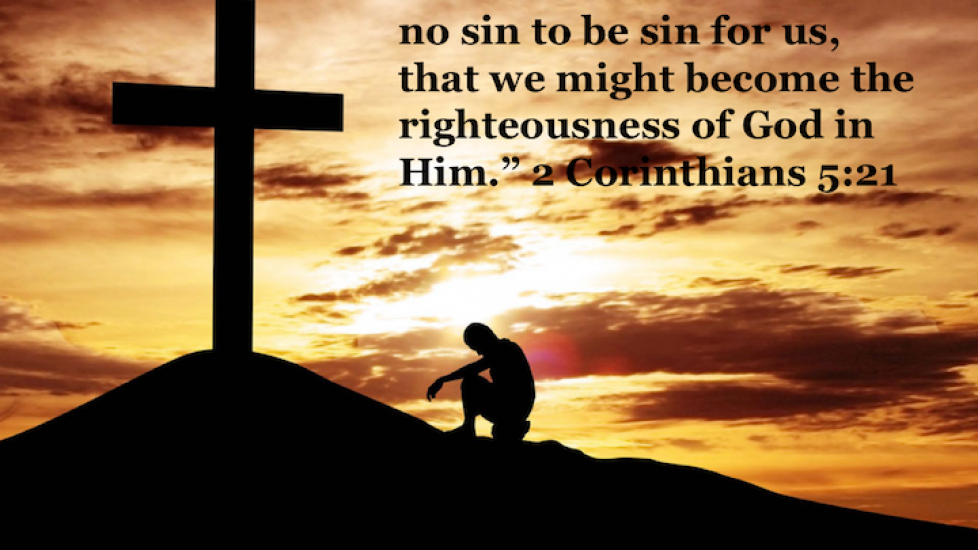
Today as we prepare for the Lord’s Supper, I want us to consider what the crucifixion of the Lord Jesus Christ means for us. In most of my sermons I preach expositional sermons on a paragraph or more of scripture. But today I will focus our thoughts on just one verse: 2 Corinthians 5:21, “For He made Him who knew no sin to be sin for us, that we might become the righteousness of God in Him.”
This is one of the most magnificent verses in the all the Bible. Spurgeon called it the heart of the gospel. It is the gospel in one verse. Listen to it in context:
18 Now all things are of God, who has reconciled us to Himself through Jesus Christ, and has given us the ministry of reconciliation, 19 that is, that God was in Christ reconciling the world to Himself, not imputing their trespasses to them, and has committed to us the word of reconciliation. 20 Now then, we are ambassadors for Christ, as though God were pleading through us: we implore you on Christ’s behalf, be reconciled to God. 21 For He made Him who knew no sin to be sin for us, that we might become the righteousness of God in Him. (2 Corinthians 5:18-21).
The theme of this passage is obviously reconciliation. In those four verses Paul mentions the concept of reconciliation with God no less than five times. In 2 Corinthians 5:18 he writes about “God, who has reconciled us to Himselfthrough Jesus Christ, and has given us the ministry of reconciliation.” 2 Corinthians 5:19 says “that God was in Christ reconciling the world to Himself … ” and “has committed to us the word of reconciliation.” In 2 Corinthians 5:20 Paul pleads as an ambassador of Christ for his readers to “be reconciled to God.”
What does “reconciliation” mean? Basically, the idea behind the word translated “reconciliation” refers to “a change” or “an exchange” of a hostile relationship for a friendly one. It means that two parties that were once against one another, or who were hostile to one another, are now brought together. It means enemies are now made friends.
The Bible teaches us that, because of the sin of our first parents, we are each born into a state of enmity with God. Human rebellion and disobedience to God broke the harmony in their relationship with Him. It resulted in death: spiritual death immediately and physical death eventually. All of us who are children of Adam and Eve have inherited the guilt of their sin; a broken relationship with the holy God; and death, both spiritual and physical. The Bible makes it clear that all people are sinners by nature and by their actions. Romans 5:12 says, “Therefore, just as through one man sin entered the world, and death through sin, and thus death spread to all men, because all sinned.” And Romans 3:23 says, “for all have sinned and fall short of the glory of God.”
How could the broken relationship between the holy God and sinful man ever be reconciled? The only way is to remove the cause of our enmity. The sin that broke our relationship with Him and brought our death must be dealt with—both the sin that our first parents committed in the beginning, and the personal sins we ourselves commit every day as a result. Reconciliation requires the removal of the guilt of our sin.
In Matthew 18 Jesus told a parable about a servant who owed his king a huge debt, ten thousand talents—that is, 200,000 years of labor! 60,000,000 working days! In modern money, it is over $3.5 billion. It was impossible for a servant to pay back that debt. Jesus says that the servant fell down before the king saying (Matt. 18:24), “Master, have patience with me, and I will pay you all.” But despite his pleadings and his best efforts both he and his master knew there was no way that he or even several generations of his family could ever pay that debt.
Our sin debt is like that. Because of the sin of our first parents, we are—each one—born into the human family with a debt before a holy God that we cannot pay. And we all compound our debt before God every day by adding our own personal sins against Him. It is impossible for us to repay this enormous debt of sin. How then can we be reconciled to God? The only way that the debt of our sin could be removed would be if someone else, extremely rich and kind, were to pay it to the full satisfaction of God. The problem is that no other human can pay our debt for they all have the same debt against them also.
Paul says here that the good news is that is what God Himself was doing in Christ—reconciling the world to Himself. His own Son, Jesus Christ, took the debt of our sins upon Himself, and paid it to the full satisfaction of His Father. And now, God—legitimately and freely—extends His hand to us and invites us to be “reconciled” to Himself. God didn’t simply ignore the sin debt that stood between us and Himself; He completely removed it, because His Son paid it to the full satisfaction of God’s own holy character and righteous law.
As we come to the Lord’s Supper this morning, we are remembering what God has done to reconcile us to Himself in Christ. In this one verse we will see how God can reconcile with sinners. We will examine four features of our reconciliation to God. Then we will pause after each one to give thanks to God in prayer. My desire is that through the truth of this verse we would grow in deep thankfulness to God what He did for us in Christ on the cross; and that we would bring this attitude of thankfulness to the Lord’s Supper this morning. (I have drawn these points from Greg Allen’s sermon, “Our Greatest Need”).
First, I ask you to notice that . . .
1. Reconciliation is from God
Our verse starts off by telling us Who it is that took the initiative in our broken relationship with God. 2 Corinthians 5:21 begins with the words “For He made …” Who is “He”? Go back to 2 Cor. 5:20, “Now then, we are ambassadors for Christ, as though God were pleading through us: we implore you on Christ’s behalf, be reconciled to God. For He made …” God is the antecedent. “He” is God Himself. Those beginning three words, “For He made”, tell us that the plan of paying for our sins, removing the cause of enmity between us, and welcoming us back into a relationship with Himself, was all the initiative of God the Father Himself.
Look back to 2 Corinthians 5:18; it begins, “Now all things are of God, who has reconciled us to Himself . . .” God initiated reconciliation. He designed the plan of redemption. He prophesied it. He fulfilled it. He executed it. God the Father did not have to be convinced by God the Son to save lost sinners. As John 3:16 says, “For God so loved the world that He gave His only begotten Son, that whoever believes in Him should not perish but have everlasting life.” God loved the world of lost sinners. He gave His Son. Peter preached about Jesus Christ on the day of Pentecost,
22 “Men of Israel, hear these words: Jesus of Nazareth, a Man attested by God to you by miracles, wonders, and signs which God did through Him in your midst, as you yourselves also know– 23 Him, being delivered by the determined purpose and foreknowledge of God, you have taken by lawless hands, have crucified, and put to death.” (Acts 2:22-23).
“Jesus went to the cross not because men turned on Him, though they did; Jesus went to the cross not because seducing spirits orchestrated the minds of the religious leaders of Judaism to plot His death, though they did; Jesus went to the cross not because an angry mob screamed for His blood, though they did. Jesus went to the cross because God planned it. God purposed it. And God designed it as the absolutely necessary means by which and by which alone reconciliation could take place.”
As we come to the table of the Lord this morning, we remember that we are giving the Father thanks for the reconciliation that He brought about. We remember that He loved us while we were still sinners, while we were still His enemies. We remember it was God the Father who gave His Son to become sin for us, that we might become the righteousness of God in Him.
Father, as we come to the Lord’s table, we thank You that, while we were still dead in our trespasses and sins—though we were utterly unlovely to You, and utterly unworthy—You gave Your Son for us because You are the God who is rich in mercy, and because of the great love with which You first loved us. Thank You, Father, for sending Your Son, Jesus Christ, and that You made Him who knew no sin to be sin for us. In Jesus’ name, Amen.
Reconciliation is from God. Please look at 2 Corinthians 5:21 again with me; and next consider . . .
2. Reconciliation is through Christ
“For He made Him who knew no sin to be sin for us . . .” God the Father planned for reconciliation; and God the Son achieved it. Paul has already written about this in 2 Cor. 5:18 when he speaks of God, “who has reconciled us to Himself through Jesus Christ . . .” and again in 2 Cor. 5:19, when he writes that “God was in Christ reconciling the world to Himself, not imputing their trespasses to them . . .”
Now in 2 Cor. 5:21 Paul emphasizes why reconciliation had to come through Jesus Christ. It was because Jesus Himself “knew no sin.” The Bible declares that Jesus Christ was born into the human family as one of us. But He was conceived by the Holy Spirit and born of the virgin Mary. Thus, Jesus lived both without the guilt of sin that we inherited from Adam, and without having committed any sins of His own. Hebrews 2:17 says about Christ, “Therefore, in all things He had to be made like His brethren, that He might be a merciful and faithful High Priest in things pertaining to God, to make propitiation for the sins of the people.” Hebrews 4:15 also says, ” For we do not have a High Priest who cannot sympathize with our weaknesses, but was in all points tempted as we are, yet without sin.”
If Jesus had any sin of His own, He could not have suffered and died for others because all His sufferings would have been justly charged against His own sin. But Paul declares what all the scripture confirms, Christ Jesus “knew no sin.” Because He was a man Jesus could die and because He was God He was sinless. Jesus did not die for His own sins—He had none. He died vicariously for our sin.
Jesus was not only sinless because of His divine nature, He was also without sin because He lived in perfect obedience to His Father’s commandments. He was able to say of His Father, “I always do those things that please Him” (John 8:28). Jesus Christ is the only man who knew no sin. The testimony of the eyewitnesses confirm it. Jesus says to the Jews in John 8:46, “Which of you convicts Me of sin?” No one could then, and no one can now. In fact, at His trial they had to bring in lying witnesses who could not agree (Matt. 26:59-60). In Luke 23 the Roman governor Pontius Pilate, a pagan ruler known to be vicious, cruel and cynical, declared three times “I find no fault in this Man” (Luke 23:4, 14, 22). The thief on the cross beside Jesus said, “… this Man has done nothing wrong” (Luke 23:41). When Jesus died, the centurion exclaimed, “Certainly this was a righteous Man!” (Luke 23:47). The ultimate testimony of Jesus’ sinlessness was God the Father who twice testified with a voice from Heaven, “This is My beloved Son, in whom I am well pleased” (Matt. 3:17; 17:5).
As we come to the Lord’s table this morning, we remember to give thanks to God the Father for the gift of His Son—the perfect, spotless Lamb of God who knew no sin. And we remember to give thanks to the Lord Jesus Christ who willingly gave Himself in obedience to the Father’s plan to reconcile us to God.
Father; as we come your Supper today, we give thanks to You for Jesus Christ, the sinless Son of God, who walked among us on earth as fully human—and yet without the sin of humanity upon Him. Thank You that You so loved the world that You gave that which was most precious to Your heart—Your beloved, well-pleasing Son—in order to reconcile us to Yourself. And thank You that, in obedience to Your will, Christ gave Himself over to death, willingly, for us.In Jesus name, Amen.
Reconciliation was from God through Christ. Now; let’s consider . . .
3. Reconciliation is by a substitute
Paul writes, “For He made Him who knew no sin to be sin for us . . .” The debt of sin had to be paid. We could not pay it for ourselves. Only Someone who personally knew no sin could bear the debt on our behalf. And so, it was the plan of the Father that the Son would become a Man, live a sinless life on this earth, bear the guilt of our sins on His own Person, and die in our place on the cross—thus “becoming” sin for us.
Paul wrote about this in 2 Cor. 5:19 “that is, that God was in Christ reconciling the world to Himself, not imputing their trespasses to them . . .” It wasn’t that God chose not to “impute” or “account” those sins at all. God didn’t simply ignore our trespasses. He fully treated them as they deserved, and as His holy justice demanded. But instead of counting them against us, God imputed them to Jesus; He charged them to Jesus’ account; and He extracted the full penalty of death for our sins upon Christ.
Paul speaks of this in Galatians 3:13, when he writes, “Christ has redeemed us from the curse of the law, having become a curse for us (for it is written, ‘Cursed is everyone who hangs on a tree’) . . .” Our own sins brought about a curse upon ourselves; but Jesus became “cursed” in our place upon the cross. God made Him “to be sin for us.” What does it mean that Christ became sin for us?
Isaiah 53:4-6 states it clearly:
Surely He has borne our griefs And carried our sorrows; Yet we esteemed Him stricken, Smitten by God, and afflicted. But He was wounded for our transgressions, He was bruised for our iniquities; The chastisement for our peace was upon Him, And by His stripes we are healed. All we like sheep have gone astray; We have turned, every one, to his own way; And the LORD has laid on Him the iniquity of us all (Isaiah 53:4-6).
Christ bore the penalty of death for our sin. All our sin was imputed, credited, to Christ on the cross. God laid the charge against sin completely on Christ. He died the death of a sinner as a sinless substitute for sinners. Christ became sin by imputation. Our sin was accounted to Him.
Father; thank You for the unspeakable gift of Jesus’ willing sacrifice on our behalf. Thank You that as the sinless Lamb of God, He bore our sins as our substitute and became sin for us, paying our sin debt in full. In Jesus’ name, Amen.
How marvelous is God’s mercy and grace, that the Father gave His Son to pay the debt for our sin. How wonderful to be forgiven! But God did much more. His plan is for full reconciliation and restoration.
Reconciliation is from God through Christ by substitution. Next we find that . . .
4. Reconciliation results in righteousness
Paul writes that God made Jesus—who knew no sin—to be sin for us, “… that we might become the righteousness of God in Him” (2 Cor. 5:21). Christ became sin so that we would become righteousness.
First, notice that the outcome of reconciliation is the righteousness of God. This isn’t speaking of a self-righteousness that we work hard to achieve in order to earn a standing of acceptance before a holy God. We have already seen that we could never pay our own sin debt. The Bible also says, “But we are all like an unclean thing, And all our righteousnesses are like filthy rags” (Isa. 64:6). We could never keep God’s commandments, nor could our good works remove the guilt of our sin.
Rather, this is speaking of a righteousness that has God as its source—a righteousness that is the free and gracious gift of God—where we are not only declared “not guilty” before His throne on the day of judgment, but where we are positively declared to be one-hundred percent acceptable in His sight with respect to the holy standards of His law. Paul writes in Philippians that he is found in Christ “… not having my own righteousness, which is from the law, but that which is through faith in Christ, the righteousness which is from God by faith” (Phil. 3:9). When God looks at you as a believer in Christ, He sees you covered by the righteousness of Jesus Christ. That’s why all your sin is automatically forgiven in the eternal sense because Jesus already paid debt for sin and the death penalty for all sinners who believe in Him.
Then, second, notice that we aren’t simply “given” this righteousness. Paul says that we actually “become the righteousness of God in Him.” All of Christ’s righteousness is placed to our account and is counted as our standing before God the Father. We become utterly identified with the righteousness of Jesus Christ Himself. Despite all of the sins we have ever committed, we are accepted in Him as if we had been Christ, while Christ was punished for us as if He had been sin.
His robes for mine: O wonderful exchange!
Clothed in my sin, Christ suffered ‘neath God’s rage.
Draped in His righteousness, I’m justified.
In Christ I live, for in my place He died.
His robes for mine: such anguish none can know.
Christ, God’s beloved, condemned as though His foe.
He, as though I, accursed and left alone;
I, as though He, embraced and welcomed home! (Chris Anderson)
Salvation is a full exchange. Just as God imputed our sin to Christ, God imputed Christ’s righteousness to us. Just as Christ Jesus became sin for us, we have by faith become the righteousness of God in Him. This is something that we need to remember we come to the Lord’s table.
Father; thank You that You not only took away all our sin, You also made us to become the very righteousness of Your beloved Son. You now accept us and love us as much as You accept and love Jesus! Thank You, Father, for this amazing gift of grace! In Jesus name, amen!
Our great need as sinners is reconciliation with God. We cannot be reconciled by our good works, or by our religious acts. It isn’t by the contrition of our souls before Him, or by the sacrifice of our lives to His cause. The Father has provided only one way for the debt of sin to be removed from us—but He has, in great mercy provided it freely to whoever will receive it. It is ours only through being “in Christ”.
You say, “How do I know that I am in Christ?” Believe. Believe what? Believe that you’re a sinner, you’re hopelessly alienated from God, a willful enemy of God. And then believe that God sent His Son into the world in the form of a man to die as your substitute and take your place; and that He took the penalty of death for your sin upon Himself. Believe that God’s love and justice was satisfied because God raised Jesus from the dead. At the resurrection God was saying, “I am satisfied.” When you believe in the crucified and risen Lord Jesus Christ, God takes the righteousness of Christ and credits it to your account because your sins were imputed to Christ on the cross.
As you come to the table of the Lord this morning, I invite you to be very sure that you are “in Christ”—that you have consciously and personally placed your trust in the sacrifice He has made on the cross for you. If you have never done so before, do it now: “we implore you on Christ’s behalf, be reconciled to God.” (2 Cor. 5:20).
“For He made Him who knew no sin to be sin for us, that we might become the righteousness of God in Him.”