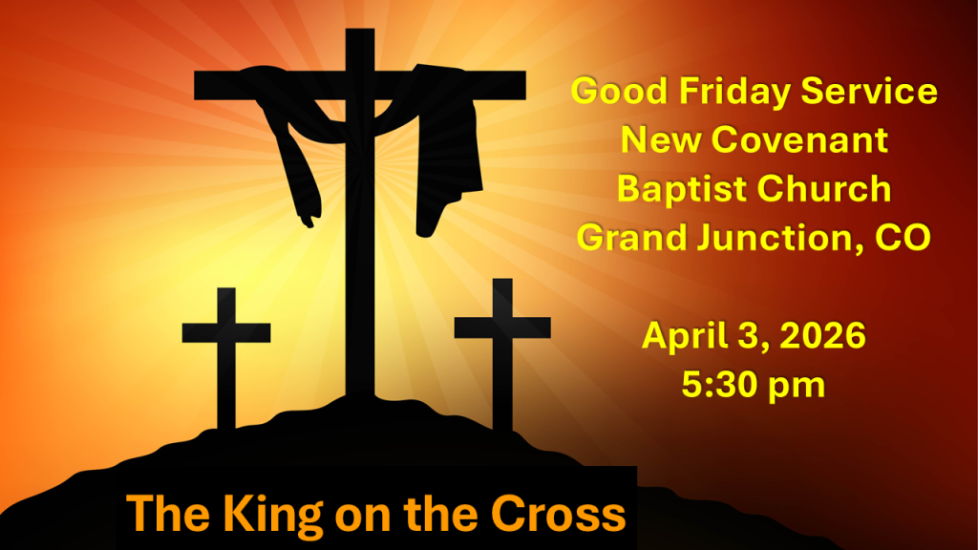
31 Therefore, because it was the Preparation Day, that the bodies should not remain on the cross on the Sabbath (for that Sabbath was a high day), the Jews asked Pilate that their legs might be broken, and that they might be taken away. 32 Then the soldiers came and broke the legs of the first and of the other who was crucified with Him. 33 But when they came to Jesus and saw that He was already dead, they did not break His legs. 34 But one of the soldiers pierced His side with a spear, and immediately blood and water came out. 35 And he who has seen has testified, and his testimony is true; and he knows that he is telling the truth, so that you may believe. 36 For these things were done that the Scripture should be fulfilled, “Not one of His bones shall be broken.” 37 And again another Scripture says, “They shall look on Him whom they pierced.”
The point of this text (John 19:31-37) is very simple. It is that Jesus of Nazareth died as the lamb of God for the forgiveness of our sins. Our response must be to repent and believe in Him. Jesus really died. He breathed His last breath. His side was pierced through. All for us.
This fact is essential because Jesus’ death and burial are at the very heart of the gospel message by which we are saved.
In Matthew 23, we are following Jesus’ last words to the crowds of worshippers in the Jerusalem temple in Matthew 23. It is just two days before Jesus will be condemned and crucified. It is His last public encounter with the scribes and Pharisees—the Jewish religious leaders who, on the whole, despised and rejected Jesus. In Matthew 23:1-12, Jesus warned His disciples and the gathered multitudes not to follow the hypocritical practices of the scribes and Pharisees. Then, Jesus turned directly to the scribes and Pharisees themselves and pronounced a series of woes on them. Again and again, Jesus said to them, “Woe to you, scribes and Pharisees, hypocrites!” The woes pronounce God’s judgment, while, at the same time, calling for repentance.
We saw last time that Jesus began by issuing some “woes” over the way their religious hypocrisy harmed other people around them (Matt. 23:13-15), showing that
What do you suppose might be the most significant question that anyone could answer? In Matthew 22, we have witnessed the Jewish religious leaders in Jerusalem questioning Jesus just a few days before they would condemn Him and hand Him over to be crucified by the Romans.
You recall that in Matthew 21, Jesus had shaken the whole city when He rode into Jerusalem on a donkey’s colt to the praise of the multitudes, shouting,
“Hosanna to the Son of David!
‘Blessed isHe who comes in the name of the LORD!’[fn]
Hosanna in the highest!” (Matt. 21:9).
The next day, after He cleansed the temple, saying, “It is written, ‘My house shall be called a house of prayer,’ but you have made it a ‘den of thieves,’” the chief priests and scribes angrily complained about the praises of the children in the temple saying to Jesus, “Hosanna to the Son of David!”
In the temple again the following day, the chief priests and the elders of the people confronted Him as He was teaching, and demanded, “By what authority are You doing these things? And who gave You this authority?” (Matt. 21:23). And when they would not answer His question about the authority of John’s baptism, Jesus did not directly answer theirs, but rather He told a series of three parables that indicted them for their unrepentant unbelief and rejection of Him, saying, “Therefore I say to you, the kingdom of God will be taken from you and given to a nation bearing the fruits of it.” (Matt. 21:43).
Still unrepentant, the religious leaders then “went and plotted how they might entangle Him in His talk” (Matt. 22:15). Their plan was to press Jesus with questions designed to trap Him and discredit Him before the people. The Pharisees had asked Jesus about politics; the Sadducees had asked about the afterlife; and the lawyer had asked about the Law. But Jesus answered each question with great wisdom; and He exposed the hard-hearted unbelief of His opponents in the process. In the end, all they succeeded in doing was discrediting themselves.
Finally, Jesus turns the tables and asks them a question that gets down to the central issue.
Matthew 21 begins the last week of Jesus’ ministry before He would be crucified. Matthew devotes seven chapters to the events of this week. It is the culmination of Jesus’ mission as the Son of God. From the beginning of his Gospel, Matthew has presented Jesus to us as the promised Messiah and King.
But most Jews in Jesus’ day missed Him as their Messiah and King because they were expecting a different kind of Savior. They thought that Messiah would be a mighty political deliverer, who would lead Israel to military victory over their Roman oppressors. They were not looking for a lowly Savior, riding on the foal of a donkey. They could not conceive of a suffering Savior, who offered Himself as the sacrifice for sinners. And so, tragically, they missed the coming of their King![1]
Yes, the multitudes rejoiced as Jesus rode that donkey’s colt into Jerusalem. But did they truly understand Who He was and why He came?
In our study of the Gospel of Matthew, we come today to a short passage at the end of Matthew 20 where Jesus heals two blind men. It is also the end of Jesus’ journey toward Jerusalem that began in Matthew 19:1 when Jesus departed Galilee. Over the last few months of Jesus’ ministry, He has been very focused on teaching His disciples. And we have seen two major recurring themes in His teaching during this period. Jesus has been repeatedly telling His disciples about His looming betrayal, arrest, suffering, death, and resurrection that waits Him in Jerusalem. His crucifixion is close and certain. On the other hand, because His disciples keep bringing it up, Jesus has been teaching about true greatness in the kingdom of heaven.
Christianity is supremely a religion of grace. We sing about God’s amazing grace, grace greater than our sin. Paul’s epistles are saturated with the concept of God’s grace. But, even so, I think that God’s grace is often not well understood and sometimes not really believed. In his book, “What’s So Amazing About Grace,” Phillip Yancey points out that part of our problem is in the nature of grace itself.[1] Grace shocks us in what it offers. Grace is a gift that costs everything to the giver and nothing to the receiver. It is given to those who don’t deserve it, barely recognize it, and hardly appreciate it. In grace, God does for others what we would never do for them. By grace God saves what we think are the not-so-bad people and also the very worst of sinners. In fact, no one is saved apart from God’s grace.
Today we are looking at Jesus’ parable of the workers in the vineyard in Matthew 20. Although our text does not use the word “grace”, it powerfully illustrates it.
Think about the context in which Jesus taught this parable. Jesus is on His final journey to Jerusalem with His disciples (Matt. 19:1). The conflict between Jesus and His adversaries began to intensify, and the time for our Lord’s sacrificial death was drawing near. In Matthew 19, when some parents brought their little children to Jesus for Him to bless them, the disciples tried to prevent them. But Jesus rebuked His disciples saying, “Let the little children come to Me, and do not forbid them; for of such is the kingdom of heaven” (Matt. 19:14). The scribes and Pharisees didn’t see it that way. They thought that heaven belonged to them, because of their religious efforts, and because of their positions.
Then a man came up to Jesus and wanted to know what he needed to do in order to have eternal life.
Last time, we looked at Matthew’s account of the rich young ruler and his encounter with Jesus. Looking at this young man from the outside, it appeared like he had it all—wealth, youth, influence, and morality. He seemed to the life that many would long for. Yet he knew that things were not right with his soul. So, he came to Jesus asking, “Good Teacher, what good thing shall I do that I may have eternal life?” (Matt. 19:16).
Jesus first questioned him about his understanding of who is good, then directed him to keep God’s commandments, hoping to bring the young man to see his own sinfulness and need of the Savior. Although the young man claimed an eternal righteousness of keeping the commandments, he still did not have assurance of eternal life. So, he asked Jesus, “What do I still lack?” (Matt. 19:20).
In John Bunyan’s classic analogy of the Christian life, Pilgrim’s Progress, the story opens with the character Pilgrim having a large and heavy burden upon his back. It weighs him down and makes everything that he does difficult. The first part of the story centers on Pilgrim’s efforts to find a way to get rid of the burden. It is not until Pilgrim comes to the cross of Jesus that he is set free from his burden. The rest of the story describes Pilgrim’s progress in the Christian life after he is freed of his burden.[1]
The analogy of a heavy burden on our back is a good description of what life is like apart from Christ. Even for the Christian, when we are not walking with the Lord in the power of His Spirit, striving to do things in our own power, it can feel like the weight of the world is on our shoulders.
Jesus invites the weary and burdened to come to Him for rest—not just physical rest or mental rest but rest for your soul. We are a restless people. Our lives are often filled with burdens, regrets, and guilt. People seek rest in activities, relationships, religion, entertainment, and other distractions but none of that cures the restlessness in our souls.
Augustine writes in his Confessions, “You have made us for yourself, O Lord, and our hearts are restless until they rest in You.”[2] In Matthew 11:28, Jesus says, “Come to Me, all you who labor and are heavy laden, and I will give you rest.”
Do you want rest for your soul? If your soul is weary and burdened, if your soul is restless this morning, then this invitation is for you.
Remember the context in Matthew 11. Jesus has answered those who were critical of both Him and His forerunner, John the Baptist (Matt. 11:16-19) and He strongly rebuked the cities in which He did many miracles because they did not repent and believe in Him. Then He prayed a prayer in Matthew 11:25 where He praises His Father for hiding the truth about Jesus and His kingdom from the wise and prudent and revealing it to babes. Those who think they are wise and righteous do not receive the kingdom, only those who know they are humble and dependent. And He states clearly that the only way to know God the Father, the only way to salvation, is through Him, the Son—the Son that most of them thus far have rejected.
The context, then, highlights the wonderful grace of our Savior. For the most part, His own people are rejecting Him, and yet Jesus gives them this gracious invitation.
I want you to see three things in these words of Jesus: (1) The Lord’s saving invitation, (2) The Lord’s sanctifying instruction, and (3) The Lord’s satisfying assertion.[3]
1. The Lord’s Saving Invitation (Matt. 11:28)
Our Lord says, “Come to Me, all you who labor and are heavy laden, and I will give you rest.”
Jesus’ invitation is “Come to Me.” It is an urgent invitation. The word “Come” is an adverb or interjection used as a command. It literally means, “Come here” and has the intensity of “Come here now!” And it is a personal invitation. His invitation is to come “to Me.”—meaning “to Me and Me alone” not any another. In fact, notice Jesus stresses Himself using the first person pronoun repeatedly in these three verses: “to Me”; “I will give”; “My yoke”; “learn from Me”; “I am gentle”; “My yoke”; “My burden.” Rest for your soul, relief from your burden, and salvation from sin, is in the person of Jesus Christ alone.
“Come to Me”, Jesus says. Don’t come to the law. Don’t come to “religion”. Come to the Savior! Come to Jesus. Come to the Son of God Who has said (Matt. 11:27), “All things have been delivered to Me by My Father, and no one knows the Son except the Father. Nor does anyone know the Father except the Son, and the one to whom the Son wills to reveal Him.” Come to Him directly and personally. He invites you. He welcomes you.
Notice those to whom Jesus gives this invitation. It’s for all those who “labor and are heavy laden”. Another translation says, “weary and burdened” (CSB). “Labor” comes from a verb meaning “to toil, expend great effort in hard and disagreeable work” making one “weary or tired to the point of exhaustion.”[4] “Heavy-laden” comes from a verb meaning “to place a burden upon; to load”[5] as when placing a load on a pack animal. Metaphorically, it came to mean “to oppress by legal burdens.”
I believe Jesus refers here first to those who labor and are heavy-laden under the horrible burden of trying to earn God’s righteousness by works of the law. In Matthew 19, we meet a man who came to Jesus under such a burden. We have labeled him the “rich, young ruler”. He was, outwardly, a righteous man who lived in strict conformity to the law of Moses. But he had no rest for his soul. He came to Jesus and said, “Teacher, what good thing shall I do that I may have eternal life?” (Matt. 19:16). Jesus told the man, “. . . if you want to enter into life, keep the commandments.” And when the man asked, “Which ones?”, Jesus said, “‘You shall not murder,’ ‘You shall not commit adultery,’ ‘You shall not steal,’ ‘You shall not bear false witness,’ ‘Honor your father and your mother,’ and, ‘You shall love your neighbor as yourself’” (Matt. 19:18-19). Jesus told him what he already believed—that if he kept the commandments of God, he would have eternal life. And yet, the man knew that he did not have it. He had no rest for his soul. He told Jesus—in desperation, I believe—“All these things I have kept from my youth. What do I still lack?” (Matt. 19:20). Oh, how weary of labor and heavy-laden any poor soul is who tries to make themselves perfect before God through keeping the law!
What’s fascinating is that Jesus then adds to his labor and burden even further. “If you want to be perfect,” He said, “go, sell what you have and give to the poor, and you will have treasure in heaven; and come, follow Me” (Matt. 19:21) And with that, the young man went away sorrowful, “for He had great possessions” (Matt. 19:22). This man wanted to know what “good thing” he must do that he may have eternal life. Jesus wanted him to realize what an impossibly wearisome and heavy burden it was that he was trying to bear.
The scribes and Pharisees taught a righteousness before God on the basis of outward obedience and conformity to the law of Moses. Jesus said, “they bind heavy burdens, hard to bear, and lay them on men’s shoulders” (Matt. 23:4). It was an impossible burden to bear; because, as the Bible tells us, “by the works of the law no flesh shall be justified” (Gal. 2:16). Israel’s entire history is nothing but “labor and heavy laden”. Over and over, God had promised rest for His people (Deut. 12:8-10; 25:19; 1 Kings 8:56; 1 Chron. 23:25; Mic. 2:10; Heb. 4:8,9; 1 Pet. 1:3,4). But because of their sin, idolatry, and rebellion the Jews never truly received the rest God intended.
The heavy load of the law which they could not keep caused them to be weary with guilt over their sin. King David spoke of this in Psalm 38. He said, “There is no soundness in my flesh Because of Your anger, Nor any health in my bones Because of my sin. For my iniquities have gone over my head; Like a heavy burden they are too heavy for me” (Psalm 38:3-4). Have you felt the heavy burden of the guilt of your sin and the weight of the condemnation of God’s judgment on you?
To all these Jews who were laboring under the heavy load of the law, and the guilt of their sin, Jesus says: “Come to Me, all you who labor and are heavy laden, and I will give you rest.” “For”, as Paul writes, “Christ is the end of the law for righteousness to everyone who believes” (Rom. 10:4). This is Jesus’ wonderful invitation to all men and women who labor under the impossible task of trying to earn God’s favor, and earn eternal life for themselves through their obedience to the works of the law, through trying to be a good person. Jesus invites them to come to Him and find rest! For those who take Him up on His offer, the work is already done; “knowing that a man is not justified by works of the law but by faith in Jesus Christ” (Gal. 2:16).
Jesus Himself bore the weight of keeping the law of God perfectly. And Jesus Himself bore the guilt of our sin on the cross having been made a sin offering for us. And now, the promise of God is, “Therefore, having been justified by faith, we have peace with God through our Lord Jesus Christ” (Rom. 5:1).
And so, for every man or woman who has ever felt the unbearable guilt of sin—guilt that no amount of good deeds could ever undo or erase—Jesus gives this invitation: “Come to Me, all you who labor and are heavy laden, and I will give you rest.”
Notice the promise is to “all” who labor and are heavy-laden. It doesn’t matter who you are. It doesn’t matter if you are Jew or Gentile. It doesn’t matter if you are the world’s most outwardly moral Pharisee or the world’s most depraved sinner. Jesus extends this invitation to “all”.
Can you think of a more wonderful, more satisfying invitation than this? Have you come to Jesus for rest?
Next, please notice that the Lord not only gives a ‘saving invitation’ but we also see . . .
2. The Lord’s Sanctifying Instruction (Matt. 29a).
Jesus says, “Take My yoke upon you and learn from Me . . .”. In the original language, those words are spoken in the imperative, a command to be obeyed, an instruction to follow. And it’s a “sanctifying” instruction because it’s how we grow closer to Jesus and He makes us more like Him as we follow it.
First, Jesus commands those who come to Him to take up His “yoke”. A yoke was a large wooden crossbar that was carefully carved to fit over the necks of beasts of burden, like oxen. Yokes were usually to hold two animals together, bound by leather straps, so that the animals could be made to carry a burden together or pull together. It was an instrument that curbed the will of the animal and bought it under the master’s control.
And there are a couple of interesting things to notice about this. The word “yoke” was sometimes used in Jesus’ day as a figure of speech. Sometimes, the word was used to symbolize a heavy burden. The Bible uses it as a figure of speech for the heavy burden of the law of Moses. In Acts 15:10 Peter used it as a figure of speech for the heavy burden of the law. He said to those who sought to put new Gentile believers under the law of Moses, “Why do you test the God by putting a yoke on the neck of the disciples which neither our fathers nor we were able to bear?” Paul also wrote about this yoke to the Galatian believers who were trying to keep the law of Moses as a means of making themselves more righteous in the sight of God, saying, “Stand fast therefore in the liberty by which Christ has made us free, and do not be entangled again with a yoke of bondage” (Gal. 5:1).
Sometimes, the word “yoke” was used as a symbol of being under submission to someone else or of being a disciple under the authority of a master. The ancient Jewish advice to students was, “Put your neck under the yoke and let your soul receive instruction.”[6] The yoke here symbolizes obedience to Jesus which includes learning His ways and following them. The word “learn” in Matthew 11:29 means to receive instruction and is related to the word for “disciple”.
Jesus here says that we are not only to take up His yoke, but also “and learn from Me . . .” The Greek word that is used (apo) can either mean to learn “from” Him, in the sense that He is our divine Teacher, or to learn “of” Him, in the sense that He is the divine subject. I believe both are true. When we come to Him, we learn from Him and of Him. He is both the reason we learn and the lesson we are taught.
When Jesus tells you to take His yoke upon you, He is asking you to become His disciple. He invites you to follow Him and to serve Him as your Master. Jesus is inviting those who are weary and heavy-laden under the unbearable burden of the law to come out from under the burden of trying to find righteousness before God on the basis of their performance in the law, and to take up another yoke which is easier and a burden which is lighter. The law is a heavy taskmaster. But not Jesus. Jesus is gentle and humble in heart. And when you follow him, you will find rest for your soul.
When we take up Jesus’ yoke, we are trading away an old burden-that is, the burden of the law-that meant our death before God. We could never keep it or find favor with God through it. It would only condemn us and bring us under a curse—”Cursed is everyone who does not continue in all things which are written in the book of the law, to do them” (Gal. 3:10). Instead, when we come to Jesus, we take up a burden that gives us life. We enter into a relationship with One who kept the law perfectly on our behalf; and now, we walk in life when we walk in union with Him through the Holy Spirit. Paul writes in Romans 8,
For the law of the Spirit of life in Christ has made us free from the law of sin and death. For what the law could not do in that it was weak through the flesh, God did by sending His own Son in the likeness of sinful flesh, on account of sin: He condemned sin in the flesh, that the righteous requirements of the law might be fulfilled in us who do not walk according to the flesh but according to the Spirit (Romans 8:2-3).
Dear brothers and sisters in Christ; when we accept Jesus’ wonderful invitation, we come to obey a command. We come to put on a yoke. But what a blessed yoke it is! It’s a yoke that is nothing less than a relationship with the wonderful Savior Himself.
He puts us to work as His followers, but it’s a work that is a delight to do because of what a wonderful Savior He is. He has done all that is necessary for us to be in the favor of His Father. He has purchased our pardon at His cross, and earned our righteousness by His own obedience. There is no more satisfying and fulfilling place to be than under His yoke.
Have you truly come to Him in that sense? In coming to Him, have you truly taken up His yoke and learned of Him? If so, then finally we see . . .
3. The Lord’s Satisfying Assertion (Matt. 11:29b-30).
He says to take up His yoke and learn from Him; “for I am gentle and lowly of heart, and you will find rest for your souls. For My yoke is easy and My burden is light.”
First, Jesus gives an assertion or promise about Himself. Jesus lets us know that He is “gentle” or “meek”. He is not harsh or rough on those who come under His yoke. He doesn’t beat His servants. He loves them, and is good to them, and is kind to them. This speaks of His manner toward us.
And He also lets us know that He is “lowly” or “humble” of heart. Now, understand: He Himself is never “lowly” or “humble” in His being. Far from it! He is the King of kings and Lord of lords, awesome in His majesty and fearful in His wrath! But to those who come to Him weary and heavy laden, He is “lowly of heart”. This speaks of His approachability. He humbles Himself to reach down to those who are poor and lowly, weary and burdened by sin and guilt.
What a wonderful Master and Teacher He is. We need never fear to take Him up on His great invitation. He will always welcome us and love us. He will never give us more than we can bear but will always strengthen us and enable us to bear the burden He places upon us.
That’s the satisfying assertion He says about Himself. And then, notice the satisfying assertion or promise He gives us concerning His command. He tells us that, in taking His yoke, we will find “rest for our souls”. Here, Jesus quotes from Jeremiah 6. In Jeremiah’s day, God offered this rest, but Israel refused it. Jeremiah 6:16 16 “Thus says the LORD: ‘Stand in the ways and see, And ask for the old paths, where the good way is, And walk in it; Then you will find rest for your souls.’ But they said, ‘We will not walk in it.’”
Now God has sent His only begotten Son with the offer of rest for your souls. It is rest for the soul because the nature of the yoke or burden He places upon us is “easy”; and that means “well-fitted” or “agreeable” to us.
The Bible commentator William Barclay writes that when an ox was brought to a craftsman, it was first measured for the yoke. And then, the yoke was roughed out and the ox brought back to try it on. Then, the yoke was adjusted and shaped again, so that it would fit “easily” or “agreeably” to that animal-so that it wouldn’t hurt the animal to wear it.[7] And Jesus does the same for us. He knows us well; and will not place a yoke of service upon us that is not “easy” or “agreeable” to the way He has made us. He tailor-makes His yoke for those who come to Him.
And second, note that His burden is “light”. It is not something that we cannot carry. It’s not something that will crush us or destroy us. It’s something that He Himself gives us the strength to bear.
We cannot bear it in our own power. But we are not meant to bear it in our own power. Paul writes, “I can do all things through Christ who strengthens me.” (Phil. 4:13) His burden is light because it is Christ who gives it to us, and He who indwells us and empowers us to bear it.
Jesus has given His gracious invitation. But now there is a decision that you must make. Jesus is calling to you, “Come to Me.” Will you? Will you turn your eyes away from the sinful enticements of this world and look to Jesus? Will you lay down the burden of your sin and self-righteousness at the foot of the cross? Will you come to Him who can take your burden and give you rest for your soul? Will you take His yoke and be His disciple? Jesus is calling. Will you heed His call and come?